
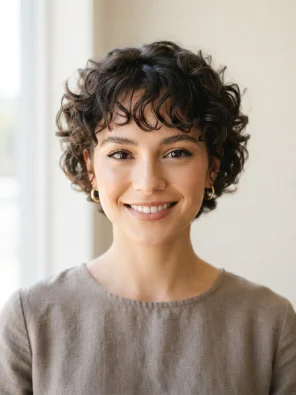
A curly hair pixie cut can look fresh, soft, and full of shape. Still, cutting your curls this short may feel risky.
What if your hair shrinks more than expected? What if the sides look too wide? You may also worry that your curls will become flat, frizzy, or hard to style.
These concerns are normal. Curly hair can look much shorter when it dries. Its final shape also depends on your curl pattern, hair thickness, and the way the cut is layered.
The right pixie can make your morning routine easier. It can remove heavy ends, bring out your curl pattern, and add volume where you need it. The key is choosing a cut that works with your natural texture.
Voluminous Curly Pixie With a Full Crown

This pixie keeps height at the crown and less volume near the sides. It creates a tall, lifted shape without making the hair look stiff.
The style works especially well for tight curls and coils. These textures can hold the full crown without needing daily heat styling.
Crown volume can also make a round face look longer. The shorter sides help keep the shape balanced.
Best for: Tight curls, coils, and hair that naturally grows upward.
Styling tip: Lift the roots with your fingers or a small hair pick after the curls are completely dry.
Keep in mind: Keep heavy creams away from the roots. They can pull down the volume you want to keep.
Tousled Pixie Cut for Loose Curls

A tousled pixie has a soft, slightly messy finish. It works with loose curls and strong waves that do not form perfect ringlets.
Light layers create movement through the crown and front. The curls can fall in different directions without making the haircut look unfinished.
This is useful if you prefer a relaxed look and do not want to shape each curl by hand.
Best for: Loose curls, wavy hair, and soft natural texture.
Styling tip: Scrunch damp hair with mousse. Use a diffuser on low heat and low airflow.
Keep in mind: This style still needs a clear haircut shape. Without one, the sides may look wide instead of softly tousled.
Thick Curly Pixie Cut With Controlled Volume

Thick curls need shape, but they should not be thinned without a clear plan. Removing too much hair can create short pieces that puff up or feel rough.
This pixie keeps enough length on top for the curls to form. Weight is removed from selected areas, such as the sides, temples, or back.
The result is full hair with a cleaner outline.
Best for: Thick curls, dense hair, and curls that become wide at the sides.
Styling tip: Work your product through small sections. This helps every curl get even moisture and hold.
Keep in mind: Cutting every area to the same short length may create more bulk instead of reducing it.
Short Curly Pixie Cut With Tapered Sides

A short curly pixie cut with tapered sides keeps the area around your ears and neck neat. The hair becomes shorter as it moves down the sides and back.
The curls on top stay fuller. This creates a clean shape without removing all your natural volume.
It is a useful choice if thick curls become wide around your temples. The taper controls bulk while keeping the top soft and textured.
Best for: Thick curls, dense hair, and anyone who wants a clean neckline.
Styling tip: Use a light gel on top. Shape the front curls with your fingers while the hair is wet.
Keep in mind: The sides may need regular cleanups to keep the tapered shape clear.
Natural Curly Pixie Cut for Tight Curls
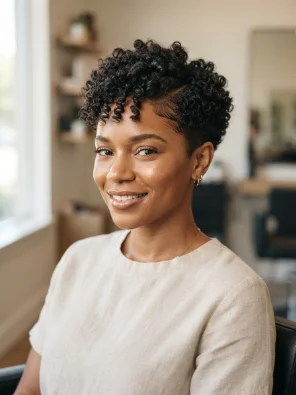
A natural curly pixie works with the way tight curls and coils grow. It keeps the sides shaped while leaving enough length on top to show the texture.
The cut does not need every curl to be stretched or made longer. Its strength comes from the natural pattern and overall outline.
This style can be rounded, tapered, or slightly taller at the crown.
Best for: Tight curls, compact coils, and hair with strong shrinkage.
Styling tip: Apply a moisturizing leave-in, then add a small amount of gel for hold.
Keep in mind: Tight curls can shrink a lot. Agree on the final dry length before your stylist starts cutting.
Low-Maintenance Wash-and-Go Curly Pixie

A wash-and-go pixie has a simple shape that looks good with little daily work. The sides stay controlled, and the top follows the natural curl pattern.
You wash the hair, apply a small amount of product, shape the front, and let it dry.
Still, low maintenance does not mean no maintenance. The haircut must be shaped well, and the sides may need trims as they grow.
Best for: People with a steady curl routine and little time for morning styling.
Styling tip: Use one main styling product instead of layering several heavy products.
Keep in mind: Your wash-and-go result depends on your natural curl pattern. A photo may look different on another hair type.
Long Curly Pixie Cut With Side-Swept Bangs

A long curly pixie keeps more hair through the front and crown. The longer curls can fall across the forehead or sweep to one side.
This cut gives you more styling choices than a very short pixie. You can wear the front loose, pin it back, or change the part.
It is a good option if you want short hair but are nervous about exposing your full forehead or ears.
Best for: Waves, loose curls, soft ringlets, and anyone easing into short hair.
Styling tip: Create your side part while the hair is wet. Dry the curls in the direction you want them to sit.
Keep in mind: The longer front may become heavy as it grows. Light reshaping can bring back movement.
Layered Curly Pixie Cut for Better Shape

A layered curly pixie helps separate curls that usually sit in one thick group. The layers remove some weight and create a rounder, softer outline.
This does not mean every curl should be cut to a different short length. Too many small layers can make the ends look thin or frizzy.
The goal is to create movement while keeping enough hair for each curl to form.
Best for: Medium-density curls that feel heavy or flat.
Styling tip: Apply product in small sections so the inner layers get the same coverage as the top.
Keep in mind: Ask your stylist how the layers will look when your curls are fully dry. Random thinning may create more frizz.
Defined Ringlet Pixie Cut

A ringlet pixie puts small, shaped curls at the center of the look. The crown and front stay long enough for each ringlet to form.
The final shape can be rounded, but it should still have a clean outline around the ears and neck.
This style works best when your curls already form clear ringlets. Styling products can help with hold, but they cannot create a curl pattern that your hair does not have.
Best for: Springy curls and naturally defined ringlets.
Styling tip: Apply gel or curl cream to soaking-wet hair. Shape any uneven front curls with your fingers.
Keep in mind: A strong haircut matters as much as the product. Poor layering can make ringlets sit in heavy groups.
Curly Pixie Cut With Wispy Bang

Wispy curly bangs can soften a short haircut without covering your full forehead. The curls sit in small, separated pieces instead of forming one thick fringe.
This look can frame your eyes and add movement around your face. It often suits oval, heart-shaped, and longer faces.
The bangs should stay long enough to curl. If they are cut too short while wet, they may rise much higher after drying.
Best for: Soft curls, medium curls, and people who want light face framing.
Styling tip: Twist a few bang pieces around your finger with a small amount of gel.
Keep in mind: Humidity can make short bangs shrink or lift. Leave a little extra length at the salon.
Curly Pixie Cut With Shaved Sides

Shaved sides create more contrast than a soft taper. The sides and back are clipped very close, while the curls remain longer on top.
This can show off tight curls and coils. It also removes side bulk from very dense hair.
The style looks sharp, but it is not free from upkeep. The shaved sections grow out quickly and may lose their clean finish.
Best for: Thick curls, coils, and people who want a strong short haircut.
Styling tip: Define the top curls with gel or curling cream. Keep the product away from the shaved scalp.
Keep in mind: Protect exposed areas from dry weather and strong sun. Regular side trims are part of this style.
Curly Pixie Cut With an Undercut

An undercut removes much of the hair below the longer top section. The curls stay full above the shaved or closely clipped area.
This creates strong contrast and can make very thick hair feel lighter. You can wear the top curls forward, to one side, or lifted away from your face.
It is bold, but it also has a practical benefit. Less hair underneath can make washing and drying faster.
Best for: Very thick curls, dense coils, and people who enjoy strong haircut shapes.
Styling tip: Use a light holding product so the top curls stay separate without becoming hard.
Keep in mind: An undercut needs frequent side trims. The grow-out stage can also feel uneven.
Curly Pixie Cut for Older Women

A curly pixie can give gray, silver, or color-treated curls a clear shape. It can also remove dry ends that make the hair look less defined.
The cut may be soft and rounded or short and tapered. Age does not decide which version you should wear.
Hair can become drier or less dense over time. Lighter styling products may help keep curls soft without pulling them down.
Best for: Gray curls, changing hair density, and anyone who wants an easy-to-shape short cut.
Styling tip: Use a light leave-in conditioner on dry areas. Add mousse for soft hold.
Keep in mind: Choose the style based on your texture, comfort, and taste. You do not need an “age-appropriate” haircut.
Curly Pixie Cut for Fine Hair

Fine curls can look fuller when the haircut keeps enough weight at the crown. A soft pixie removes weak or thin-looking ends while keeping the main shape compact.
The layers should be light. Deep thinning can leave gaps and make the scalp more visible.
A shorter cut may also help fine curls spring up because they are no longer pulled down by extra length.
Best for: Fine strands, low-density curls, and hair that becomes flat at the roots.
Styling tip: Use mousse or styling foam instead of thick curl butter.
Keep in mind: Fine hair and low-density hair are different. Ask your stylist to check both before adding layers.
Curly Pixie Cut for an Oval Face

An oval face can work with many pixie shapes. You may choose a full crown, short bangs, longer side curls, or a bold asymmetrical front.
The bigger question is how the cut works with your curl density. Fine curls may need a softer shape. Thick curls may need shorter sides or planned weight removal.
Your shrinkage level will also decide how long the front should stay.
Best for: Oval faces and people who want several styling choices.
Styling tip: Try changing your part before changing the haircut. A side part can make the same pixie look very different.
Keep in mind: Do not choose the cut by face shape alone. Hair texture and daily styling time matter too.
Curly Pixie Cut for a Round Face

A curly pixie cut for a round face can add height at the crown while keeping the sides closer to the head.
An off-center part or side-swept front creates a diagonal line across the face. This can make the haircut feel longer and less wide.
These are helpful ideas, not strict rules. You can still wear full sides or curly bangs if those features fit your style.
Best for: Round faces and anyone who wants more height through the top.
Styling tip: Lift the crown once the hair is dry. Keep the curls near the cheeks soft and controlled.
Keep in mind: Your glasses, forehead, and preferred part can matter as much as your face shape.
Classic Curly Pixie Cut With Soft Layers

A classic curly pixie is a safe place to start if you are unsure about going very short. The sides and back are trimmed, while the top stays long enough to show your natural curl pattern.
Soft layers stop the hair from forming one heavy shape. They also help the curls sit around your head instead of sticking out at the sides.
This cut works well for loose curls and medium-sized ringlets. It can also suit fine hair when the layers are kept light.
Best for: Loose to medium curls and first-time pixie wearers.
Styling tip: Apply a small amount of curl cream to damp hair. Scrunch gently and let the curls dry without touching them.
Keep in mind: Ask your stylist to check the top curls when dry. They may shrink more than expected.
Asymmetrical Curly Pixie Cut
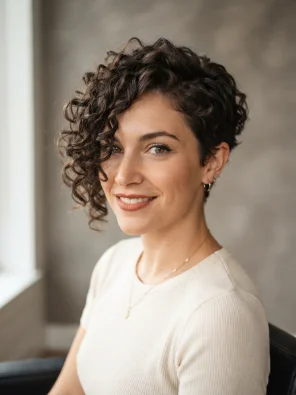
An asymmetrical pixie has more length on one side. The other side stays shorter and closer to the head.
The uneven shape creates movement, even when every curl is not perfectly defined. It can also bring attention to your eyes and cheekbones.
A deep side part makes the difference between the two sides more visible. You can use a small clip when you want to change the shape.
Best for: Loose curls, ringlets, and anyone who wants a bolder style.
Styling tip: Dry the longer section across your forehead or away from your face.
Keep in mind: The cut needs careful shaping. A small amount of uneven growth can change the full look.
How to Choose a Pixie Cut for Your Curl Type
A pixie cut for curly hair should work with more than your curl pattern. You also need to think about strand thickness, hair density, shrinkage, and the way your hair grows at the crown.
Curl pattern describes the shape of your curls. Density means how much hair grows on your scalp. Strand thickness describes how fine or thick each piece of hair feels.
Two people may both have springy curls but need very different cuts. One may have fine, low-density hair that needs crown fullness. The other may have thick, dense hair that needs weight removed from the sides.
| Hair Feature | Helpful Pixie Approach | What to Avoid |
| Fine curls | Keep fullness at the crown | Heavy thinning |
| Thick curls | Remove weight in selected areas | Cutting every area equally short |
| Loose curls | Add soft layers for movement | Too many short layers |
| Tight curls | Plan for dry shrinkage | Choosing length while hair is wet |
| Dry curls | Keep the shape simple | Too many exposed short ends |
Porosity can affect how your hair takes in water and products. It may change your styling routine, but it should not decide the whole haircut.
A good curly hair pixie cut should support your real texture. It should not depend on daily straightening or heavy product to hold its shape.
Which Curly Pixie Cut Suits Your Face Shape?
Face shape can help you decide where to place height, bangs, and side volume. It should not stop you from wearing a style you like.
For a round face, try extra height at the crown with shorter sides. An off-center part can also create a longer line.
An oval face can suit most pixie shapes. You may try short bangs, full curls, or an uneven front.
For a square face, soft curls around the temples can balance a strong jawline. Wispy bangs can also soften the forehead.
A heart-shaped face may suit light bangs or a little more volume near the jaw. This can balance a wider forehead and narrower chin.
For a long face, curly bangs can reduce the look of extra length. Moderate crown volume may work better than a very tall top.
Think about your full look before making a choice. Glasses can change how bangs sit around your eyes. Your forehead length, ear coverage, and usual part also affect the final result.
Bring photos to your stylist, but treat them as a starting point. The placement of volume matters more than following a strict face-shape rule.
How to Style a Short Curly Pixie Without Making It Stiff
A common mistake is using the same amount of product you used on long hair. A pixie has less hair, so too much cream or gel can make the curls flat and greasy.
Start with wet or very damp hair. Water helps spread the product and keeps the curls grouped together.
Use this simple routine:
- Wet your curls or mist dry areas with a spray bottle.
- Apply a small amount of leave-in conditioner.
- Add mousse, gel, or curl cream based on your hair type.
- Shape the front curls with your fingers.
- Air-dry or use a diffuser on low heat.
- Lift the roots after the hair is fully dry.
Fine curls often work well with mousse or foam. These products add hold without too much weight.
Thick curls may need curl cream with a small amount of gel. Apply both in light layers instead of using one large amount.
Tight curls may need more moisture. A light leave-in can soften the hair before you add a holding product.
Try not to touch your curls while they dry. Touching can separate the curl groups and create frizz.
If gel leaves a hard cast, wait until your hair is completely dry. Then gently squeeze the curls to soften them.
You do not need to soak your full head every morning. Mist flat sections, add a tiny amount of product, and reshape them with your fingers.
Useful tools include a spray bottle, diffuser, microfiber towel, small hair pick, wide-tooth comb, and satin pillowcase. Keep your routine simple. The haircut should create most of the shape.
How to Maintain Your Curly Pixie as It Grows
A pixie does not grow evenly in the way it looks. The sides and neckline may lose their shape before the top feels too long.
You may not need a full haircut each time. A small cleanup around the ears or neck can make the whole cut look fresh again.
Bangs may also need attention first. If they start falling into your eyes, your stylist may trim only the front while leaving the rest to grow.
| Growth Stage | Common Change | Helpful Action |
| Early growth | Neckline loses its clean shape | Ask for a small neckline cleanup |
| Mid growth | Sides start looking wider | Change the part or reduce heavy product |
| Longer growth | Top curls feel heavy | Ask for light reshaping |
| Grow-out stage | Front and back look uneven | Use clips, bands, or small twists |
As the hair gets longer, you may need more product. Increase the amount slowly. Adding too much at once can make the curls heavy.
Small clips can hold back a growing front section. A soft headband can control wide sides. You can also use tiny twists when some curls are longer than others.
Keep conditioning your hair even when it is very short. Short hair can still become dry, rough, and hard to shape.
If the outline looks uneven even after styling, you may need a trim. If the shape is good but the curls feel flat, try changing your product or drying method first.
Choose a Curly Pixie That Fits Your Real Routine
Going short can feel like a big step, especially when your curls shrink as they dry. A good pixie should make your natural texture easier to wear, not harder to manage.
Look at your curl pattern, hair density, face-framing needs, and styling time. Then choose a style that fits your normal routine.
You may prefer soft layers, curly bangs, tapered sides, a full crown, or a bold undercut. Each choice comes with its own level of upkeep.
Save two or three styles that match your texture. Take them to a stylist who has experience with curly hair. Talk about shrinkage and final dry length before the first cut.
The best curly hair pixie cut is one that still feels like you. Choose a shape that looks good on wash day and remains easy to manage as your curls grow.
