
20 Curly Hair Curtain Bangs Ideas to Try
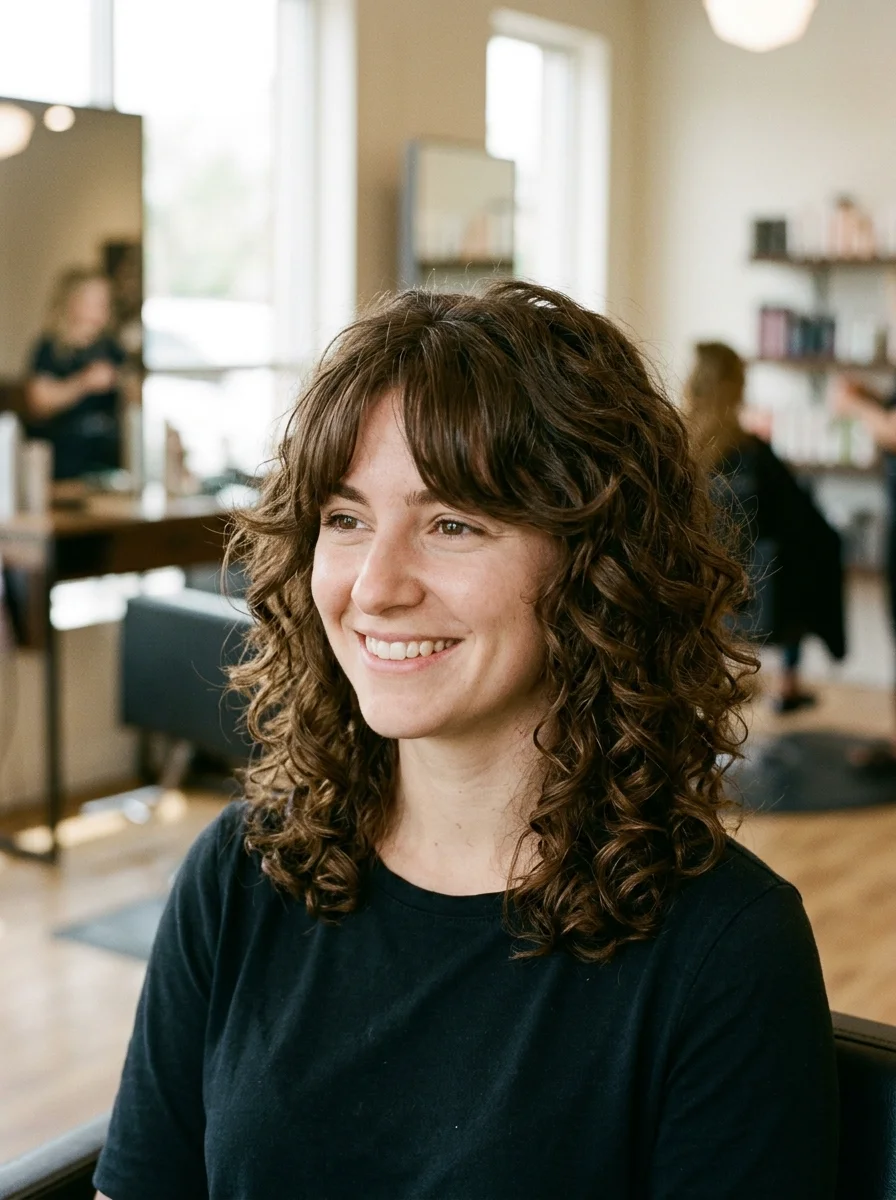
Curtain bangs can frame your face in a soft and flattering way. But cutting them on curly hair needs more care than cutting them on straight hair. Your curls may shrink after drying. Some pieces may spring higher than others. Your natural part can also change how the bangs sit around your forehead. That does not mean you have to avoid bangs. The right curly hair curtain bangs can work with loose waves, defined ringlets, thick curls, and tight coils. The key is choosing a length and shape that match your natural texture. Save the styles that match your curl pattern. Then use them as a starting point for your next haircut. How to Choose Curtain Bangs for Curly Hair The most important choice is not where your bangs sit when wet. It is where the shortest curl will land after your hair dries. Curly hair can rise as it dries. That means bangs that look eye-length when wet may sit closer to your brows once your curls spring back into shape. For this reason, longer curtain bangs for curly hair are often easier for first-time bang wearers. Cheekbone-length pieces give you face framing without the risk of a very short fringe. You can also tuck them behind your ears or pin them back. Eye-level bangs create a more visible curtain shape. They open around the center of the forehead and draw attention to the eyes. Brow-length bangs make a stronger statement. They may also need more frequent trims and daily refreshing. Hair density matters too. A narrow fringe section can look soft and wispy on fine curls. A fuller section may suit thick hair better. However, taking too much hair from the front can create extra bulk around the forehead. Your bangs should also connect with the rest of your haircut. Long side pieces can blend into cheekbone or jaw-length layers. This keeps the fringe from looking separate from the rest of your curls. Your natural part should guide the shape as well. A middle part creates the classic curtain look. An off-center part can work better if you have a cowlick or if your curls naturally fall more heavily to one side. When you visit the salon, ask your stylist where the shortest curl will sit when fully dry. This small question can prevent a much shorter result than you expected. Curly Curtain Bangs with a Middle Part A middle part creates the classic curtain bang shape. The curls open around the center of the forehead and fall toward each side. The part should look soft rather than sharply drawn. Your curls may naturally create a slightly uneven opening, and that is fine. Trying to force perfect symmetry can make the bangs harder to style. Best for: Curls that naturally split near the center. Maintenance: Medium. Styling tip: Use two small clips near the roots while the bangs dry to help hold the center opening. Curly Curtain Bangs with an Updo Curtain bangs can make a bun, ponytail, or claw-clip style feel softer. Leave the front curls and a few side pieces loose. Refresh the bangs separately before putting the rest of your hair up. This can make an older wash day look more polished. The style is practical because the bangs add shape even when most of your hair is tied back. Best for: People who often wear their curls up. Maintenance: Low. Styling tip: Mist only the front section instead of wetting your whole head. Curly Curtain Bangs with Highlights Highlights around the bangs can make your curl pattern easier to see. Lighter pieces catch the light and bring more focus to the face frame. The color does not need to be bold. Fine highlights around selected curls can add enough contrast. Avoid placing very thick color sections across the whole fringe. This may make the bangs look separate from the rest of the hair. Best for: Readers who want more color and dimension. Maintenance: Medium to high. Ask your colorist: “Place fine highlights around a few face-framing curls instead of creating one heavy front section.” Curly Shag with Curtain Bangs A curly shag combines curtain bangs with short crown layers and longer pieces through the sides and ends. The result feels soft, full, and slightly undone. It can bring more movement to curls that feel heavy or flat near the roots. The bangs connect the shorter crown layers with the face frame. This creates a smooth shape from the forehead to the sides of the haircut. Best for: Medium to thick curls that need movement. Maintenance: Medium. Ask your stylist: “Blend my curtain bangs into short crown layers without making the top too short.” Curly Wolf Cut with Curtain Bangs A curly wolf cut has shorter layers around the crown and more length through the back. Curtain bangs soften the front and connect with the layered sides. This haircut creates strong volume around the top of the head. It also gives the ends a lighter, less polished shape. The look can be bold, so it works best if you enjoy visible layers and natural texture. Best for: Medium to thick curls with strong volume. Maintenance: Medium to high. Styling tip: Focus your product near the ends. Too much product at the roots may flatten the crown. Curtain Bangs for Coily Hair Curtain bangs can work beautifully on tight curls and coils. The shape should be planned around the fully dry length. Each coil may shrink in a different way. For this reason, the stylist should shape the fringe one section at a time. Longer side pieces can blend into rounded layers around the face. This creates an open center without forcing the coils into a straight-hair bang shape. Best for: Tight curls, coils, and highly textured hair. Maintenance: Medium. Ask your stylist: “Shape each coil based on where it sits when fully dry.” Curtain Bangs for Wavy-Curly Hair Wavy-curly hair may form waves in some areas and stronger curls in others. Soft curtain bangs … Read more


