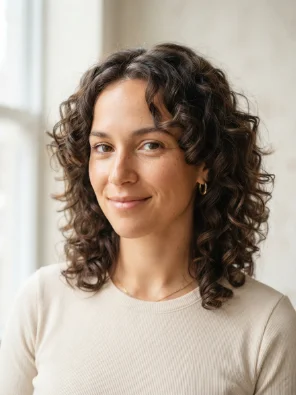
A curly shag haircut can give flat, heavy curls more bounce and shape. But the wrong layers can leave your hair too wide, uneven, or much shorter than you expected.
This is why choosing a shag based on one pretty photo can be risky. Your curl pattern, hair density, current length, and daily routine all affect the final result.
Short layers can lift the crown. They can also make tight curls spring up much higher. Full bangs may frame your face well, but they need more daily care than long face-framing pieces.
The good news is that there is more than one way to wear a shag haircut for curly hair. You can choose a soft shoulder-length shape, a short shag with bangs, or a long cut that keeps most of your length.
What Makes a Curly Shag Different From Other Layered Cuts?
A curly shag is a layered haircut that adds lift near the crown and movement around the face. The upper sections are usually shorter than the lower sections. This creates a loose, full shape instead of one heavy line around the ends.
A normal layered cut can be very soft. The layers may blend into each other with little change in the overall outline.
A shag has more visible shape. The crown often looks fuller. The ends may look lighter, while pieces around the face create movement.
Bangs are common, but they are not required. A curly shag without bangs can use cheekbone or jaw-length pieces to frame the face.
A shag is also different from a wolf cut. A curly wolf cut often has a bigger change between the short top and long lower section. It can look more separated and bold.
A curly mullet has an even clearer length change. The front and sides are shorter, while the back stays longer.
The best choice depends on how much volume and contrast you want.
| Haircut | Main Shape | Layering | Overall Look |
| Curly shag | Rounded or softly tapered | Strong around the crown and face | Full, soft, and textured |
| Curly wolf cut | Full top with narrower ends | Bigger change from top to bottom | Bold and separated |
| Curly mullet | Short front with a longer back | Strong length change | Sharp and edgy |
| Layered curly cut | Varies by style | Soft or blended | Less dramatic |
Tight-Curl Shag With Face-Framing Layers

Tight curls can create a beautiful shag, but the shortest pieces must be placed with care.
Face-framing curls can begin around the brow, cheekbone, or jaw. The best starting point depends on how much your curls shrink.
The back and sides may stay longer to balance the volume at the top.
This cut can be worn with short bangs or an open forehead.
Best for: Tight curls that need shape around the face
Ask your stylist for: Face-framing pieces checked while the curls sit naturally
Styling effort: Medium
Keep in mind: Small changes in wet length can become larger changes when dry.
Soft Curly Shag for Fine Hair

A curly shag for fine hair needs soft layers. Too many short pieces can make the lower half look thin.
The goal is to create lift around the crown while keeping a full edge near the bottom. Longer layers often work better than heavy, choppy layers.
Light mousse can add body without weighing down the curls.
This style can work at chin, shoulder, or collarbone length.
Best for: Fine curls that look flat but lose fullness easily
Ask your stylist for: A few longer crown layers with a strong lower edge
Styling effort: Low to medium
Keep in mind: Heavy thinning may make fine ends look sparse.
Side-Parted Curly Shag

A side-parted curly shag creates uneven volume in a planned way. One side looks fuller, while the longer fringe sweeps across the forehead.
This option is useful if you do not like a centre part. It can also work well with a natural side part or cowlick.
The longer front pieces blend into the cheek and jaw layers.
Tell your stylist where you usually part your hair before the cutting starts.
Best for: Curls that naturally fall to one side
Ask your stylist for: Layers shaped around your normal part
Styling effort: Low to medium
Keep in mind: Changing the part later may change the balance of the cut.
Short Curly Shag With Full Bangs

A short curly shag haircut gives you strong shape and plenty of crown volume. The length may sit between the ears and the neck.
Full curly bangs cover most of the forehead and blend into the side layers. This gives the haircut a soft, rounded finish.
The style works best if you like wearing your curls down. Short side pieces may fall out of clips and ponytails.
Bangs also need regular styling. You may need to wet and reshape them between wash days.
Best for: Short curls that need height and face framing
Ask your stylist for: Full bangs cut long enough to allow for shrinkage
Styling effort: Medium
Keep in mind: Bangs can spring much higher after they dry.
Rounded Curly Shag for Thick Hair
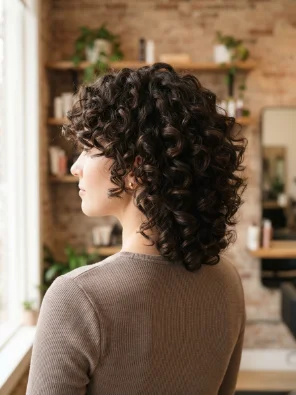
Thick curly hair can feel heavy and hard to shape. A rounded curly shag removes selected weight while keeping the outside shape full.
The crown has lift, but the sides do not need to become huge. Internal layers can reduce bulk without making the ends look thin.
This cut works well for dense curls that form a triangle shape when left at one length.
The exact placement of the layers matters more than the number of layers.
Best for: Thick curls that feel bulky or bottom-heavy
Ask your stylist for: Weight removal inside the cut with solid-looking ends
Styling effort: Medium
Keep in mind: Random thinning can cause frizz and uneven curl groups.
Rounded Coily Shag

A rounded coily shag creates a clear shape from every angle. It uses lift at the top, balanced width at the sides, and a soft taper near the ends.
The haircut should work with the natural direction of the coils. It should not depend on constant stretching or heat styling.
A soft fringe can be added, but it needs enough length for shrinkage.
The side and back views matter as much as the front.
Best for: Coily hair that needs a fresh outline and balanced volume
Ask your stylist for: A rounded shape with a controlled taper and full edges
Styling effort: Low to medium
Keep in mind: Bring photos that show the front, sides, and back.
Loose-Curl Shag With Long Layers

Loose curls and strong waves may need longer layers to keep the haircut soft. Very short layers can make the top look puffy while the ends stay flat.
A loose-curl shag uses connected layers that move from the crown into the lower length.
The result looks relaxed rather than choppy. It can also be easy to air-dry when the cut follows the natural wave pattern.
Long curtain bangs can add more shape without creating a heavy fringe.
Best for: Strong waves and loose spiral curls
Ask your stylist for: Long, connected layers with gentle crown lift
Styling effort: Low
Keep in mind: Layers that are too long may hide the shag shape.
Long Curly Shag With Curtain Bangs

A long curly shag haircut is a good choice when you want movement but do not want a major chop.
The longest pieces stay below the shoulders. Shorter layers around the crown, cheeks, and jaw stop the hair from hanging in one heavy shape.
Curtain bangs part near the centre and become longer at the sides. They blend into the rest of the cut and can often be tucked back.
This style can still work with ponytails and loose updos.
Best for: Long, heavy curls that need more movement
Ask your stylist for: Long curtain bangs with face-framing layers that blend into the length
Styling effort: Low to medium
Keep in mind: Short crown layers may fall out when your hair is tied back.
Curly Wolf-Shag Haircut

A curly wolf-shag has a shag base with a stronger change between the top and bottom.
The crown is shorter and fuller. The lower section stays longer and may look more separated.
This style is bolder than a classic shag. It works well if you want visible texture and do not mind shorter pieces around the face.
The ends still need enough fullness to stop the haircut from looking weak.
Best for: Medium or long curls that need a bold shape
Ask your stylist for: Strong crown layers with enough lower weight to keep the cut balanced
Styling effort: Medium
Keep in mind: A bigger length change creates a sharper wolf-cut effect.
Curly Shullet With Longer Back Layers

A curly shullet mixes the shape of a shag with the longer back of a mullet.
The front and side layers stay short and textured. The back remains clearly longer.
This is the boldest option on the list. It creates a strong side view and works best when you want the length difference to be easy to see.
Bring several reference photos because shullets can vary a lot.
Best for: Anyone who wants an edgy, high-contrast cut
Ask your stylist for: Short front layers with a clear but balanced longer back
Styling effort: Medium to high
Keep in mind: This is closer to a mullet than a classic shag.
Curly Shag Without Bangs

You do not need bangs to get a clear shag shape. A curly shag haircut without bangs uses face-framing layers instead.
The shortest pieces may begin near the cheekbones or jaw. This keeps the forehead open and gives you more freedom to change your part.
It is also a smart option if you have a strong cowlick or do not want to style a fringe each morning.
The cut can work at short, medium, or long lengths.
Best for: Anyone who wants a lower-care shag
Ask your stylist for: Face-framing layers that begin at a safe length after shrinkage
Styling effort: Low
Keep in mind: Longer front layers create a softer shag effect.
Curly Shag With Micro Bangs

Micro bangs sit above the eyebrows. On curly hair, they create a bold and playful look.
This style works best when the rest of the cut also has clear, short layers. A full crown and textured sides help the small fringe feel connected to the haircut.
Micro bangs show more of the forehead than full bangs. They can also draw attention to the eyes and brows.
The length must be planned with care because curls rise as they dry.
Best for: People who want a strong, creative haircut
Ask your stylist for: Short bangs checked in their natural dry position
Styling effort: Medium to high
Keep in mind: Cutting them slightly too short can make a big difference.
Curly Shag With Bottleneck Bangs

Bottleneck bangs are shorter in the centre and longer near the sides. Their curved shape opens the face while still giving you a clear fringe.
This curly shag haircut with bangs works well when full, straight-across bangs feel too heavy.
The longer side pieces blend into cheekbone layers. This creates a smooth link between the fringe and the rest of the haircut.
The final shape can look soft and relaxed rather than sharp.
Best for: Curls that need light face framing
Ask your stylist for: A curved fringe that is shorter in the centre and longer at the edges
Styling effort: Medium
Keep in mind: The centre section may need a quick refresh each morning.
Classic Shoulder-Length Curly Shag

The classic shoulder-length curly shag is a safe first choice. It adds movement without taking your hair very short.
Rounded layers lift the crown and reduce heaviness near the ends. The lower layers stay long enough to keep the shape balanced.
This cut works well for loose curls, medium curls, and mixed curl patterns. It can also help hair that looks flat at the top but wide near the shoulders.
You can wear it with soft bangs or keep the forehead open.
Best for: Medium-length curls that feel heavy or flat
Ask your stylist for: Rounded crown layers with enough weight left around the ends
Styling effort: Low to medium
Keep in mind: Very short top layers can create more height than you expect.
Chin-Length Curly Shag Bob

A curly shag bob gives a normal bob more movement. Instead of one thick line at the bottom, it uses soft internal layers to shape the curls.
The length usually falls around the chin or jaw. The crown stays light, while the lower edge keeps enough weight to stop the cut from looking too round.
This option can help curls that become bulky when cut to one length.
You can pair it with side-swept bangs, short bangs, or no bangs.
Best for: Short curls that look wide or heavy in a blunt bob
Ask your stylist for: Shaggy internal layers with a fuller lower edge
Styling effort: Medium
Keep in mind: Removing too much weight can make the ends look weak.
Which Curly Shag Fits Your Length and Routine?
Use this table to narrow down your choices before booking a salon visit.
| Haircut | Best Length | Main Benefit | Bangs | Styling Level |
| Classic shag | Medium | Balanced shape | Optional | Low to medium |
| Short shag | Short | Strong crown lift | Usually | Medium |
| Shag bob | Short | Lighter bob shape | Optional | Medium |
| Long shag | Long | Movement with less length loss | Curtain | Low |
| No-bang shag | Any | Easy grow-out | No | Low |
| Wolf-shag | Medium to long | Bold texture | Optional | Medium |
| Shullet | Short to medium | Strong length contrast | Usually | Medium to high |
Save two or three styles that match your current length. Then compare the bang type and shortest layer.
How to Choose a Curly Shag That Works With Your Hair
The shortest layer controls much of the final shape. Short top layers create more lift. Longer top layers create a softer result.
Before choosing your cut, look at four parts of your hair and routine.
Check How Much Your Curls Shrink
Tight curls and coils may look much shorter after they dry. A bang that looks long when wet may sit above the eyebrows once dry.
Ask your stylist to plan the shortest sections with shrinkage in mind.
Loose curls may not rise as much. They may need shorter layers before the shag shape becomes clear.
Protect Fullness in Fine Hair
Fine curly hair needs fewer layers. Too much weight removal can make the lower edge look thin.
Longer crown layers can add movement while protecting fullness.
Remove Weight Carefully From Thick Hair
Thick curls may need weight removed from inside the shape. This can help the top lift and stop the bottom from spreading too wide.
The ends should still look full. Thin, weak ends can make the haircut seem damaged even when the hair is healthy.
Think About Your Daily Routine
A haircut can look great in a photo and still be wrong for your normal day.
Ask yourself:
- Do you air-dry or use a diffuser?
- Will you style bangs every morning?
- Do you need to tie back all your hair?
- Do you like volume at the top or width at the sides?
- How often can you return for shaping?
A long shag without bangs usually needs less daily work. A short shag with a full fringe may need more frequent wetting and reshaping.
How to Style a Curly Shag Without Hiding the Layers
A good shag should support your curls before you add much product. Styling should define the layers without making the crown flat.
1. Start With Wet or Damp Hair
Apply leave-in conditioner to wet or damp curls. Focus on dry areas, but avoid using too much near the crown.
Heavy product can pull short top layers down.
2. Add Curl Cream or Mousse
Use curl cream when your hair needs moisture and softer hold.
Use mousse when you want light volume. Fine hair may respond better to mousse because it often feels lighter.
3. Add Gel Where You Need More Hold
Gel can help curls keep their shape. Apply it in sections if your hair is thick.
You do not need the same amount everywhere. Bangs and short crown pieces may need less product than long lower sections.
4. Scrunch Without Stretching the Layers
Scrunch from the ends upward. Avoid pulling your curls straight while adding product.
Stretching can hide the shorter layers until the hair dries.
5. Style the Bangs First
Bangs dry fast. Shape them before the rest of your hair begins to set.
Place them where you want them to sit. You can finger-coil a few pieces if they separate or point in the wrong direction.
6. Air-Dry or Use a Diffuser
Air-drying gives a softer finish. A diffuser can create more root lift and speed up drying.
Keep the heat and air level gentle. Strong airflow may cause frizz before the curls set.
7. Wait Before Fluffing
Let the hair dry before separating curls or lifting the roots.
Once dry, use your fingers or a hair pick to lift the crown gently. Do not drag the pick through the full length.
Avoid brushing dry curls. This can break up curl groups and create more frizz.
For a next-day refresh, wet flat areas with a spray bottle. Add a very small amount of curl product and reshape the curls with your fingers.
How to Maintain a Curly Shag as It Grows
Your shag may need reshaping when the crown becomes flat and the lower section starts feeling heavy.
Bangs can lose their shape before the rest of the haircut. They may need a small salon trim between full appointments.
Avoid cutting random curls at home. One curl may sit longer because of its pattern rather than its true length. Trimming separate pieces can slowly change the full shape.
Protect your curls at night with a loose pineapple, satin bonnet, or satin pillowcase. This can reduce friction and help the crown keep its volume.
Your trim schedule depends on the length and shape.
A short shag or full fringe may need earlier care. A long shag without bangs may hold its shape for more time.
Look for these signs instead of following one fixed date:
| Sign | What It May Mean |
| Crown sits flat | The top layers may have grown too long |
| Ends look thin | Too much weight may have been removed |
| Bottom looks too wide | The lower section may need reshaping |
| Bangs cover your eyes | The fringe may need a small trim |
| Curls stop grouping well | Buildup, dryness, or grown-out layers may be the cause |
Choose Shape Before Following a Trend
The best shag is the one that works with your curls and your normal routine.
Think about your curl pattern, density, current length, and desired volume. Decide whether you want bangs and how much daily styling feels realistic.
Save two or three photos that match your hair type. Bring them to a stylist who has experience cutting curls.
Be clear about the shortest layer, fringe length, and how much fullness you want to keep near the ends.
The right curly shag haircut should give your curls shape and movement without making your routine harder.
