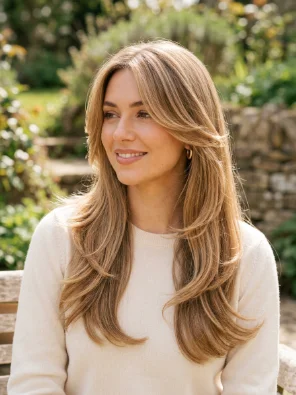
Long hair can look beautiful. But without shape, it can also feel heavy, flat, and hard to style.
If you want to keep your length but add movement, these layered haircuts for long hair can help you find the right idea before your next salon visit.
The right layers can make your hair feel lighter. They can frame your face, add volume, and help your hair move better. But the wrong layers can make your ends look thin or uneven.
Why Layered Haircuts for Long Hair Work So Well
Layered haircuts for long hair work because they add shape without taking away all your length.
One-length long hair can look full, but it can also feel heavy. The ends may sit in one solid block. This can make your hair look flat at the roots and bulky at the bottom.
Layers help break up that weight.
They can add lift around the face. They can make waves look softer. They can also help thick hair feel easier to manage.
But layers are not the same for everyone.
Soft layers give a natural look. Choppy layers give more texture. Feathered layers feel light and airy. Face-framing layers bring attention to the front of your haircut.
The best layers should work with your natural hair. They should make styling easier, not harder.
If your hair is fine, you may need fewer layers. If your hair is thick, you may need more shape inside the hair. If your hair is curly, your stylist needs to think about shrinkage before cutting.
Good layers are planned. Random layers are where problems start.
Wispy Layers

Wispy layers are light, thin, and delicate. They add small movement through the ends without making the haircut look heavy.
Best for: Fine to medium hair.
Ask your stylist for:
“Add very soft wispy layers, but keep my ends looking full.”
Styling tip:
Use a light leave-in spray or smoothing cream. Heavy products can flatten this cut.
Wispy layers need balance. Too many can make fine hair look sparse.
Wavy Beach Layers

Wavy beach layers are soft and relaxed.
They help natural waves move without looking too styled. The layers should blend well and avoid removing too much weight.
Best for: Wavy hair, especially loose to medium waves.
Ask your stylist for:
“Add soft long layers that bring out my natural wave pattern.”
Styling tip:
Use leave-in conditioner, curl cream, or sea-salt spray depending on how dry your hair feels.
This cut is great if you want easy movement with a natural finish.
V-Cut Layers

A V-cut forms a point at the back.
The center back section is the longest. The sides are shorter, creating a V shape.
Best for: Very long and thick hair.
Ask your stylist for:
“Create a soft V-shape with cascading layers.”
Styling tip:
Loose waves help show the shape of this cut.
Be careful with this haircut if your ends are already thin. A strong V shape can make the ends look thinner.
U-Cut Layers

A U-cut keeps the back of the hair full.
The ends form a soft U shape instead of a straight line. This makes the haircut look smooth and rounded.
Layers add movement, but they do not remove too much weight. This is helpful if you hate thin ends.
Curtain bangs complete the shape by adding softness around the face.
This cut works well for medium to thick hair.
Ask your stylist for a soft U-shape with light layers and face-framing bangs.
Best for: fuller ends, thick hair, soft shape
Maintenance level: low to medium
Step Layers
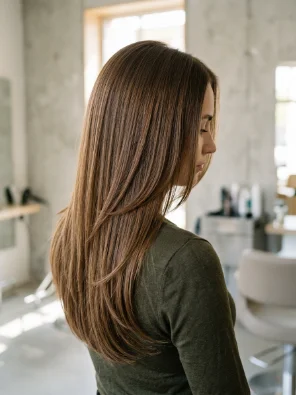
Step layers are more visible than soft long layers.
They create clear sections in the hair. When done well, they can add strong shape and movement.
Best for: Thick, straight hair.
Ask your stylist for:
“Add step layers, but keep them blended enough so they do not look too harsh.”
Styling tip:
Straighten or blow-dry the hair smooth to show the shape.
This cut needs a skilled stylist. Bad step layers can look disconnected.
Shaggy Long Layers

Shaggy long layers have more texture.
They can add movement around the crown, face, and ends. The result feels casual and undone.
Best for: Wavy hair, thick hair, or people who like a relaxed style.
Ask your stylist for:
“Give me a soft long shag, but keep my length.”
Styling tip:
Use texture spray or styling cream to bring out the layers.
This cut works best when you like a slightly messy finish.
Long Wolf Cut

A long wolf cut is bolder than a soft shag.
It has more volume near the top and lighter ends. It can give long hair a cool, textured shape.
Best for: Thick, wavy, or trend-focused hair.
Ask your stylist for:
“Create a long wolf cut with blended layers, not harsh steps.”
Styling tip:
Scrunch in styling cream or texture spray while the hair is damp.
This cut needs some effort. Without styling, it can look uneven or too messy.
short haircuts for older women
Long Layers for Thick Hair

Thick long hair can feel heavy.
Long layers can remove bulk and help the hair move better. Internal shaping can also make the hair easier to blow-dry and style.
Best for: Dense, heavy, long hair.
Ask your stylist for:
“Remove weight with long layers and internal shaping, but keep my ends healthy.”
Styling tip:
Use a smoothing cream before blow-drying to control puffiness.
The key is to remove weight without making the ends look too thin.
Long Layers for Fine Hair

Fine hair needs careful layering.
The goal is to add lift without removing too much fullness. Heavy layers can make fine hair look thinner at the bottom.
Best for: Fine or thin long hair.
Ask your stylist for:
“Keep my baseline full and add minimal long layers for movement.”
Styling tip:
Use lightweight mousse at the roots and avoid heavy oils near the ends.
This cut should be soft. The bottom of the hair should still look strong.
short haircuts for women with thin hair
Invisible Layers

Invisible layers are hidden inside the hair.
You may not see clear layer lines, but you will feel more movement. The hair still looks full from the outside.
Best for: People who want natural volume without obvious layers.
Ask your stylist for:
“Add invisible layers so my hair moves but still looks full.”
Styling tip:
Use a light mousse or root spray if you want more lift.
This is one of the best choices if you want a clean, simple, low-maintenance cut.
Feathered Layers

Feathered layers are soft, light, and airy.
They usually flick away from the face and blend into the rest of the hair. They are less sharp than choppy layers.
Best for: Straight or slightly wavy hair.
Ask your stylist for:
“Add feathered layers that feel soft and blended.”
Styling tip:
Use a round brush to turn the ends away from your face.
This cut works well if you want movement without a messy or edgy look.
Face-Framing Layers for Long Hair

Face-framing layers are shorter pieces around the front of your hair.
They can start near the cheekbones, jawline, or collarbone. These layers help the front of your haircut look softer and more styled.
Best for: Anyone who wants a visible change without cutting much length.
Ask your stylist for:
“Add face-framing layers that blend into the rest of my hair.”
Styling tip:
Blow the front pieces away from your face with a round brush.
This cut is a strong choice if your long hair feels plain around the front.
Curtain Bangs with Long Layers

Curtain bangs open in the middle or slightly off-center.
When they blend into long layers, they create a soft frame around the face. They are easier to grow out than blunt bangs.
Best for: People who want bangs without a very short fringe.
Ask your stylist for:
“Cut curtain bangs that blend into long face-framing layers.”
Styling tip:
Blow-dry the bangs away from the face, then let them fall naturally.
This is a good option if you want a trendy style that still feels soft.
Curly Layered Long Hair

Curly layered long hair needs shape.
Without layers, long curly hair can become heavy at the bottom. This can pull curls down and make the top look flat.
Best for: Curly and coily long hair.
Ask your stylist for:
“Cut layers based on my curl pattern and shrinkage.”
Styling tip:
Use curl cream, then dry with a diffuser or air-dry.
Curly hair may look shorter after it dries. That is why your stylist should plan for shrinkage before cutting.
Classic Long Layers

Classic long layers are soft, simple, and easy to wear.
The layers usually start below the chin or around the collarbone. They blend into the rest of the hair, so the cut does not look too sharp.
Best for: Straight, wavy, or medium-density hair.
Ask your stylist for:
“Keep my length, but add soft long layers for movement.”
Styling tip:
Use a round brush at the ends to make the layers bend softly.
This is a safe choice if you want a change but do not want a bold haircut.
Choppy Layers

Choppy layers are piecey and textured.
They give long hair a casual, modern look. They work best when the hair has enough thickness to support the cut.
Best for: Thick or wavy long hair.
Ask your stylist for:
“Add soft choppy layers for texture, but do not thin out my ends too much.”
Styling tip:
Use texture spray and shape the ends with your fingers.
This cut is good if you want movement that looks less polished.
Butterfly Layers

Butterfly layers have shorter layers on top and longer layers underneath.
This gives the hair a bouncy look. It can make long hair look full, shaped, and styled.
Best for: Medium to thick long hair.
Ask your stylist for:
“Create butterfly layers with shorter face-framing pieces and longer blended layers underneath.”
Styling tip:
Use a blow-dry brush, large rollers, or a round brush.
This cut can look great, but it is not perfect for everyone. If your hair is very fine, ask for a softer version so the ends do not look thin.
90s Blowout Layers

90s blowout layers are big, bouncy, and full of movement.
The layers are cut to move away from the face and lift at the roots. This style works best when the hair is blown out.
Best for: Medium to thick hair.
Ask your stylist for:
“Add long, bouncy layers that work with a round-brush blowout.”
Styling tip:
Use mousse, large rollers, or a blow-dry brush.
This cut is great if you like polished hair with volume.
Best Layered Haircuts for Long Hair by Face Shape
Face-framing layers for long hair can change where the eye lands. The goal is not to hide your face. The goal is to choose layers that sit in a place you like.
Use this table as a simple guide.
| Face Shape | Best Layered Haircut | Why It Works |
| Round | Long face-framing layers | Adds soft length around the face |
| Oval | Classic layers, butterfly layers | Works with many layer placements |
| Square | Feathered layers, curtain bangs | Adds softness near the jawline |
| Heart | Curtain bangs, cheekbone layers | Adds shape around the upper face |
| Long | Curtain bangs, 90s layers | Adds width and movement |
If your face is round, layers that start below the chin often work well. Very short front pieces may sit too high.
If your face is square, soft layers around the jawline can make the haircut feel lighter.
If your face is long, curtain bangs or cheekbone layers can add shape around the front.
Still, face shape is just one part of the choice. Your hair type matters just as much.
Best Layered Hairstyles for Long Hair by Hair Type
The same haircut can look very different on different hair types.
A butterfly cut on thick hair may look full and bouncy. The same cut on fine hair may look too thin if the layers are too short.
Use this table before choosing your style.
| Hair Type | Best Layers | Avoid |
| Fine hair | Subtle long layers, invisible layers | Heavy short layers |
| Thick hair | Butterfly layers, V-cut, internal layers | One-length heaviness |
| Straight hair | Feathered, classic, step layers | Harsh unblended layers |
| Wavy hair | Beach layers, soft shag, long layers | Too much thinning |
| Curly hair | Curl-shaped layers | Cuts that ignore shrinkage |
How to Style Layered Haircuts for Long Hair
Layered hairstyles for long hair look best when the styling matches the cut.
You do not need a hard routine. But you do need the right method.
For volume, start at the roots. Apply a light mousse, then blow-dry the roots upward. Large rollers can help the top layers stay lifted.
For soft waves, use a large curling iron. Curl the front pieces away from your face. Let the curls cool, then brush them out gently.
For natural waves, use leave-in conditioner or curl cream. Scrunch the hair while it is damp. Let it air-dry or use a diffuser.
For face-framing layers, style the front first. Use a round brush or blow-dry brush. Pull the front pieces away from your face, then let them fall.
A few useful tools include:
- Round brush
- Blow-dry brush
- Wide-tooth comb
- Heat protectant
- Light mousse
- Texture spray
- Curl cream
- Large rollers
Do not use too much product. Heavy products can make long layers fall flat.
The best styling routine is one you can repeat.
Maintenance Tips for Long Layered Haircuts
Long layered haircuts grow out better than short cuts, but they still need care. Most people should trim long layers every 8 to 12 weeks. Your exact timing depends on your hair growth, ends, and layer shape.
Face-framing pieces may need a trim sooner. Curtain bangs also need more upkeep than back layers. Use conditioner often, especially on the ends. Long hair is older at the bottom, so it can get dry faster.
If you use heat tools, use heat protectant each time. This helps reduce dryness and breakage.
Be careful with thinning. Some people ask for too much weight removal because their hair feels heavy. But too much thinning can make the ends look weak.
Here is the simple rule:
Remove weight where needed. Keep the ends healthy.
That is how long layers stay full, soft, and easy to style.
Final Thoughts
Long layers can refresh your hair without a major cut. They can add movement, reduce heaviness, and make long hair feel easier to style.
But the best cut depends on your hair type, face shape, density, and daily routine.
Save your top three styles before your salon visit. Then ask your stylist which one works best for your real hair.
