Long hair can look pretty, but it can also feel heavy, flat, or boring.
You may want a fresh haircut, but you do not want to lose your length. You may also want bangs, but that can feel risky. What if they are too short? What if they do not suit your face? What if the layers make your ends look thin?
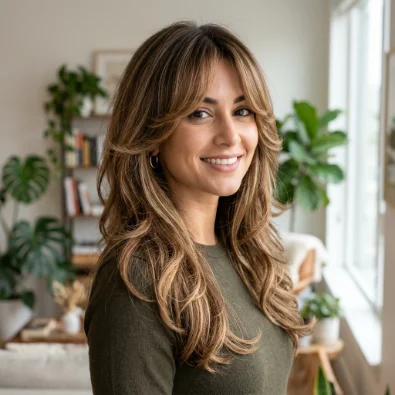
A long butterfly cut with bangs can solve those problems when it is done the right way.
This haircut keeps the length long while adding shorter layers around your face. The bangs help frame your features. The layers add movement, shape, and softness.
But there is one thing you need to know.
Not every butterfly cut looks the same. The best version depends on your bang shape, layer placement, hair thickness, face shape, and styling routine.
What Is a Long Butterfly Cut with Bangs?
A long butterfly cut with bangs is a layered haircut that keeps your hair long while adding shorter pieces around the face.
The shorter front layers create shape. The longer back layers keep your length. The bangs sit at the front and blend into the side layers.
That blend is what makes the haircut work.
If the bangs are too separate, the cut can look uneven. If the layers are too heavy, the ends can look thin. If the front pieces are too short, the cut may feel harder to style.
A butterfly haircut with bangs is usually softer than a shag cut. It is also less edgy than a wolf cut. It gives long hair more bounce without making the whole haircut look messy.
This cut works best when the front layers move away from your face. That is why many people style it with a round brush, blow dryer, or large rollers.
Still, you do not need a perfect blowout every day. You just need the right shape for your hair.
Airy Face-Framing Bangs

Airy face-framing bangs are light and soft.
They do not sit heavily on your forehead. They also blend easily into the butterfly layers.
This style is good if you want a gentle change. It works well for medium hair density and soft styling routines.
Arched Bangs

Arched bangs are shorter in the middle and longer near the sides.
This shape frames your forehead without looking too blunt. It also blends well into cheekbone layers.
This style works well if you want bangs that feel shaped but still soft. Ask your stylist for a light arch that connects into the side pieces.
Cheekbone Bangs

Cheekbone bangs stop near the cheek area.
They draw attention to the middle of your face and connect well with butterfly layers. This gives the haircut a soft, lifted look.
This style is good if you want shape without short bangs. Ask your stylist to place the first layer near your cheekbones.
Curved Bangs

Curved bangs follow the natural shape of your forehead.
They look softer than blunt bangs and cleaner than messy bangs. This makes them a good choice if you want a polished but gentle look.
The curve should blend into the side layers. Ask your stylist to avoid a hard line at the edges.
Flipped-Out Bangs
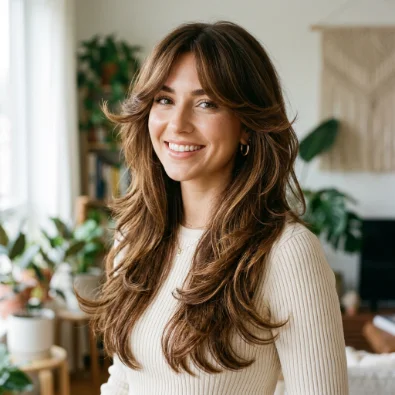
This look is all about the finish.
The bangs and front layers flip away from your face. That gives the haircut a soft, bouncy shape.
You can style it with a round brush, hot brush, or large rollers. Ask your stylist for front layers that are long enough to bend outward.
Heavy Crown Layers

Heavy crown layers add lift near the top of your head.
This can help long hair look less flat. It works best if your hair is thick enough to handle more layers.
The bangs should connect with the crown layers so the shape feels balanced. Avoid this style if your hair is very fine.
Invisible Layers and Bangs

Invisible layers add shape without looking too obvious.
This is a good choice if you want a natural haircut. The layers move, but they do not look sharp or choppy.
Pair this with soft bangs for a simple, easy look. Ask your stylist for blended layers that keep the ends full.
Jawline Bangs

Jawline bangs are longer and easier to manage.
They frame the lower part of your face and blend into the longer layers. This is one of the safest options if you are trying bangs for the first time.
You can wear them parted, side-swept, or tucked back. Ask for soft jawline pieces that do not feel too thick.
Light Crown Volume

This version adds light lift near the crown.
It is not as heavy as full crown layering. It gives flat long hair a bit more height without making the ends look too thin.
This is a good middle option. Ask for soft lift at the crown and longer layers through the bottom.
Long Side Pieces

This cut keeps longer pieces around the sides of your face.
The bangs stay soft in the front, while the side pieces connect to the layers. This gives your face a gentle frame.
This is a strong option if you want movement but do not want the front too short.
Low-Maintenance Grown-Out Bangs

Grown-out bangs sit near the cheekbones or jawline.
They are easy to pin back, tuck away, or part in the middle. They also need fewer trims than short bangs.
This is the best option if you want the butterfly shape but do not want high upkeep. Ask for longer bangs that blend into the face frame.
Rounded Front Layers

Rounded front layers create a smooth frame around your face.
The bangs curve into the side pieces, and the layers sit softly around the cheeks and jaw. This gives the haircut a balanced shape.
This style works well if you want a soft, clean look without sharp layers.
Salon Blowout Bangs

This style is made for volume.
The bangs are cut to bend with a round brush. The front layers are shaped to roll away from the face.
This is a good choice if you like polished hair. Ask your stylist for bangs and layers that work with a blowout, not flat styling.
Soft Blended Fringe

A soft blended fringe connects smoothly into the front layers.
There is no hard break between the bangs and the rest of the haircut. This makes the style look natural and easy.
This is a good choice if you want bangs but do not want them to stand out too much.
Soft Razored Bangs

Soft razored bangs have light ends.
They can make the front of your haircut feel airy instead of heavy. This works best on medium or thick hair.
Be careful if your hair is fine. Too much razor cutting can make the bangs look weak. Ask for soft texture, not thin pieces.
Soft Shaggy Bangs

Soft shaggy bangs make the haircut feel relaxed.
They are textured but not too choppy. This gives your long butterfly cut a casual look.
This style works well if you do not want perfect hair every day. Ask for soft texture that still blends into the side layers.
Split Bangs

Split bangs open near the center.
They give light forehead coverage but still keep your face open. This makes them easier to wear than full bangs.
This style is a good choice if you want bangs without a heavy fringe. Ask for split bangs that blend into your first face-framing layer.
Swoopy Front Layers

This version puts the focus on the front layers.
The bangs blend into large, swoopy pieces that move away from your face. The result is soft, bouncy, and face-framing.
This style works best if you like blowouts. Ask for front layers that start near the cheekbones or chin.
U-Shaped Ends

U-shaped ends make the back of your hair look soft and full.
The front layers and bangs add shape, while the back keeps a smooth curve. This is a good choice if you want a pretty shape from behind.
Ask your stylist to keep the ends full and avoid cutting too much weight out.
V-Shaped Ends

V-shaped ends make the back of the hair look sharper.
This gives long hair more structure while keeping the front soft. The bangs and face-framing layers balance the pointed shape at the back.
This works best if your hair is medium to thick. Fine hair may look thinner with a strong V shape.
How to Choose the Right Long Butterfly Cut with Bangs
Choose your bang length before you choose the full haircut.
That one choice changes the whole style.
Shorter bangs give more drama. Longer bangs are easier to grow out. Cheekbone and jawline bangs are safer if you are nervous.
Then choose your layer shape.
If your hair is thick, you can handle more layers. If your hair is fine, keep the layers soft. If your hair is wavy, ask for layers that support your natural movement.
Use this quick guide.
| If You Want | Choose This |
| Easy grow-out | Jawline bangs |
| More face shape | Cheekbone bangs |
| More volume | Crown layers |
| Softer look | Curved bangs |
| Bolder shape | Arched bangs |
| Less styling | Grown-out bangs |
Also be honest about your routine.
If you do not style your hair often, do not choose a cut that needs a daily blowout. Pick longer bangs and soft layers instead.
If you enjoy styling, you can choose flipped-out bangs, crown volume, or salon blowout layers.
How to Ask Your Stylist for This Haircut
Do not only say, “I want a butterfly cut.”
That can mean different things to different stylists. You need to be more clear.
Bring two or three photos. Choose photos with hair that looks close to yours. If your hair is fine and straight, do not only bring photos of thick, styled hair.
Tell your stylist where you want the bangs to fall.
You can choose:
- Brows
- Cheekbones
- Jawline
- Chin
- Collarbone
Also explain how much length you want to keep.
Here is a simple script you can use:
“I want a long butterfly cut with bangs. Please keep my length, add soft face-framing layers, and make the bangs blend into the front layers. I want the shortest pieces to start around my cheekbones or jawline.”
Do not say:
“Just give me layers.”
That is too vague. Layers can be soft, heavy, short, long, choppy, or blended.
The more clear you are, the better your result will be.
How to Style a Long Butterfly Cut with Bangs at Home
This haircut looks best when the bangs and front layers have shape.
That does not mean you need perfect hair every day. But the front pieces should not sit flat.
Quick Styling Routine
- Apply heat protectant.
- Blow-dry your bangs first.
- Use a round brush on the front layers.
- Roll the front pieces away from your face.
- Let the hair cool before touching it.
- Finish with light texture spray.
This can take 15 to 25 minutes, depending on your hair length and thickness.
Heatless Styling Routine
- Add light styling cream to damp hair.
- Twist the front layers away from your face.
- Use large rollers on the bangs.
- Let the hair set.
- Shape the front pieces with your fingers.
This works best if your bangs are longer. Short bangs usually need more direct styling.
Best Products by Hair Type
| Hair Type | Product to Try |
| Fine hair | Volumizing mousse |
| Thick hair | Smoothing cream |
| Wavy hair | Light curl cream |
| Straight hair | Root spray |
| Frizzy hair | Anti-frizz serum |
Use less product than you think. Too much product can make the layers fall flat.
How to Maintain a Long Butterfly Cut with Bangs
The bangs need care first.
They grow faster than the rest of the haircut seems to change. Once they fall into your eyes or lose shape, the whole style can look messy.
Use this trim guide.
| Hair Area | Trim Timing |
| Bangs | Every 3 to 6 weeks |
| Face-framing layers | Every 6 to 8 weeks |
| Full haircut shape | Every 8 to 12 weeks |
| Ends | As needed |
If your bangs are long, you can wait longer between trims. If your bangs are short or full, you may need trims more often.
The front layers also need upkeep. If they stop flipping or blending, ask your stylist to refresh the face frame.
Do not keep adding more layers every time. That can make the ends thin. Sometimes you only need a small trim around the front.
Final Thoughts
A long butterfly cut with bangs can make long hair feel lighter, softer, and more shaped. But the right version matters.
Do not choose a style only because it looks good in a photo. Look at the bang length, layer placement, hair thickness, and styling needs.
If you want less upkeep, choose grown-out bangs or jawline bangs. If you want more volume, try crown layers or salon blowout bangs. If you want a softer look, choose curved bangs or blended fringe.
Before your salon visit, save two or three ideas. Then ask your stylist how each one will work with your hair.
The best long butterfly cut with bangs is the one that gives your long hair shape, frames your face, and still fits the way you style your hair every day.
