
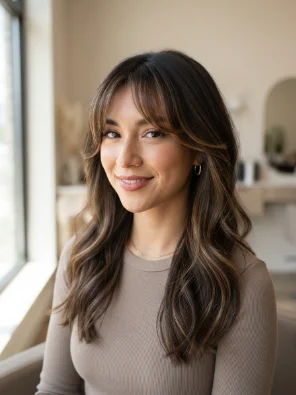
You want to brighten your dark brown hair, but you do not want harsh stripes or a color that feels too blonde. That is where dark brown hair with light brown highlights can help.
Light brown highlights add depth without hiding your natural brunette base. They can make curls look more defined, give long layers more movement, or add a soft glow around your face.
Still, choosing the right look can feel hard. Caramel may look warm and bright. Ash brown can feel softer and cooler. Fine babylights create a small change, while chunky ribbons stand out much more.
Save two or three looks that match your hair texture and daily routine. Your colorist can then adjust the shade and placement to suit your current color.
Sun-Kissed Highlights on Wavy Brunette Hair

Sun-kissed brunette highlights use soft light brown pieces through the middle and ends. The placement is often less even than classic foil highlights.
This creates a relaxed finish that works well with natural waves. Dark roots keep the color grounded and help the lighter sections stand out.
Caramel, honey, and warm beige shades can all create this effect. The right choice depends on how warm you want the finished color to look.
Ask for a few finer highlights near the face and wider sections near the ends. This gives the color a natural shift from dark to light.
Best for: Loose waves and textured styles
Tone: Warm
Maintenance: Low to medium
Soft Caramel Face-Framing Highlights

Soft caramel pieces around the face can brighten dark brown hair without changing the full color. The highlights usually begin near the cheekbones and blend into the lower lengths.
This placement draws attention to your eyes and facial shape. It also keeps most of the dark base untouched, which can make future growth less obvious.
Face-framing light brown highlights work best on medium and long hair. They look clear on loose waves but can also add shape to straight layers.
Ask for thin sections if you want a soft result. Wider sections will create a brighter and bolder frame.
Best for: Medium to long hair
Tone: Warm
Maintenance: Low to medium
Sleek Dark Brown Hair With Fine Highlights

Straight dark hair shows every line of color. This means careful blending is important.
Fine light brown highlights can add depth without creating a striped effect. Narrow sections placed evenly through the top and sides give the hair a soft color change.
Cool mocha or beige-brown shades work well when you want a smooth and polished finish. Warmer tones can add more visible contrast.
A clear or tinted gloss may help support shine, but it will not replace healthy hair care. Use heat protection when straightening or blow-drying highlighted hair.
Best for: Straight or smooth hair
Tone: Cool or neutral
Maintenance: Medium
Light Brown Money Piece

A light brown money piece places brighter sections around the front of the hair. The rest of the base can stay dark brown.
This look gives you more contrast without lightening the full head. It can be thin and blended or wide and bold.
A narrow money piece works well when you want a gentle frame around your face. A thicker piece creates a stronger color statement and needs more care as it grows.
This style works on bobs, lobs, curtain bangs, and long layered cuts. Ask your colorist to connect the front pieces with a few softer highlights near the sides.
Best for: Most hair lengths
Tone: Warm or neutral
Maintenance: Medium
Light Brown Highlights Through Long Layers
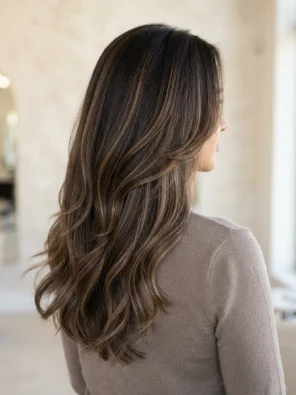
Long dark brown hair can sometimes look heavy, especially when the color is solid from root to end. Light brown highlights can break up that weight.
Place the highlights along the shape of the layers. This helps each section stand out when the hair moves.
Keeping the roots dark creates depth near the top. Slightly brighter ends can make the bottom layers look lighter and softer.
This color looks clear with a blowout or loose waves. Still, it should also blend when the hair is worn straight.
Ask for medium-width highlights if fine babylights may disappear inside thick hair.
Best for: Long or thick layered hair
Tone: Neutral
Maintenance: Low to medium
Light Brown Highlights on a Shoulder-Length Lob

A shoulder-length lob gives light brown highlights enough space to show without needing very long hair.
Soft pieces can begin a few inches below the roots and continue through the ends. A few brighter sections around the face keep the cut from looking too solid.
This placement can give a blunt lob more texture. It also works well when you wear the hair with bends, waves, or a smooth finish.
Shorter hair has less room for the shades to blend. Because of this, careful placement matters. Ask for narrow sections near the top and slightly wider pieces through the ends.
Best for: Shoulder-length hair
Tone: Warm or neutral
Maintenance: Medium
Honey-Brown Ribbon Highlights

Honey-brown ribbon highlights use wider sections of warm color. They are more visible than babylights but can still blend well when placed through long layers.
The wider ribbons catch the light as the hair moves. This makes thick or heavy hair look less solid.
Honey brown has more warmth than ash or beige shades. It can add a soft golden effect without taking the hair into blonde color.
Ask your colorist to leave enough dark brown hair between each ribbon. This keeps the result balanced and stops the lighter pieces from joining into one large block.
Best for: Thick, long, or layered hair
Tone: Warm
Maintenance: Medium
Hidden Light Brown Peekaboo Highlights

Peekaboo highlights sit beneath the top layer of the hair. They stay hidden when the hair is down and become more visible when it moves or is tied up.
This is a useful choice if you want to test light brown color without changing the surface of your hair.
The hidden pieces can be fine and soft or wide and bold. Medium and thick hair often gives enough room to hide the sections.
Place the color near the sides or lower back of the head for a quiet effect. Add brighter pieces near the ears if you want them to show more often.
Best for: Medium to thick hair
Tone: Warm, cool, or neutral
Maintenance: Low to medium
Fine Mocha Babylights

Mocha babylights are a good choice when you want people to notice that your hair looks different but cannot tell exactly why.
Babylights are very thin highlights placed throughout the hair. The mocha shade stays close to the dark brown base, so the change feels soft.
This look works well on straight hair because narrow highlights can blend without creating clear stripes. It also adds depth to fine hair that can look flat in one solid shade.
Keep the root area blended if you want less visible growth. A soft root can also make the finished color feel more natural.
Best for: Fine, straight, or lightly wavy hair
Tone: Neutral
Maintenance: Medium
Dark-Rooted Light Brown Ombré

A light brown ombré changes from dark roots to lighter ends. The bottom half of the hair carries more lightness than classic highlights.
The middle section should blend slowly between the two shades. A hard line can make the color look unfinished.
Ombré works best on medium and long hair because there is more length for the color to shift. It can look soft with waves or smooth and clear on straight hair.
Choose this style if you want to keep your natural root color. The dark top can make growth less noticeable between appointments.
Best for: Medium and long hair
Tone: Warm or neutral
Maintenance: Low
Curtain Bangs With Light Brown Highlights

Curtain bangs can stand out more when lighter pieces follow their curved shape.
The highlights usually begin near the cheekbones and connect with the longer face-framing layers. The crown and roots can stay dark for depth.
This placement draws attention to both the color and the haircut. It also helps the bangs blend into the rest of the style as they grow.
Choose thin highlights for a soft frame. Ask for wider light brown pieces if you want the bangs to become the main focus.
Best for: Medium or long layered hair
Tone: Warm or neutral
Maintenance: Medium
Curly Dark Brown Hair With Light Brown Highlights

Curly dark brown hair can look more defined when lighter pieces follow the natural curl pattern.
The highlights should sit on selected curl groups instead of being spread in very fine sections. Highlights that are too thin may disappear inside dense curls.
Lighter pieces around the crown and face can make the curl shape easier to see. A few brighter ends can also add depth without changing the full base.
Ask your colorist to view your hair in its natural dry state before choosing placement. Curl shrinkage and movement can change where each highlight appears.
Best for: Naturally curly or coily hair
Tone: Warm or neutral
Maintenance: Medium
Chunky Light Brown Highlights on a Dark Bob

Chunky highlights create a stronger difference between the light and dark sections. They work well when you want the color placement to be easy to see.
On a dark bob, wider light brown pieces can be placed around the front, crown, and upper layers. This can make the shape of the cut look sharper.
There is a difference between planned chunky highlights and uneven stripes. The sections should follow the haircut and leave enough dark hair between them.
Choose a neutral light brown for a clean contrast. Try caramel if you want the color to feel warmer.
Best for: Bobs and short layered cuts
Tone: Warm or neutral
Maintenance: Medium to high
Beige-Brown Highlights on Espresso Hair

Beige-brown highlights can soften a deep espresso base without adding strong gold or red tones.
The shade sits between cool and neutral. It creates visible depth but does not feel as icy as ash brown.
Fine highlights around the face and upper layers can give the hair a polished finish. Add a few brighter pieces through the ends if you want more movement.
This color works well on straight, wavy, and softly curled hair. Ask to see the shade in natural light before making a final choice, since salon lighting can change how beige tones appear.
Best for: Deep brunette or espresso hair
Tone: Cool-neutral
Maintenance: Medium
Ash Light Brown Balayage on Dark Hair

Ash light brown balayage adds cool, muted pieces through the middle and ends of dark hair. The color avoids strong red, orange, or golden tones.
Balayage is painted onto selected sections of hair. This creates a softer root area than highlights placed close to the scalp.
The cool contrast can work well if your dark brown base already has a neutral or cool tone. It can also suit people who do not want caramel or honey shades.
Loose waves help show the blend between the dark base and ash brown sections. Wear it straight for a smoother and more subtle finish.
Best for: Neutral or cool brunette hair
Tone: Cool
Maintenance: Low to medium
How to Pick a Light Brown Shade That Suits Your Goal
“Light brown” does not describe one single shade. It can be warm, cool, or neutral.
Start by deciding how you want the finished color to feel.
| Your goal | Shades to consider |
| Warm and bright | Caramel, honey brown, chestnut |
| Soft and balanced | Mocha, natural light brown |
| Cool and muted | Ash brown, beige brown, mushroom brown |
| Strong contrast | Bright ribbons or a money piece |
| Gentle contrast | Fine babylights close to the base |
Warm brown highlights can add a golden or rich effect. They often include caramel, honey, or chestnut tones.
Cool brown highlights have less red and gold. Ash, mushroom, and beige-brown shades can create a softer finish on a cool brunette base.
Mocha is a useful middle choice. It can add depth without looking strongly warm or cool.
Your current color also matters. Previously dyed hair may not lift the same way as untreated hair. Dark permanent color can also affect how light the highlights can become in one appointment.
Bring two or three photos to your salon consultation. Choose images with hair that looks close to your length and texture.
A shade shown on curled hair may look very different when worn straight. Photos taken in bright sunlight can also make highlights look lighter than they appear indoors.
Where Should You Place Light Brown Highlights?
The shade matters, but placement can change the result just as much.
Highlights around the face create the most visible brightness. If you want to keep most of your base untouched, partial highlights for dark hair can focus the lightness around the face, crown, or upper layers. They can draw attention to your eyes, cheekbones, bangs, or front layers.
Crown highlights make the color easier to see from the top. This can help straight or fine hair look less flat.
Color placed through the mid-lengths and ends keeps the root area darker. This can make growth look softer and may reduce how often you feel the need for a full refresh.
Hidden highlights sit below the top layer. They appear when you move, curl, braid, or tie your hair.
Highlights can also follow curls or long layers. This makes the shape of the cut easier to see.
| Placement | Main effect |
| Around the face | Adds visible brightness |
| Through the crown | Makes color easier to see from above |
| Mid-lengths and ends | Keeps the roots soft and dark |
| Beneath the top layer | Creates a hidden color effect |
| Along curls or layers | Defines texture and movement |
The same caramel shade can look very different based on placement. Fine caramel babylights will feel soft. A thick caramel money piece will create much more contrast.
How to Keep Light Brown Highlights From Looking Dry or Dull
Highlighted hair may need more care because the lightening process can affect how the hair feels.
Start with a shampoo and conditioner made for color-treated hair. Choose products based on your hair type, since thick curls and fine straight hair may need different levels of moisture.
Use heat protection before blow-drying, curling, or straightening. High heat can make already dry ends feel rough.
You do not need to stop using hot tools completely. Lower the temperature when possible and avoid going over the same section many times.
Use a conditioning mask when your hair feels dry. Focus the product on the middle and ends instead of loading it onto the roots.
Sun and frequent pool exposure may also affect colored hair. A hat, swimming cap, or hair product made for UV protection may help when you spend long periods outside.
Your toner or gloss may fade before the highlights themselves grow out. Ask your colorist when the tone may need refreshing.
Balayage, ombré, and rooted highlights often show softer growth than highlights placed close to the scalp. Still, the right appointment schedule depends on your shade, placement, hair growth, and preferred finish.
No single product can stop all fading or repair every type of damage. A simple routine used often is usually more helpful than buying many products you rarely use.
Choose a Highlight Style That Fits Your Routine
Light brown highlights can make dark brunette hair look softer, brighter, and more defined.
Fine babylights give you a small color change. Ribbon highlights and money pieces create more contrast. Balayage and ombré keep more darkness near the roots, while curl-focused placement can make natural texture easier to see.
Choose a shade that fits the result you want. Caramel and honey feel warm. Mocha looks balanced. Ash and beige brown create a cooler finish.
Save two or three ideas that match your hair length and texture. Take them to a licensed colorist and discuss your current color, upkeep, and styling habits.
The right dark brown hair with light brown highlights can brighten your hair while keeping the rich depth of your natural brunette base.
