
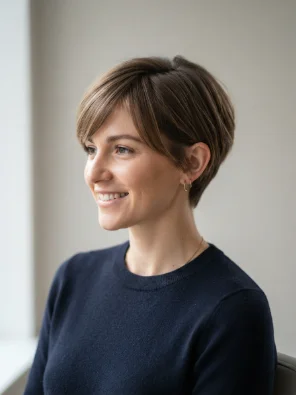
You may love the look of short hair but still worry about choosing the wrong cut. Will it suit your face? Will your bangs sit flat? Will you need to style your hair every morning?
A pixie haircut with bangs can be soft, bold, neat, or relaxed. The result depends on the length of the bangs, the layers, and how the hair is shaped around your face.
The right pixie cut with bangs can also make your routine easier. Still, short hair is not always free from upkeep. Some styles need regular trims, while others grow out with less effort.
Asymmetrical Pixie With Long Bangs

An asymmetrical pixie keeps one side or one front section longer than the other. The difference creates a clear diagonal line across the face.
The longer fringe can draw attention to your eyes or cheekbones. It may also work well with glasses because you can place the bangs to one side of the frames.
This cut has a bold shape, but the longer front keeps it easy to change.
Best for: Anyone who wants a less traditional pixie
Styling tip: Use a light smoothing cream on the longer section.
Choppy Pixie Haircut With Piecey Bangs

A choppy pixie uses uneven layers to create clear texture. The bangs are separated into small pieces rather than brushed into one smooth section.
This style gives straight hair more movement. You can wear it neat for work or rough it up with your fingers for a casual finish.
It is also a useful choice if your hair tends to fall flat soon after styling.
Best for: Straight or slightly wavy hair
Styling tip: Pinch a tiny amount of texture paste into selected ends.
Classic Pixie Cut With Soft Side Bangs

A classic pixie has short, neat sides with extra length at the top. Soft side bangs sweep across the forehead and blend into the temples.
This style is a good first pixie cut because it does not feel too severe. The longer fringe gives you room to change your part or tuck one side behind your ear.
It works well on straight hair and loose waves.
Best for: First-time pixie wearers
Styling tip: Smooth a small amount of light styling cream through the bangs.
Curly Pixie Cut With Short Bangs

A curly pixie keeps the natural curl pattern visible at the front. The bangs may sit above the brows or fall in soft curls across the forehead.
Curl shrinkage matters with this cut. Hair that looks long when wet may become much shorter after it dries.
Ask your stylist to check the fringe when your curls are dry. This can help prevent the bangs from ending up shorter than planned.
Best for: Naturally curly hair
Styling tip: Use a small amount of curl cream and avoid brushing dry curls.
Layered Pixie Cut With Feathered Bangs
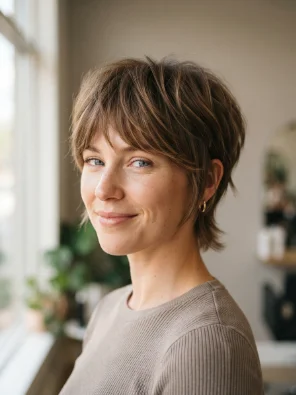
Soft layers add lift through the top of this pixie. The feathered bangs blend into the sides instead of ending in a hard line.
This shape can help fine hair appear fuller. It also gives the hair movement without creating a messy finish.
Ask your stylist to keep the layers light. Too many short layers can make thin ends look weak.
Best for: Fine or medium-density hair
Styling tip: Lift the roots with a small round brush while drying.
Long Pixie Haircut With Side-Swept Bangs

A long pixie cut with bangs gives you the feel of short hair without removing all your length. The sides stay fairly short, while the top and front remain longer.
The side-swept fringe creates a soft line across the face. It can also be tucked behind one ear when you want your hair away from your eyes.
This cut is helpful if you are growing out a bob or feel nervous about a very short style.
Best for: Anyone who wants a flexible short haircut
Styling tip: Blow-dry the fringe from side to side before placing it.
Pixie Bob With Long Bangs

A pixie bob sits between a short pixie and a bob. It keeps more fullness around the ears and nape, with longer bangs at the front.
The fringe may reach the brows or cheekbones. This gives you more options for side parts, smooth styles, and tucked-back looks.
It is also one of the easier pixie styles to grow out because the outer shape is already longer.
Best for: Anyone testing shorter hair
Styling tip: Keep the front smooth while adding light lift at the crown.
Pixie Cut With Curtain Bangs

Curtain bangs open near the center and sweep to both sides. On a pixie cut, they need enough length to blend into the temple area.
This fringe keeps the middle of the face open. It can also frame the eyes and cheekbones without covering the whole forehead.
The style works best when your natural part supports the split shape.
Best for: Oval, heart-shaped, or longer faces
Styling tip: Blow-dry each side away from the face.
Shaggy Pixie Haircut With Messy Bangs

A shaggy pixie has broken layers and a loose shape. The messy bangs blend into the top instead of sitting apart from the rest of the cut.
This style works well with natural waves, bends, and uneven movement. It does not depend on every strand sitting in the right place.
It can also handle a little extra growth better than a sharp, closely cropped pixie.
Best for: Wavy hair and relaxed routines
Styling tip: Add texture spray to dry hair and shape it with your fingers.
Short Pixie Haircut With Wispy Bangs

This short pixie haircut with bangs uses light, separated pieces across the forehead. The bangs do not form one thick line.
Wispy bangs can soften the look of very short sides. They also keep fine hair from appearing heavy or flat around the face.
The fringe may need light styling after sleep, but it usually takes less effort than a full, blunt bang.
Best for: Fine or straight hair
Styling tip: Avoid thick wax, which can make the bangs clump together.
Sleek Pixie Cut With Blunt Bangs

A sleek pixie cut with blunt bangs has clean edges and a smooth finish. The fringe forms a clear line across the forehead.
This style works best on straight hair that holds a neat shape. It may take more upkeep because uneven growth is easier to see on blunt bangs.
A strong cowlick can also make the fringe harder to control. Ask your stylist to check your hairline before cutting it too short.
Best for: Straight hair and precise styles
Styling tip: Apply heat protection before using a flat iron.
Textured Pixie Cut With Tousled Bangs

A textured pixie with bangs works with natural bends instead of trying to hide them. The crown has relaxed layers, while the fringe falls in soft, uneven pieces.
This haircut does not need to look perfect. That is part of its appeal. It can be a good match if you prefer to air-dry your hair.
Natural movement helps the style keep its shape without a stiff finish.
Best for: Wavy or medium-density hair
Styling tip: Scrunch light mousse into damp hair and let it air-dry.
Undercut Pixie With Sweeping Bangs

An undercut pixie has very short hair beneath a longer top section. The sweeping bangs create contrast with the closely cropped sides.
Removing hair underneath can reduce bulk in thick or dense hair. The undercut may be hidden or clearly visible, depending on how much length stays on top.
The shorter area will need regular cleanup if you want the contrast to remain sharp.
Best for: Thick hair and bold short styles
Styling tip: Use flexible pomade so the longer hair still moves.
Voluminous Pixie With Lifted Bangs

This pixie keeps more length at the crown and front. The bangs are lifted up or swept back instead of falling across the forehead.
The added height creates a strong, open shape. It can work well for thick hair or hair that holds volume easily.
This style may need a few minutes of blow-drying each morning. It is less suitable if your roots become oily or flat very quickly.
Best for: Medium-density or thick hair
Styling tip: Direct the roots upward while drying.
Wavy Pixie Haircut With Side Bangs

A wavy pixie haircut with bangs follows the hair’s natural movement. The side fringe bends softly across the forehead and blends into the longer top.
This style can add fullness to finer waves. It may also reduce the need for daily heat styling because the natural bend becomes part of the finished look.
Keep the layers long enough to stop the waves from becoming too round or puffy.
Best for: Loose waves and soft curls
Styling tip: Use light curl cream instead of heavy gel.
How to Choose Bangs That Suit Your Face Shape
Face shape can help you compare different bang styles. It should not stop you from wearing a haircut you like.
Think about the effect you want. Do you want more height? Do you want a softer line around your forehead? Would you like your cheekbones to stand out?
For a round face, side-swept or lifted bangs create diagonal and vertical lines. An asymmetrical pixie can also add length to the overall shape.
For a square face, wispy or feathered bangs create softer movement around the forehead. A curved side fringe may feel gentler than a strong blunt line.
An oval face can work with many types of bangs. Choose your fringe based on your texture, hairline, and styling routine.
For a heart-shaped face, curtain bangs or soft side bangs can frame the upper part of the face. Longer temple pieces can also connect the fringe to the sides.
For a long face, fuller bangs can reduce the amount of visible forehead. Avoid adding too much height at the crown if you do not want the face to look longer.
The same pixie can change a lot with different bangs. Short blunt bangs create a stronger shape. Long diagonal bangs add movement. Open curtain bangs create a softer frame.
Choose the effect you like instead of trying to hide parts of your face.
Match Your Pixie Cut to Your Hair Texture and Density
A haircut photo may look very different on your own hair. The model may have another texture, density, or growth pattern.
Fine hair has thin strands. Low-density hair means there are fewer strands on the scalp. These two things are not always the same.
Fine hair often works well with soft layers, feathered bangs, and light texture. Heavy products can make it fall flat.
Thick or dense hair may need weight removed from the inside of the cut. A tapered shape or undercut can stop the sides from becoming too wide.
Straight hair shows cutting lines clearly. Blunt, sleek, and choppy pixies can work well because the shape stays easy to see.
Wavy hair often suits shaggy, tousled, and side-swept cuts. Keeping some length allows the waves to form without becoming too puffy.
Curly hair needs space for shrinkage. The stylist should check how each curl sits when dry, especially around the bangs.
Your growth pattern also matters. A cowlick at the front may push short bangs upward or split them apart. Longer side bangs may be easier to control than a short, straight fringe.
Show your stylist how your hair looks when it is clean and air-dried. This gives them a better view of its natural shape.
How to Style a Pixie Cut With Bangs at Home
Style your bangs first. Short fringe dries quickly and becomes harder to move after it has set.
Start with damp hair rather than soaking-wet hair. Blot away extra water with a soft towel. Do not rub roughly, especially if your hair is curly or wavy.
Follow this simple routine:
- Apply a small amount of product.
- Move the bangs from side to side while drying.
- Direct the roots where you want them to sit.
- Shape the ends with your fingers.
- Add more product only where it is needed.
Use root-lifting mousse or a light volume spray if your hair falls flat.
For visible separation, place a tiny amount of texture paste on your fingertips. Touch only the ends and selected pieces.
A light styling cream can smooth straight hair and calm flyaways. Curl cream or lightweight gel can help waves and curls keep their shape.
Use flexible hairspray when you need hold. A stiff spray can make short hair feel hard and difficult to reshape.
Heavy oils and thick wax can flatten a pixie quickly. Start with less product than you think you need. You can always add more.
For a smooth finish, use controlled blow-drying and light cream. For a tousled finish, use texture spray and your fingers. For clear, piecey ends, use a small amount of paste.
How Often Does a Pixie Cut Need a Trim?
Pixie cuts are short, but that does not always make them low-maintenance. Growth becomes easier to see when the sides, nape, or bangs are closely cut.
Many pixie styles are reshaped every four to eight weeks. Your own schedule may be shorter or longer.
A cropped pixie often needs more frequent cleanup because the outline changes quickly. An undercut also loses its sharp contrast as the short area grows.
A shaggy pixie can usually handle more length. Extra growth may blend into the broken layers.
A long pixie or pixie bob often grows out more smoothly. The longer outline gives you more time between major reshaping appointments.
Your bangs may need attention before the rest of the cut. This is more common when they sit near your eyes or form a blunt line.
Do not cut your bangs at home unless you feel confident about the length and angle. Hair can spring upward after it dries, especially when it is wavy or curly.
If you plan to grow out your pixie, work through clear stages:
- Cropped pixie
- Long pixie
- Pixie bob
- Short bob
Small reshaping trims can keep the back from becoming heavy while the top and sides grow. Tell your stylist that length is your goal so they do not remove more hair than needed.
Choose a Pixie That Works With Your Hair
The right pixie depends on more than face shape. Bang length, hair texture, density, growth patterns, and maintenance all affect the result.
Save two or three styles that match your natural hair. Show the front, side, and back views to your stylist. Then ask how each look would need to change for your texture.
The best pixie haircut with bangs is not always the shortest or boldest one. It is the cut that frames your face the way you like and fits the amount of styling you are willing to do.
