
A French bob haircut can look chic, soft, bold, or a little messy in the best way. But choosing one is not always easy. You may love a short bob in a photo, then worry it will not suit your face shape, hair type, or daily routine.
That worry makes sense. A bob that looks great on thick, straight hair may sit very differently on fine, wavy, or curly hair. Bangs can also change the whole look. Some need quick styling every morning. Others grow out more easily.
The good news is that there is no single French bob style. You can choose a neat chin-length cut, a short French bob with soft waves, a curly version, or a bob with wispy bangs.
What Is a French Bob Haircut?
A French bob is a short bob that usually sits between the lips and chin. It often has a soft fringe, textured ends, or a relaxed finish. Some versions look smooth and polished. Others look a little undone and casual.
The key difference is the length. A French bob is usually shorter than a regular bob. It shows more of your neck, jawline, and cheeks. That can make the haircut feel fresh and bold.
You can wear this cut with blunt ends, layers, curls, waves, or straight hair. You can also add full bangs, wispy bangs, curtain fringe, or no bangs at all.
A lip-length French bob gives a sharper look. A chin-length version feels softer and easier to wear. Both can look great, but the best choice depends on your hair texture and how much styling you want to do.
Before choosing your favorite photo, think about your face shape, natural hair texture, and normal morning routine.
Classic Chin-Length French Bob

The classic chin-length French bob is simple, neat, and easy to style. It sits right around the chin and has a clean line at the bottom.
This style works well if you want a short cut without going too bold. You can wear it with a middle part for a clean look or a soft side part for more volume.
Best for: Straight, fine, or lightly wavy hair.
Ask your stylist: “I want a chin-length bob with a clean shape and very light layers.”
Styling note: Blow-dry the ends slightly inward with a round brush for a soft finish.
Curly French Bob

A curly French bob can look full, fun, and soft. The best version follows your natural curl shape instead of trying to make your curls act like straight hair.
Your stylist should think about shrinkage, curl pattern, and where your curls sit around your cheeks and neck. This cut may need careful shaping, especially if your curls are tight.
Best for: Natural curls of any type.
Ask your stylist: “I want a curly French bob that looks balanced when my hair is dry.”
Styling note: Use a curl cream and avoid brushing your curls once they are dry.
French Bob for Fine Hair

Fine hair can look fuller with the right French bob haircut. The main goal is to keep the bottom edge strong and avoid too many short layers.
A blunt or soft blunt cut can make your hair look thicker. Light bangs may also add shape around the face without taking away too much hair.
Best for: Fine hair that looks flat near the ends.
Ask your stylist: “I want my bob to look full at the bottom. Please keep the layers light.”
Styling note: Use a lightweight mousse at the roots before blow-drying for a little lift.
French Bob for Naturally Wavy Hair

Naturally wavy hair can give a French bob a soft, lived-in look. But your stylist should leave enough length for the waves to settle well.
A bob that looks perfect when wet may sit much shorter after it dries. That is why it helps to choose a style that is slightly longer than your first choice.
Best for: Wavy hair that gets more textured as it dries.
Ask your stylist: “My hair gets wavier when it dries, so I want enough length for the waves to sit well.”
Styling note: Apply curl cream or light foam, then let your hair air-dry.
French Bob for Straight Hair

Straight hair shows every line in a bob. That can be a good thing because the haircut looks neat and polished.
A straight French bob can be blunt, sleek, and simple. You can wear it with a middle part for a clean look or a deep side part for more volume.
Best for: Straight hair that is easy to smooth.
Ask your stylist: “I want a clean French bob that looks sharp when worn straight.”
Styling note: Use heat protectant before flat ironing. Finish with a tiny amount of shine serum on the ends.
French Bob for Thick Hair

Thick hair can look amazing in a French bob, but the cut needs the right shape. Too much weight can make the sides look wide or puffy.
Your stylist can remove some bulk from inside the haircut while keeping the ends full. This helps the bob sit closer to your head without looking thin.
Best for: Thick hair that feels heavy around the sides.
Ask your stylist: “I want less bulk inside the cut, but I do not want thin-looking ends.”
Styling note: Use a small amount of smoothing cream on the middle and ends of your hair.
French Bob With a Cropped Nape

A cropped nape means the hair at the back of your neck is cut shorter. This gives the bob a cleaner shape and makes the neck look more open.
The front can still sit around the chin, so you get a little contrast between the front and back.
Best for: Readers who like neat short hair at the back.
Ask your stylist: “I want the back shorter and clean, with a little more length around my face.”
Styling note: This style looks best when you keep the neckline trimmed regularly.
French Bob With a Deep Side Part

A deep side part can change a simple French bob fast. It adds root volume and gives the haircut a softer, more dressed-up feel.
This is useful for fine hair that falls flat. It can also help you change your look without cutting more layers.
Best for: Fine or straight hair.
Ask your stylist: “I want the cut to work well with a deep side part.”
Styling note: Blow-dry your roots in the opposite direction first. Then move the part where you want it.
French Bob With Baby Bangs

Baby bangs are very short bangs that sit above the brows. They can make a French bob feel bold and modern.
This style puts more focus on your eyes, brows, and forehead. It is not the easiest fringe to grow out, so make sure you love the look before choosing it.
Best for: Readers who like a bold short haircut.
Ask your stylist: “I want short baby bangs that still look soft with my bob.”
Styling note: Keep the rest of your makeup simple and let the haircut stand out.
French Bob With Curtain Fringe

Curtain fringe is longer and splits near the middle. It frames your face without giving you a full heavy bang.
This look feels soft and easy to wear. It is also a good choice if you want bangs that can grow out without looking awkward.
Best for: Readers who want face-framing pieces with less daily work.
Ask your stylist: “I want a soft curtain fringe that blends into the sides of my French bob.”
Styling note: Blow-dry the fringe away from your face with a small round brush.
French Bob With Curved Ends
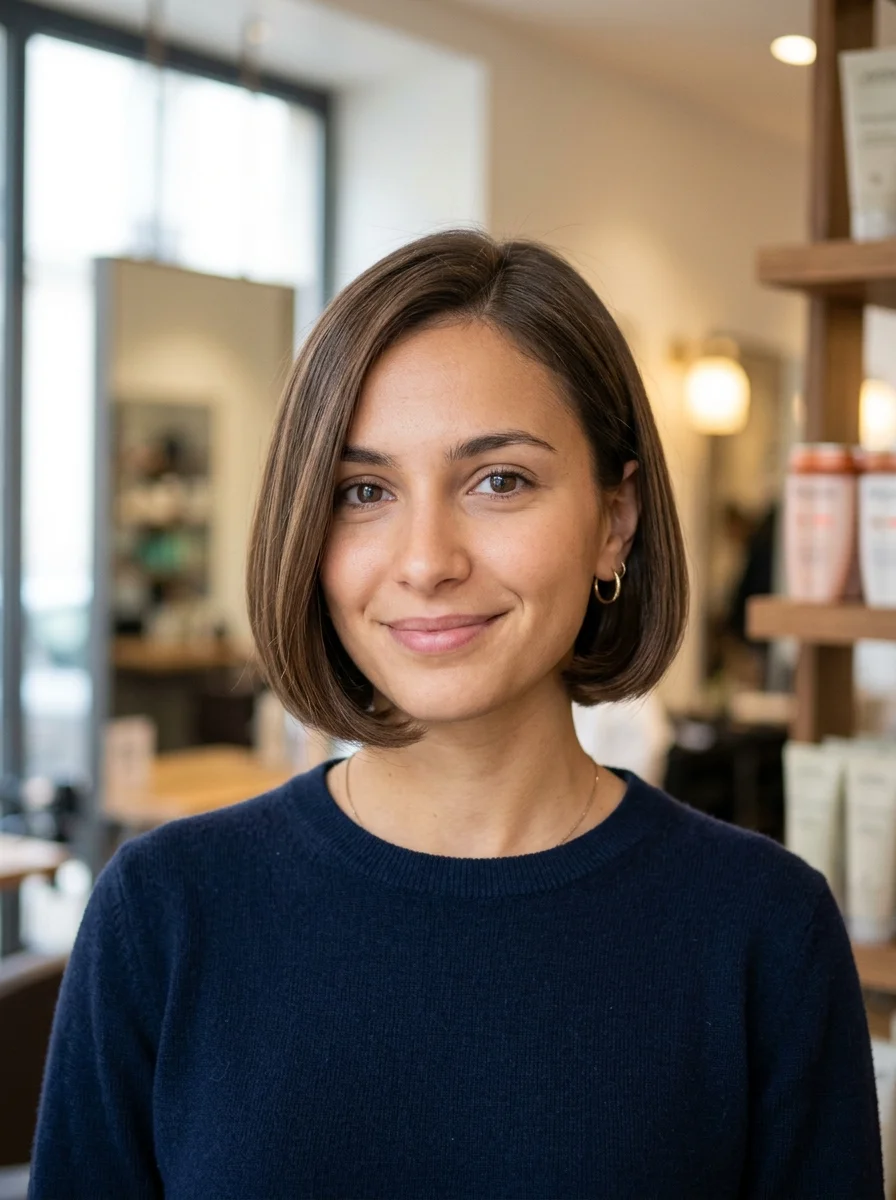
This French bob has ends that curve under the chin. It gives the haircut a softer and more classic look.
It is a good choice if you want short hair but do not want a sharp, blunt line. The curved ends can make the cut look smooth and neat.
Best for: Straight hair or hair that holds a blow-dry well.
Ask your stylist: “I want the ends to sit softly under my chin.”
Styling note: Use a small round brush while blow-drying. Turn the brush inward near the ends.
French Bob With Face-Framing Pieces

Face-framing pieces are slightly longer bits of hair around the cheeks and jaw. They make the bob feel softer and less blunt.
This can be a good option if you are nervous about a very short, sharp cut. The longer pieces give you a little more movement around the face.
Best for: Readers who want a softer short haircut.
Ask your stylist: “I want soft pieces around my face that blend into the bob.”
Styling note: Bend the front pieces inward for a polished look or outward for a more casual one.
French Bob With Full Bangs

A French bob with full bangs gives you a strong, classic look. The fringe usually sits near the brows and blends into the sides of the bob.
This style can make your eyes stand out. But full bangs need some daily care. They may need a quick blow-dry after washing or refreshing.
Best for: Readers who enjoy styling their fringe.
Ask your stylist: “I want full bangs that feel soft, not too thick or heavy.”
Styling note: Blow-dry your bangs first before the rest of your hair. They dry fast and can split if left too long.
French Bob With Grown-Out Fringe

A grown-out fringe is longer and blends into the sides of the bob. You can part it, sweep it to one side, or tuck it behind your ear.
It gives you the softness of bangs without the daily work of a short fringe. It is also a safer pick if you have never had bangs before.
Best for: Readers who want low-maintenance face framing.
Ask your stylist: “I want longer fringe that can blend into the rest of my French bob.”
Styling note: Use a light blow-dry cream and brush the fringe away from your face.
French Bob With Wispy Bangs

Wispy bangs are lighter than full bangs. They give you a soft fringe without covering too much of your forehead.
This is a good option if you want to try bangs for the first time. They feel less heavy and can be easier to grow out.
Best for: Fine hair or readers who want a softer fringe.
Ask your stylist: “I want light, wispy bangs that blend into the rest of my bob.”
Styling note: Use a tiny amount of dry shampoo if your bangs get oily between washes.
Lip-Length Micro French Bob

A lip-length French bob is much shorter and more daring. It sits above the chin and puts more focus on your cheekbones, eyes, and jawline.
This is a strong haircut. It can feel fun and stylish, but it may need more regular trims to keep the shape neat.
Best for: Readers who like short hair and do not mind showing more of their face.
Ask your stylist: “I want a short French bob that sits near my lips, with a clean but soft finish.”
Styling note: Tuck one side behind your ear and wear small earrings for an easy dressed-up look.
Shaggy French Bob

A shaggy French bob has light layers and movement. It looks a little messy, but it still has shape.
This style works especially well for wavy hair. The layers help your natural texture show more. It can also make thick hair feel lighter.
Best for: Wavy or thick hair.
Ask your stylist: “I want soft layers and movement, but I still want the bob shape to show.”
Styling note: Apply texture spray to dry hair, then scrunch gently with your hands.
Soft Blunt French Bob

A soft blunt French bob has a fuller bottom edge without looking too sharp. The ends are cut fairly straight, but the shape still feels gentle.
This style can make fine hair look thicker because the ends stay full. It also works well on straight hair that tends to fall flat.
Best for: Fine or straight hair.
Ask your stylist: “I want blunt ends, but I do not want the haircut to look too harsh.”
Styling note: Use a flat iron to bend the ends slightly inward.
Tucked-Behind-the-Ear French Bob

This style is simple but very pretty. The bob can be blunt, wavy, or lightly layered. The main detail is tucking one side behind your ear.
It opens up your face and makes the haircut look less heavy. It also gives you an easy way to change your look without doing much styling.
Best for: Straight, wavy, or lightly textured hair.
Ask your stylist: “I want enough length around the sides to tuck one side behind my ear.”
Styling note: Add a little texture spray before tucking the hair back so it stays in place.
Wavy French Bob

A wavy French bob looks relaxed and easy. The waves should not look too perfect. Slight bends and loose texture make this style feel natural.
You can wear this look with natural waves or create it with a flat iron. The goal is soft movement, not tight curls.
Best for: Naturally wavy hair or anyone who likes a casual finish.
Ask your stylist: “I want a bob that looks good with loose waves and air-dried texture.”
Styling note: Twist small sections away from your face while using a flat iron. Leave the ends out for a softer finish.
How to Choose a French Bob for Your Hair and Face Shape
A French bob can work for many face shapes. You just need to choose the right length, shape, and fringe.
For round faces, a chin-length bob can create a softer look. A deep side part or longer fringe can also add height near the crown. Avoid choosing a cut just because it looks good on someone else. Look for photos with a face shape close to yours.
For fine hair, blunt ends can make your hair look thicker. Too many layers may make the bottom look thin. A soft blunt bob with light bangs can be a good choice.
For thick hair, ask for hidden layers or light shaping inside the cut. This removes some bulk without making the ends look wispy. Thick hair can look beautiful in a French bob, but it may puff up if the cut is too short or too heavy.
For wavy hair, keep a little extra length. Waves often shrink as they dry. A slightly longer French bob can help your hair sit in the right place.
For curly hair, choose photos with curls similar to yours. Curl pattern matters more than copying a sleek bob photo. Your stylist should cut the shape based on how your curls sit when dry.
Pick a style you can manage on a normal day. A haircut should fit your life, not create more work every morning.
How to Style and Maintain a French Bob
A French bob does not need to take a long time to style. But a few simple habits can help it look better.
For a smooth look, start with heat protectant. Blow-dry your hair with a small round brush. Turn the ends slightly inward. Finish with a small amount of shine serum on the ends.
For a wavy look, apply texture spray or light mousse. Use a flat iron to create loose bends. Do not curl every section in the same direction. That can make the style look too formal.
For curly hair, use curl cream or gel on damp hair. Scrunch your curls gently. Then let your hair air-dry or use a diffuser.
On day two, refresh your roots with dry shampoo. Add a little texture spray to the middle and ends. You can also tuck one side behind your ear for an easy change.
Short cuts often look best with regular trims. Ask your stylist when you should book your next appointment based on your hair growth and the shape of your cut.
Final Thoughts
A French bob can be soft, sleek, curly, textured, bold, or simple. The best option is the one that suits your hair type and feels easy to wear in real life.
Do not choose a haircut only because it looks good in one photo. Think about your natural texture, your styling time, and whether you want bangs. Save two or three photos that match your hair, then talk through them with your stylist.
