
Choosing a short wolf cut can feel risky.
You may like the photos online. But you may still wonder if the cut will work on your real hair.
Will it make thin hair look flat?
Will thick hair puff out?
Will curly hair shrink too much?
Will the bangs be hard to style every morning?
These are fair questions. A short wolf cut can look cool, fresh, and full of texture. But the wrong version can look bulky, too choppy, or hard to manage.
You need to know which short haircuts for women wolf cut styles match your hair type, face shape, and daily routine. Some short wolf cuts are soft and easy. Some are bold and need more styling. Some work better for fine hair. Others are better for thick, wavy, or curly hair.
What Is a Short Wolf Cut?
A short wolf cut is a layered haircut that mixes a shag and a mullet.
It has volume near the crown. It also has textured ends and face-framing pieces. Many short wolf cuts also include bangs.
The short version can sit near the ears, chin, jaw, or neck. Some look like a layered bob. Some look closer to a pixie. Some have a stronger mullet shape.
The main point is movement.
A bob is usually cleaner and more even. A pixie is shorter and neater. A shag is softer and more layered. A mullet is usually shorter in the front and longer in the back.
A wolf cut takes parts from these cuts and makes them more textured.
But here is the mistake many people make.
Not every short layered haircut is a wolf cut. A real short wolf cut needs shape at the crown, movement around the face, and texture through the ends.
Undercut Detail

An undercut removes hair from the lower sides or nape. It can make a short wolf cut feel lighter and bolder.
Best for: Thick hair or bold personal style
Hair type: Thick, dense, or heavy hair
Styling level: Medium to high
Ask your stylist for: A hidden or visible undercut with wolf layers on top
Avoid if: You want an easy grow-out
This cut removes bulk fast. It can also look very edgy. Some undercuts are hidden under the top layers. Others are visible.
Be honest with yourself before choosing this one. It needs upkeep. If the undercut grows out, the shape can look uneven. This is not the best choice if you want low maintenance.
Side-Swept Bangs

Side-swept bangs are easier for many people than full bangs. They move to one side and blend into the front layers.
Best for: Women who want bangs without a heavy fringe
Hair type: Fine, straight, or wavy hair
Styling level: Easy to medium
Ask your stylist for: Side-swept bangs with soft short layers
Avoid if: Your hair strongly parts in the opposite direction
This cut can soften round or square faces. It is also easier to grow out than micro bangs. That makes it a safer choice if you are unsure.
Use a blow dryer to move the bangs to the side. Add a little texture spray so they do not fall flat. This style is practical. It gives you shape without making the front too high-maintenance.
Short Wolf Cut with Bottleneck Bangs

Bottleneck bangs are shorter in the middle and longer at the sides. They help frame the face without looking as heavy as blunt bangs.
Best for: Women who want soft face-framing
Hair type: Straight, wavy, or medium-density hair
Styling level: Medium
Ask your stylist for: Bottleneck bangs that blend into face-framing layers
Avoid if: You do not want to style bangs
This is a good choice if curtain bangs feel too common but micro bangs feel too risky. The longer side pieces help the bangs blend into the wolf cut. This makes the front look soft, not harsh.
Style the bangs first. Use a small round brush or your fingers. Keep the middle light and let the sides fall near the cheekbones.
Short Wolf Cut for Thin Hair

A short wolf cut can work for thin hair. But it must be cut the right way.
Best for: Fine or flat hair
Hair type: Thin or low-density hair
Styling level: Medium
Ask your stylist for: Crown lift with fuller ends
Avoid if: You want heavy layers through the bottom
Thin hair needs lift. It does not need too much thinning. If the stylist removes too much hair from the ends, the cut can look weak. The better choice is soft crown layers and fuller lower pieces.
Use root spray before drying. Lift the crown with your fingers or a brush. Keep products light. Heavy creams can make thin hair fall flat.
See – shoulder length haircuts for thin hair
Short Wolf Cut for Thick Hair
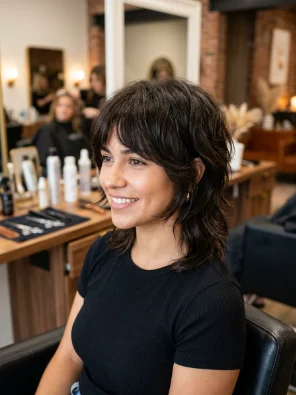
Thick hair can look great with a short wolf cut. But it needs weight control.
Best for: Dense, heavy hair
Hair type: Thick hair
Styling level: Medium
Ask your stylist for: Internal layers and controlled weight removal
Avoid if: You want very short crown layers
Internal layers are layers cut inside the hair to remove bulk. They help thick hair move without making the outside look too choppy.
This matters because thick hair can puff out if the top is cut too short. Use smoothing cream before drying. Then add texture spray only where needed.
The goal is shape, not extra volume. Thick hair already has plenty of it.
Short Wolf Cut Bob with Curtain Bangs

A short wolf cut bob is one of the safest ways to try this style. It keeps the shape close to a bob, so it does not feel too extreme. The curtain bangs soften the front and help frame your face.
Best for: First-time wolf cut wearers
Hair type: Straight, wavy, or medium-density hair
Styling level: Easy to medium
Ask your stylist for: A bob shape with soft crown layers and curtain bangs
Avoid if: You want a very sharp or bold mullet shape
This cut works well because it gives you texture without removing too much length. You can style it with a round brush, blow-dry brush, or flat iron. Move the curtain bangs away from your face. Then add a light texture spray through the ends.
This is a good choice if you want a short wolf cut that still feels wearable.
Short Wavy Wolf Cut

A short wavy wolf cut is one of the easiest versions to wear. Wavy hair already has movement. That helps the layers look natural.
Best for: Women with natural waves
Hair type: Wavy hair
Styling level: Easy
Ask your stylist for: Layers that follow your wave pattern
Avoid if: You want a smooth, blunt bob
This cut works well because the texture does half the job. You can use mousse, wave foam, or sea salt spray. Scrunch the hair while it is damp. Let it air-dry.
If some pieces fall flat, use a flat iron to add soft bends. This is a good option if you want a short wolf cut that does not need heavy styling.
Short Razor Wolf Cut

A short razor wolf cut has airy texture.
A razor can create soft, light ends that do not look blunt.
Best for: Straight to wavy hair
Hair type: Medium-density hair
Styling level: Medium
Ask your stylist for: Razor texture through the ends
Avoid if: Your hair is fragile, frizzy, or very dry
This cut can look cool and light when done well. But it is not perfect for everyone.
If your hair breaks easily, razor cutting can make the ends look rough. If your hair is very frizzy, the texture may be harder to control.
Ask your stylist if razor cutting suits your hair before you say yes. Use heat protectant if you style it with hot tools.
Short Curly Wolf Cut

A short curly wolf cut can look full and lively. But curly hair needs a careful cut.
Best for: Natural curls and coils
Hair type: Curly or coily hair
Styling level: Medium
Ask your stylist for: Curl-friendly layers that account for shrinkage
Avoid if: Your stylist does not know how to cut curly hair
Shrinkage matters. Hair can look longer when wet and much shorter when dry. That is why curly wolf cuts should not be over-layered.
The goal is shape, not thinness. Use curl cream on wet hair. Scrunch gently. Then diffuse on low heat or let it air-dry. Do not over-thin curls. That can create frizz and weak ends.
Short Androgynous Wolf Cut

A short androgynous wolf cut has a strong, gender-neutral shape. It can look clean, edgy, or fashion-forward.
Best for: Women who do not want a classic feminine bob
Hair type: Straight, wavy, or thick hair
Styling level: Medium
Ask your stylist for: Cropped sides, textured top layers, and a slightly longer back
Avoid if: You want a soft traditional haircut
This style works well if you like sharp shapes and simple styling. You can push the top forward, sweep it back, or wear it messy.
Use a light pomade or styling cream. Do not use too much. The hair should still move. This cut has attitude, but it still needs a clear shape.
Rounded Layers

Rounded layers create a softer shape. They are less sharp than choppy layers.
Best for: Women who want volume without harsh edges
Hair type: Medium-density hair
Styling level: Easy to medium
Ask your stylist for: Rounded layers with soft movement
Avoid if: You want a strong punk-style cut
This style is good if you want a short wolf cut but do not want it to look too rough. Rounded layers can help the haircut feel balanced. They also reduce the chance of a harsh mullet shape.
Use a round brush to style the layers. Bend the ends slightly so the cut looks smooth but still textured. This is a safer option for daily wear.
Pixie Wolf Cut with Long Crown Layers

A pixie wolf cut gives you short hair with more edge. The sides and back are usually shorter. The top has longer crown layers, so the hair still has movement.
Best for: Women who want short hair with texture
Hair type: Straight, wavy, or thick hair
Styling level: Medium
Ask your stylist for: A pixie base with longer, textured crown layers
Avoid if: You do not want regular trims
This cut looks best when the crown layers are long enough to move. If they are too short, the cut can look spiky. If they are too long, the shape can fall flat.
Use light wax or texture paste. Rub a tiny amount between your fingers. Then shape the top pieces. This cut needs trims to keep the shape sharp.
Piecey Ends

Piecey ends make the layers look separated. This gives the haircut more shape and movement.
Best for: Straight or slightly wavy hair
Hair type: Fine to medium-density hair
Styling level: Easy
Ask your stylist for: Textured layers with piecey ends
Avoid if: Your hair is very dry or damaged
This is a good option if you want texture without making the cut look too rough. The ends should look light, but not thin. That balance matters.
Use texture spray through the lower layers. Then use your fingers to separate the ends. Avoid heavy oils. They can make piecey ends look greasy instead of textured.
Long Side Pieces

Long side pieces frame the face. They can sit near the cheekbones, jaw, or chin.
Best for: Round and square faces
Hair type: Straight, wavy, or medium-density hair
Styling level: Medium
Ask your stylist for: Longer side pieces that blend into the layers
Avoid if: You hate hair falling near your face
This style gives the haircut more shape from the front. It is also useful if you want edge without cutting the whole style very short.
The long side pieces can make the face look softer. They can also draw attention to the cheekbones or jawline. Style them away from your face for a lifted look.
Flicked-Out Ends

Flicked-out ends turn slightly outward. This gives the cut a retro feel.
Best for: Women who want movement near the neck
Hair type: Straight or wavy hair
Styling level: Easy to medium
Ask your stylist for: Short layers with ends that can flip out
Avoid if: Your hair refuses to hold shape
This cut works well around jaw or neck length. The flicked ends add movement without needing a full curl.
Use a flat iron or round brush to bend the ends outward. Keep the crown soft and lifted. This style is useful if you want a playful finish but do not want heavy bangs or a very bold cut.
Feathered Ends

Feathered ends give the cut a softer finish. The ends are light and blended instead of sharp.
Best for: Women who want movement without harsh layers
Hair type: Fine to medium hair
Styling level: Easy
Ask your stylist for: Feathered ends and soft face-framing layers
Avoid if: You want a very edgy finish
This style is good if you want a short wolf cut that feels less aggressive. It can also work well for women who want a more mature or polished look.
The feathered ends help the haircut move without making it look too choppy. Use a blow dryer and a round brush to bend the ends slightly. Finish with a light spray.
Ear-Length Wolf Cut

An ear-length wolf cut is very short, but it still has movement.
The hair sits around the ears instead of the chin or jaw. The crown has short layers, and the sides usually have soft pieces that stop the cut from looking too plain.
Best for: Women who already like short hair
Hair type: Straight, wavy, or thick hair
Styling level: Medium
Ask your stylist for: Ear-length layers with texture at the crown
Avoid if: You are nervous about going very short
This cut is bold. It can make your face stand out more because there is less hair around the jaw. It works best when the layers are shaped well. If the sides are too heavy, the cut can look round. If the crown is too short, it can stick up. Use a small amount of styling cream or paste to shape the top.
Cropped Wolf Cut with Tapered Nape

A cropped wolf cut with a tapered nape looks cleaner from the back.
The nape is the lower back part of your hair near your neck. A tapered nape means that area is cut shorter and shaped close to the head.
Best for: Thick hair or heavy hair
Hair type: Straight, wavy, or dense hair
Styling level: Medium
Ask your stylist for: A cropped wolf cut with a clean, tapered nape
Avoid if: You want a soft grow-out with no regular trims
This style helps remove bulk from the back.
And here is why that matters. Short wolf cuts can look messy in a bad way if the back grows too heavy. A tapered nape keeps the shape neat.
This is also a strong choice if you want the cut to look good from every angle.
Choppy Crown Layers

Choppy crown layers create lift at the top. This is the part that gives many wolf cuts their shape.
Best for: Flat hair that needs volume
Hair type: Fine to medium hair
Styling level: Medium
Ask your stylist for: Choppy crown layers with blended sides
Avoid if: You have thick or curly hair that expands easily
This style works because it focuses on the crown. If your hair always falls flat, crown layers can help. But they must be cut with care.
Too many short layers can make thick hair puff up. They can also make curly hair shrink too high. Ask your stylist to keep the top textured, but not too short.
Use root spray or mousse to lift the crown.
Baby Curtain Bangs

Baby curtain bangs are shorter than regular curtain bangs. They still split open near the middle, but they sit higher on the forehead.
Best for: Oval and heart-shaped faces
Hair type: Straight or slightly wavy hair
Styling level: Medium
Ask your stylist for: Short curtain bangs that blend into the front layers
Avoid if: You do not want frequent bang trims
This cut gives a short wolf cut more character. It is softer than micro bangs but still more noticeable than long curtain bangs.
The key is balance. The bangs should not look like a separate piece. They should connect to the side layers. This style works well if you want a fresh look but do not want the cut to feel too sharp.
How to Pick a Short Wolf Cut for Your Face Shape
The best short wolf cut for women depends on your face shape, hair texture, and styling routine.
A cut that looks great on one person may not work the same way for you.
Use this guide before you choose.
| Face Shape | Best Feature | Avoid |
| Round | Crown height and long side pieces | Too much width near the cheeks |
| Square | Feathered ends and side-swept bangs | Heavy blunt layers near the jaw |
| Oval | Most short wolf cuts | Too much crown height if hair is thick |
| Heart | Bottleneck bangs or wispy bangs | Heavy top layers |
| Long | Bangs and side volume | Very tall crown layers |
If your face is round, keep some height at the crown. Long side pieces can help frame the cheeks.
If your face is square, avoid bulky layers near the jaw. Softer bangs and feathered ends usually work better.
If your face is long, avoid too much height on top. Bangs can help balance the face.
Face shape is useful. But your hair type should still guide the final choice.
How to Match a Short Wolf Cut to Your Hair Type
A wolf cut for short hair changes a lot based on hair type.
The same haircut can look full on thick hair, flat on fine hair, and round on curly hair.
Fine hair: Choose soft crown layers. Keep the ends fuller. Avoid heavy thinning.
Thick hair: Ask for internal layers. The goal is to remove weight without making the top puff up.
Straight hair: Ask for texture through the ends. Straight hair shows cut lines more clearly.
Wavy hair: Let the waves help the cut. This hair type often works well with wolf layers.
Curly hair: Ask for curl-safe layering. The stylist must think about shrinkage before cutting.
Here is the truth.
Your stylist should adjust the cut to your hair. They should not copy a photo exactly.
What Should You Ask Your Stylist Before Cutting?
Asking for “a wolf cut” is not enough.
That can mean many different things.
Before your appointment, save 2 or 3 photos. Try to find photos that show the front, sides, and back.
Then ask these questions:
- How short will the crown layers be?
- Where will the face-framing pieces sit?
- Will bangs suit my face and routine?
- How much weight will you remove?
- How will this cut grow out?
- What products will I need at home?
You can also use this script:
“I want a short wolf cut with texture and face-framing layers, but I do not want the crown layers too short. Please keep the shape wearable and tell me how it will grow out.”
That simple line can help you avoid a bad cut.
A short layered wolf haircut works best when your stylist adjusts the layers to your hair density.
How to Style a Short Wolf Cut in 5 Minutes
A short wolf cut does not need perfect styling.
But it does need shape.
Here is a simple 5-minute routine:
- Spray the roots.
- Dry the crown upward.
- Shape the bangs.
- Add texture spray.
- Piece out the ends with your fingers.
Use the right product for your hair type.
| Hair Type | Product | Quick Tip |
| Fine | Root spray | Lift the crown first |
| Thick | Smoothing cream | Control bulk before adding texture |
| Wavy | Mousse | Scrunch and air-dry |
| Curly | Curl cream | Diffuse on low heat |
| Straight | Heat protectant | Add soft bends with a flat iron |
Do not use too much oil or heavy cream.
Heavy products can make the layers look flat. They can also make the cut lose its shape.
The best short wolf cut styling is simple. Add lift. Add texture. Keep the hair moving.
How Often Should You Trim a Short Wolf Cut?
Short wolf cuts need trims because the shape depends on layers and bangs.
When the layers grow out, the crown can fall flat. The back can feel heavy. The bangs can lose their shape.
Use this trim guide:
| Style | Trim Timing |
| Pixie wolf cut | 6 to 8 weeks |
| Short wolf bob | 8 to 10 weeks |
| Bangs | 3 to 5 weeks |
| Curly wolf cut | 8 to 12 weeks |
| Undercut wolf cut | 4 to 6 weeks |
These times are not strict rules. Your hair growth and style choice matter. If you want less maintenance, choose a short wolf bob instead of a pixie wolf cut or undercut. A short wolf haircut looks better when the layers stay shaped instead of growing into random pieces.
Final Thoughts
A short wolf cut can be bold, soft, edgy, curly, wavy, pixie-like, or bob-like. The right choice depends on your real hair.
Do not choose a haircut only because it looks good in one photo. Think about your texture, your face shape, and how much styling you want to do.
Save 2 or 3 styles before your salon visit. Then talk to your stylist about what will work for you.
