
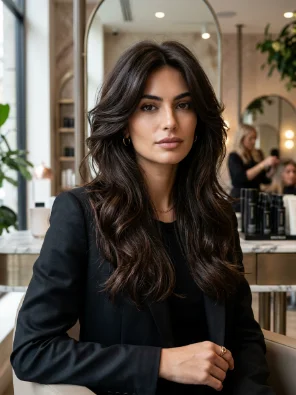
A long shag haircut no bangs can give you soft movement, lift, and shape without hair falling across your forehead.
That matters when you love the relaxed look of a shag but do not want fringe to style every morning. You may also worry that layers will make your hair look thin. Or you may fear leaving the salon with a cut that feels too much like a mullet.
The good news is simple. A shag does not need bangs to look good.
The key is where the layers begin. Cheekbone-length pieces give you stronger face framing. Chin-length pieces feel softer. Longer layers near the collarbone give you movement with less upkeep.
In this guide, you will find 20 long shag haircut without bangs ideas for different hair types and routines. You will also learn what to ask for at the salon and how to style your cut at home.
What Is a Long Shag Haircut With No Bangs?
A long shag is a layered haircut with movement through the top, middle, and ends of your hair.
It is less even than classic long layers. The shape has more texture. It often has more lift near the crown. It can also make long hair feel lighter and less flat.
A long shag haircut with no bangs keeps the forehead clear. Instead of fringe, the shape comes from face-framing layers, crown layers, and textured ends.
No bangs does not mean no face framing.
Your shortest layers can start near your cheekbones, chin, jaw, or collarbone. Each choice gives a different look.
- Cheekbone layers create a stronger frame around your face.
- Chin-length layers feel soft and easy to wear.
- Collarbone layers give subtle movement without much change near your face.
A long shag is also different from a wolf cut. A wolf cut often has much shorter layers at the top and a stronger contrast between the crown and the ends. A long shag can look softer and more blended.
It is also different from basic long layers. Regular layers often keep a smooth, even shape. Shag layers are more visible. They create a lived-in finish.
When you book your appointment, be clear. Say you want no fringe and no curtain bangs. Then tell your stylist where you want the first face-framing pieces to fall.
Do not say: “Give me a shag, but no bangs.”
Say this instead: “I want a long shag with no fringe or curtain bangs. Please keep my shortest face-framing layers around my chin.”
Long Shag Haircut No Bangs Ideas
These ideas range from barely-there layers to bolder, textured shapes. Save the looks that match your hair and daily routine.
Air-Dried Wavy Long Shag

This style lets your natural waves do most of the work. The cut adds shape, so your hair does not hang in one heavy block. A little mousse or curl cream can help.
Best for: Naturally wavy hair.
Layer intensity: Medium.
Styling effort: Low.
Ask your stylist: “I want a long shag that looks good when I air-dry my waves.”
Beach-Wave Long Shag

This version has loose texture and long layers that look slightly undone. The layers should not be too short. That keeps the style relaxed instead of messy.
Best for: Wavy hair or people who like an easygoing look.
Layer intensity: Medium.
Styling effort: Low to medium.
Ask your stylist: “I want long shaggy layers that look good with loose beach waves.”
Chin-Length Face-Framing Shag

This look gives you visible shape around the face without bangs. The shortest pieces start at the chin. They blend into longer layers through the rest of the hair.
Best for: Anyone who wants face framing but hates hair in their eyes.
Layer intensity: Soft.
Styling effort: Low.
Ask your stylist: “Keep my shortest layers at chin length and blend them into my long hair.”
Coily Long Shag With a Rounded Perimeter

A rounded perimeter means the outside shape of the hair looks soft and curved. This can keep coily hair looking full while giving it movement through the middle.
Best for: Coily hair that needs shape without losing fullness.
Layer intensity: Medium.
Styling effort: Low to medium.
Ask your stylist: “I want a rounded long shape with layers that keep my hair full.”
Curl-by-Curl Face-Framing Shag
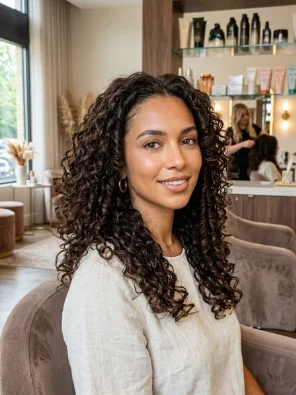
This version focuses on where each curl falls around your face. The stylist shapes the front pieces so they frame your features without becoming fringe.
Best for: Curly hair with strong curl patterns.
Layer intensity: Medium.
Styling effort: Low.
Ask your stylist: “I want curl-by-curl face framing that starts around my chin, not my forehead.”
Feathered Blowout Shag

This cut looks soft and bouncy after a blowout. The layers turn away from the face and create a light, airy finish. It works well when you like polished hair with some movement.
Best for: Straight or wavy hair.
Layer intensity: Medium.
Styling effort: Medium.
Ask your stylist: “Give me long feathered layers that will flip out softly with a blowout.”
Fine-Hair Long Shag With Soft Ends

Fine hair needs a careful approach. Too many short layers can make the ends look weak. Soft layers can still give you movement while keeping the cut light and full-looking.
Best for: Fine straight or wavy hair.
Layer intensity: Soft.
Styling effort: Low to medium.
Ask your stylist: “I want movement, but please keep the layers long and my ends full.”
Grown-Out Long Shag

This cut is made for easy grow-out. The layers stay longer. The shape looks natural even when you skip a trim for a while.
Best for: People who do not want frequent haircut visits.
Layer intensity: Soft.
Styling effort: Low.
Ask your stylist: “Give me a long shag that grows out softly and does not need a lot of upkeep.”
Long Curly Shag With Rounded Layers

Curly hair can look wide at the bottom when it has one heavy length. Rounded layers help spread the shape more evenly. The result can look full without looking boxy.
Best for: Curly hair that feels heavy at the ends.
Layer intensity: Medium.
Styling effort: Low to medium.
Ask your stylist: “Please shape my curls in rounded layers and keep the face clear of bangs.”
Long Shag With Below-the-Chin Face Frame

This is a smart choice when you dislike short pieces near your face. The first layers start below the chin. You still get movement, but your hair stays easier to tuck behind your ears.
Best for: Low-maintenance hair and people who dislike fringe.
Layer intensity: Soft.
Styling effort: Low.
Ask your stylist: “Keep my shortest face-framing layers below my chin.”
Long Shag With Crown Volume

This look has more lift near the top of the head. The lower layers stay longer, so your hair still feels long and full. It can help when your roots tend to look flat.
Best for: Wavy or curly hair with flat roots.
Layer intensity: Medium.
Styling effort: Medium.
Ask your stylist: “Add lift near my crown, but keep my lower layers long and full.”
Long Shag With Invisible Layers

Invisible layers are very soft layers that blend into the cut. You still get movement. But the change does not look choppy or bold.
Best for: Fine hair or first-time layer clients.
Layer intensity: Soft.
Styling effort: Low.
Ask your stylist: “I want soft hidden layers that add movement but keep my ends looking full.”
Long Shag With Textured Ends and No Fringe

This is the boldest option on the list. The ends look more piecey. The crown has more movement. The forehead stays open, so the style still feels clean and easy to wear.
Best for: Medium to thick hair and people who like visible texture.
Layer intensity: Bold.
Styling effort: Medium.
Ask your stylist: “I want textured ends and strong movement, but no fringe or curtain bangs.”
Long U-Shaped Shag

A U-shaped bottom keeps your hair looking full. The shag layers add movement through the middle. This is a good choice when you want texture but still love long, thick-looking ends.
Best for: Medium to thick hair.
Layer intensity: Medium.
Styling effort: Low to medium.
Ask your stylist: “Keep a soft U-shape at the bottom and add long shag layers through the middle.”
Loose S-Wave Shag

Loose S-waves make shag layers stand out. The shape looks relaxed but still put together. You can create the bends with a curling iron, flat iron, or overnight braids.
Best for: Straight or wavy hair.
Layer intensity: Medium.
Styling effort: Medium.
Ask your stylist: “Add long layers that will show off loose waves through the middle and ends.”
Side-Parted Long Shag Without Fringe

A side part can add lift at the roots. It can also make the face-framing layers look more dramatic on one side. This is helpful when you want movement without cutting bangs.
Best for: Flat roots or people who prefer a side part.
Layer intensity: Medium.
Styling effort: Low to medium.
Ask your stylist: “I wear a side part, so shape the face-framing layers for that part.”
Soft Center-Parted Long Shag

This is a gentle way to try a shag without a big change. The center part keeps the cut balanced. Long layers add movement without making the ends look thin.
Best for: Straight or softly wavy hair.
Layer intensity: Soft.
Styling effort: Low to medium.
Ask your stylist: “I want soft long layers with a center part and no fringe.”
Soft Wolf-Inspired Long Shag

This is for people who like crown volume but do not want an extreme wolf cut. The upper layers are a little shorter. The overall length stays long and soft.
Best for: Medium to thick hair.
Layer intensity: Bold.
Styling effort: Medium.
Ask your stylist: “I want soft crown volume and long layers, but I do not want a sharp wolf-cut shape.”
Straight-Hair Feathered Long Shag

Straight hair can show every layer clearly. Feathered ends keep the cut soft. A quick bend through the middle can help the shape stand out even more.
Best for: Straight hair that needs more movement.
Layer intensity: Medium.
Styling effort: Medium.
Ask your stylist: “I want feathered layers that show up on straight hair without looking choppy.”
Thick-Hair Long Shag With Weight Removal

Thick hair can feel heavy through the middle and ends. A shag can remove some bulk and make styling easier. The bottom should still look full enough to avoid a thin, stringy finish.
Best for: Thick hair that feels heavy.
Layer intensity: Medium to bold.
Styling effort: Low to medium.
Ask your stylist: “Take out some bulk through the middle, but keep a full shape at the bottom.”
Thick hair tip: Ask where the weight will be removed before the cutting starts.
How to Style and Maintain a Long Shag Haircut Without Bangs
A good long shag should look good before you reach for a hot tool.
You may still want to style it sometimes. But the cut should support your normal routine.
A 5-Minute Routine for Wavy or Curly Hair
- Apply leave-in conditioner or curl cream to damp hair.
- Add mousse or lightweight gel near the roots for lift.
- Scrunch your hair upward with your hands.
- Air-dry or use a diffuser until your hair is mostly dry.
- Rub a small amount of styling cream between your fingers.
- Gently separate a few face-framing pieces.
Try not to brush dry curls. Brushing can pull apart the curl pattern and make the shape look bigger than you want.
A 5-Minute Routine for Straight Hair
- Apply heat protectant before using a blow-dryer or hot tool.
- Dry your roots in the opposite direction of your part for extra lift.
- Use a round brush if you want soft volume.
- Add a few loose bends through the middle of your hair.
- Spray a small amount of texture spray on the ends.
- Shake out the layers with your fingers.
You do not need to curl every piece. A few bends can make the layers look more natural.
Easy Ways to Refresh the Cut Between Washes
Use dry shampoo at the roots if your hair looks flat.
Mist the middle and ends with water if your waves need help.
Twist two small face-framing pieces away from your face. Let them dry for a few minutes. This can bring back shape without using heat.
You can also change your part. A new part can add volume and make the layers look fresh.
Helpful Tools and Products
- Wide-tooth comb
- Hair clips
- Diffuser
- Round brush
- Heat protectant
- Lightweight mousse
- Texture spray
- Curl cream
- Flexible styling cream
Ask your stylist when to come back for a trim. The right timing depends on your hair, layer length, and how fast your hair grows.
How to Choose the Right Long Shag for Your Hair
The best long shag starts with your real hair. It should work with your texture, density, and normal routine.
A photo can help. But your stylist also needs to know how your hair looks when you wash it, air-dry it, and style it.
Start With Your Natural Texture
Straight hair often needs more visible layers to show the shag shape. Soft bends from a curling iron or blow-dryer can help the layers stand out.
Wavy hair usually works well with a shag. The natural bends can make the cut look relaxed with less styling.
Curly hair can look great with a long shag too. The layers help shape the curls and keep the bottom from looking too heavy. Make sure your stylist knows how your curls sit when dry.
Coily hair can also wear a long shag. A rounded shape and careful layer placement can keep the cut full and balanced.
Think About Density and Strand Thickness
Fine hair means each strand is small. Low-density hair means you have fewer strands overall. These are different things.
Fine hair can still look full with the right long shag. You may want softer layers and a fuller bottom edge.
Thick hair can handle more weight removal. Layers can help it feel lighter and easier to style.
Be Honest About Styling Time
Do you like to air-dry your hair? Choose longer face-framing pieces and softer layers.
Do you enjoy a blowout or curling your hair? You can try more layers near the crown and face.
This works because the cut matches your normal life. But a haircut that needs daily heat styling may not feel good if you prefer a five-minute routine.
Use Face Shape as a Guide, Not a Rule
You do not need a haircut “rule” based on your face shape.
Instead, think about what you want to show off. Cheekbone layers can bring attention higher on the face. Chin-length layers can soften the area around the jaw. Longer layers can keep the look subtle.
| Your Goal | A Good Direction | What to Ask For |
| Fine, straight hair | Soft, blended layers | “Keep the layers light and avoid taking out too much weight.” |
| Thick, wavy hair | More movement inside the cut | “Remove some bulk, but keep the bottom looking full.” |
| Loose curls | Rounded curl-friendly layers | “Shape the cut around how my curls look dry.” |
| Low-maintenance hair | Longer face frame | “Start my shortest layers below my chin.” |
Related Read – long shag haircut with bangs
Final Thoughts
A long shag can give your hair more life without forcing you to deal with bangs every day.
Start by choosing how bold you want your layers to be. Then decide where you want the first face-framing pieces to fall. Soft chin-length layers work for many people. Longer layers can be easier if you want less upkeep.
Save a few photos that match your texture. Use the salon script. Be honest about how much styling you will really do.
The right cut should fit your routine, not create more work for you. Save the styles that match your hair and use the salon script to make your long shag haircut no bangs feel clear from the first cut.
