
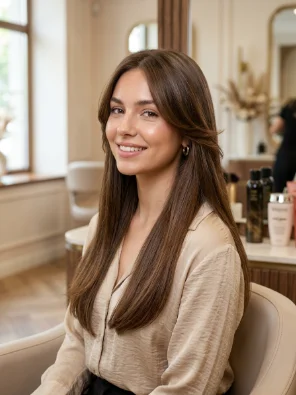
Straight hair can look flat when it is all one length. A long shag haircut straight hair can fix that by adding shape, movement, and lighter-looking ends without giving up your length.
But there is a catch. Straight hair shows every layer. That can look clean and pretty when the cut is balanced. It can also make thin ends or short, choppy layers stand out.
You may love shag haircut photos but worry the same look will not work on your hair. You may also wonder if you will need a blowout every day to make the layers show.
You do not need a high-maintenance routine for a good long shag. You need the right layer length, enough weight at the ends, and a style that matches how you really wear your hair.
This guide shows you 20 long shag ideas for straight hair. You will also learn how to choose the right version, what to say at the salon, and how to style it in a few minutes.
How a Long Shag Haircut Gives Straight Hair More Shape
Straight hair can make a good haircut look very clean. It can also make a badly placed layer easy to spot.
A long shag uses layers to break up hair that feels heavy or flat. The cut adds movement through the middle and ends. It can also add lift near the crown, which is the top area of your head.
A basic long layered cut often looks smooth and even. A shag has more visible texture. The layers may feel lighter and more lived-in.
The best long shag for straight hair keeps enough weight at the bottom. This helps your ends look full. Too many short layers can make the bottom look thin.
Face-framing layers also matter. They shape the area around your face without forcing you to get bangs.
Here are three easy options:
- Cheekbone layers: These create a stronger change near your face.
- Chin-length layers: These give you shape without hair falling into your eyes.
- Collarbone layers: These feel soft and need less styling.
A wolf cut is usually more dramatic than a long shag. It often has shorter layers near the top and a bigger difference between the crown and the ends.
A long shag can be softer. It can also grow out more easily.
Quick tip: No short bangs does not mean no face framing. You can still get movement around your face with chin-length or collarbone-length layers.
Long Shag Haircut Straight Hair Ideas
These long shag haircut straight hair ideas range from soft and simple to bold and textured. Focus on the style that matches your thickness, part, and normal routine.
U-Shaped Long Shag

A U-shaped cut has a soft curve at the bottom. The center is slightly longer than the sides.
This shape keeps your hair looking full while the layers add movement through the middle.
Best for: Medium or thick straight hair.
Layer level: Medium.
Styling time: Low.
Root lift needed: No.
Ask for: “Keep a soft U-shape at the bottom with long layers through the middle.”
Thick-Hair Long Shag With Weight Removal

Thick hair can feel bulky through the middle. Internal layers remove some of that heaviness without taking away all your length.
The goal is a lighter shape, not thin ends.
Best for: Thick hair that feels heavy.
Layer level: Medium.
Styling time: Low to medium.
Root lift needed: No.
Ask for: “Remove weight through the middle, but keep the bottom full.”
Soft Center-Parted Long Shag

This is a gentle way to try a shag haircut. The layers blend into the ends, so the style still looks smooth from the front.
Best for: First-time shag clients.
Layer level: Soft.
Styling time: Low.
Root lift needed: No.
Ask for: “I want long blended layers with a center part and no short fringe pieces.”
Smooth Long Shag With Polished Ends

This version has movement without a messy finish. The layers are blended, and the ends look neat.
It is a good match for people who like sleek hair but want more shape than a one-length cut.
Best for: People who like smooth styles.
Layer level: Soft.
Styling time: Low to medium.
Root lift needed: No.
Ask for: “Keep the layers smooth and blended with polished ends.”
Side-Parted Long Shag
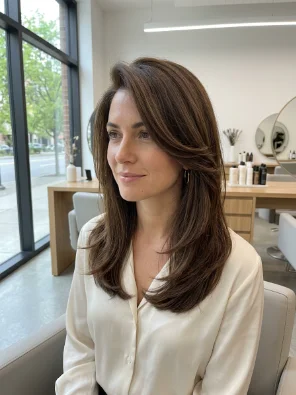
A side part can make your roots look fuller with very little work. The face-framing layers also look more dramatic on one side.
This cut works best when your hair naturally falls into a side part.
Best for: People who wear a side part most days.
Layer level: Medium.
Styling time: Low.
Root lift needed: Sometimes.
Ask for: “Shape the layers around my natural side part.”
Root-Lift Long Shag

This cut has more movement near the crown. It can help when your hair looks flat at the top.
Keep the upper layers long enough to blend. Very short crown layers can be hard to style on straight hair.
Best for: Flat roots.
Layer level: Medium.
Styling time: Medium.
Root lift needed: Yes.
Ask for: “Add movement near my crown, but keep the top layers long enough to blend.”
Piecey-End Long Shag

This look has more texture at the ends. It can make straight hair feel less heavy and more relaxed.
The key is keeping enough fullness at the bottom. Too much texturing can make your ends look weak.
Best for: Medium or thick hair.
Layer level: Medium.
Styling time: Medium.
Root lift needed: No.
Ask for: “Add texture at the ends, but keep them looking full.”
Off-Center Part Long Shag

An off-center part sits between a center part and a deep side part. It gives you a softer look than a deep side part.
It can also add a little lift near the roots.
Best for: People who want easy volume.
Layer level: Soft to medium.
Styling time: Low.
Root lift needed: Sometimes.
Ask for: “Build the front layers around an off-center part.”
Loose S-Bend Long Shag

This cut is made for soft bends through the middle and ends. The bends look like a loose letter S instead of a tight curl.
You do not need to curl every section. A few bends can make the layers stand out.
Best for: People who use a curling iron or flat iron.
Layer level: Medium.
Styling time: Medium.
Root lift needed: No.
Ask for: “Give me layers that show up with loose S-shaped bends.”
Long Shag With Tapered Ends

Tapered ends narrow softly instead of sitting in one thick line. This can make thick hair move more easily.
The effect should be light. Too much tapering can make the ends look stringy.
Best for: Thick, heavy hair.
Layer level: Medium.
Styling time: Medium.
Root lift needed: No.
Ask for: “Taper the ends lightly so my hair moves without looking thin.”
Long Shag With Soft Face Flips

The front layers flip away from your face. This gives a soft, polished finish.
You can create the flips with a round brush or a curling iron. The rest of your hair can stay mostly straight.
Best for: Blowout fans.
Layer level: Medium.
Styling time: Medium.
Root lift needed: No.
Ask for: “Give me face-framing layers that flip out softly when styled.”
Long Shag With Long Crown Layers

This cut gives you lift near the crown while keeping the shortest layers fairly long.
It can help when your hair gets flat at the top but you do not want a big haircut change.
Best for: Thick straight hair with flat roots.
Layer level: Medium.
Styling time: Medium.
Root lift needed: Yes.
Ask for: “Keep my crown layers long enough to blend into the rest of my hair.”
Long Shag With Invisible Layers

Invisible layers add movement without looking sharp or choppy. The hair still looks mostly one length from a distance.
This is often a safer choice for fine straight hair.
Best for: Fine hair or haircut beginners.
Layer level: Soft.
Styling time: Low.
Root lift needed: No.
Ask for: “Add soft hidden layers, but keep my bottom line full.”
Long Shag With Full Ends

This style keeps more weight at the bottom. Soft layers sit above the ends, so your hair can still look fuller.
This is often a smart choice for fine or low-density hair.
Best for: Fine straight hair.
Layer level: Soft.
Styling time: Low.
Root lift needed: No.
Ask for: “Keep my ends blunt enough to look full, then add soft movement above them.”
Long Shag With Collarbone Layers

The first layers begin near your collarbone. This gives you movement without short pieces around your face.
It is one of the easiest options to grow out.
Best for: Low-upkeep routines.
Layer level: Soft.
Styling time: Low.
Root lift needed: No.
Ask for: “Start my shortest layers around my collarbone.”
Grown-Out Long Shag

This is a softer shag with longer layers. It is made to look good as it grows.
You may still want trims for split ends. But the overall shape should not look awkward after a few months.
Best for: People who do not get frequent haircuts.
Layer level: Soft.
Styling time: Low.
Root lift needed: No.
Ask for: “Give me a long shag that grows out softly.”
Feathered Blowout Shag

This style looks best with a round-brush blowout. The front layers flip away from your face for a light, bouncy look.
It is not the easiest air-dry option. But it can look great when you enjoy styling your hair.
Best for: People who like blowouts.
Layer level: Medium.
Styling time: Medium.
Root lift needed: Yes.
Ask for: “Give me feathered layers that move away from my face with a blowout.”
Crown-Volume Long Shag

This look adds more shape near the top of the head. The lower sections stay long, so you do not lose the feeling of long hair.
It is a stronger version of the shag. It may need root spray or a blow-dryer to look its best.
Best for: Medium or thick hair.
Layer level: Bold.
Styling time: Medium.
Root lift needed: Yes.
Ask for: “I want more crown volume, but I do not want short, obvious layers.”
Chin-Length Face-Framing Long Shag

The shortest pieces begin around your chin. They frame your face but do not act like bangs.
This is a good choice when you want shape without hair touching your forehead.
Best for: People who want an open face.
Layer level: Soft.
Styling time: Low.
Root lift needed: No.
Ask for: “Keep my first face-framing layers around my chin.”
Bold Long Shag With Textured Ends

This is the strongest look on the list. It has more crown movement, more texture, and more visible layers.
It can look great on medium to thick straight hair. It may need some styling to keep the shape clear.
Best for: Medium to thick hair.
Layer level: Bold.
Styling time: Medium to high.
Root lift needed: Yes.
Ask for: “I want a bold long shag with texture and lift, but I still want to keep my length.”
How to Choose the Right Long Shag for Your Straight Hair
The best haircut should work after wash day, not just after a salon blowout.
Start by looking at your hair thickness. Fine hair usually needs softer, longer layers. Thick hair can often handle more texture and weight removal.
Your normal part also matters. A center part gives a balanced look. A side part can make the roots look fuller. An off-center part can give you a little lift without a major change.
Think about how much time you want to spend styling your hair.
If you air-dry most days, longer layers may work best. If you like round-brush blowouts, you can try more feathered layers. If you enjoy using a curling iron, you may like layers that show off soft bends.
Use face shape as a guide, not a rule. You do not need to follow a strict chart. Focus on what you want your haircut to do.
Do you want more movement around your cheeks? Start layers higher.
Do you want a low-upkeep cut? Keep the first layers below your chin.
| Your Hair Goal | Best Direction | What to Ask For |
| Fine straight hair | Long, soft layers | “Keep my ends full and avoid too many short layers.” |
| Thick straight hair | Internal layers and texture | “Remove some weight through the middle, but keep a strong bottom line.” |
| Flat roots | Crown lift and an off-center part | “Add movement near my crown without cutting the top too short.” |
| Low styling time | Longer face-framing layers | “Keep my shortest layers below my chin.” |
| Loves blowouts | Feathered layers | “Give me layers that flip out with a round brush.” |
Pick Your Layer Level
- Soft layers: Best when you want a small change and easy grow-out.
- Medium layers: Best when you want visible movement without a bold cut.
- Bold layers: Best when you want more crown lift and do not mind styling.
Once you know your comfort level, it is much easier to choose the right look.
The 5-Minute Styling Routine for a Straight-Hair Shag
Straight hair can show every layer. A little lift and texture can help those layers stand out.
You do not need to curl all your hair. You also do not need a long routine every day.
The 5-Minute Root-Lift Routine
- Apply heat protectant to damp hair.
- Add a small amount of mousse or root spray near your scalp.
- Blow-dry the roots in the opposite direction of your normal part.
- Flip your part back into place.
- Add texture spray through the middle and ends.
This can give you more lift without making your hair look stiff.
The Soft-Bend Routine
- Start with dry hair and heat protectant.
- Take a few middle sections of hair.
- Add loose bends with a flat iron or curling iron.
- Keep the ends mostly straight.
- Run your fingers through the bends.
- Finish with a small amount of texture spray.
The goal is movement. You do not need perfect curls.
The No-Heat Refresh
- Use dry shampoo at the roots.
- Change your part for quick lift.
- Lightly mist the front layers with water.
- Twist the front pieces away from your face.
- Clip them for a few minutes.
- Take out the clips and shake out the layers.
Helpful Tools
- Blow-dryer
- Round brush
- Sectioning clips
- Heat protectant
- Lightweight mousse
- Root-lifting spray
- Texture spray
- Dry shampoo
- Curling iron or flat iron
- Lightweight finishing cream
Use the routine that fits your life. A good long shag should not create more work than you want to do.
Final Thoughts
Straight hair can wear a long shag well when the layers match your thickness, part, and styling habits.
Soft layers work well when you want a small change. Medium layers give you more movement. Bold crown layers can add volume, but they may need more styling.
Save three looks you like before your salon visit. Then write down what you like about each one. It could be the part, the face-framing pieces, the fullness at the ends, or the crown volume.
