
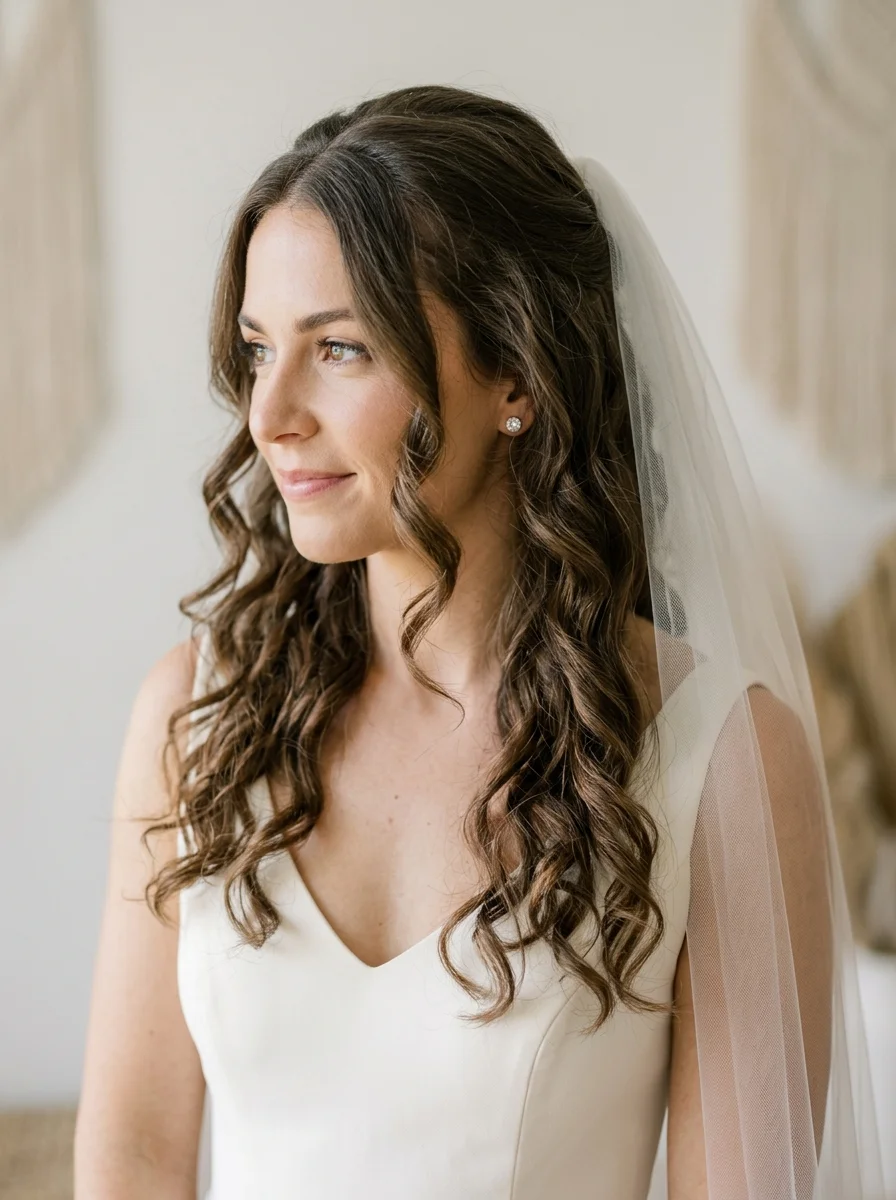
Choosing your wedding hairstyle can feel stressful. Adding a veil can make the choice even harder.
You need a style that looks beautiful from every angle. It also needs to hold your veil without slipping, pulling, or hiding the best parts of your hair.
Some hairstyles work well with light veils. Others give better support for long cathedral veils. Your hair length, texture, dress, and wedding setting can also affect your final choice.
Textured Bun With Pearl Pins and Veil

A textured bun has soft twists, loose sections, and visible shape. It feels less formal than a smooth bun but still gives good veil support.
Pearl pins can be placed around the bun for a soft bridal detail. Use different pin sizes so the design does not look too even.
The veil usually looks best under the bun. This keeps the pearls and texture visible.
Leave enough space between the pearl pins and veil comb. Crowding both into one area can weaken the hold.
Best for: Medium and long hair
Veil placement: Under the bun
Works with: Fingertip, chapel, and cathedral veils
Styling tip: Place the veil first during the trial, then plan the pearl pins around it.
Straight Hair With a Veil

Straight bridal hair can look clean, simple, and polished. You can wear it with a center part, side part, or tucked behind the ears.
The smooth surface may cause a veil comb to slip. A hidden braid or row of crossed pins can fix this problem.
Straight wedding hairstyles with veil work best with light veils. They also look good with simple dresses, modern gowns, and clean necklines.
Keep shine products away from the roots. Too much product can reduce grip.
Best for: Short, medium, and long hair
Veil placement: Crown or middle back
Works with: Birdcage, shoulder-length, and fingertip veils
Styling tip: Place a small hidden braid under the top layer of hair.
Soft Romantic Updo With Face-Framing Pieces

A soft updo gives you the support of pinned hair without looking too stiff. Loose texture around the bun creates a relaxed and romantic finish.
A few face-framing pieces can soften the cheeks and jawline. They can also make a formal hairstyle feel more natural.
The veil can sit in the middle of the updo or just below it. This placement keeps the hairstyle balanced from the side and back.
This is one of the best romantic wedding hairstyles with veil options for garden, rustic, or outdoor weddings.
Best for: Medium and long hair
Veil placement: In the middle or below the updo
Works with: Soft tulle and lace-trimmed veils
Styling tip: Test the loose front pieces in wind or humid weather.
Sleek High Bun With Veil

A sleek high bun creates a clean and modern shape. It also lifts the hair away from your face, neck, and dress.
The veil usually looks best beneath the bun. This keeps the smooth round shape visible and stops the veil from covering it.
A high bun wedding hairstyle with veil works well with fitted dresses, simple necklines, and modern bridal looks.
This style can handle a light or medium-weight veil. A very heavy veil may pull on the bun and cause discomfort.
Best for: Medium and long hair
Veil placement: Beneath the bun
Works with: Simple fingertip and chapel veils
Styling tip: Use smoothing cream near the roots, but keep the veil area free from oily products.
Side-Swept Curls With Veil

Side-swept curls gather the hair over one shoulder. This creates a soft shape and keeps the other side of the neck open.
The veil can sit at the back of the head or on the opposite side. This helps balance the hairstyle.
This look works well with strapless, off-shoulder, and one-shoulder dresses. It can also show off statement earrings.
The curls need to be pinned firmly behind one ear so they stay in place.
Best for: Medium and long hair
Veil placement: Back or opposite side
Works with: Fingertip and light chapel veils
Styling tip: Use hidden pins behind the ear to stop the curls from moving forward.
Short Bob With Veil

A short bob can look beautiful with a veil. The key is choosing a veil that feels balanced with the hair length.
Soft bends create a romantic look. Smooth ends feel more modern. One side can also be tucked behind the ear to show an earring or hair pin.
A bob hairstyle with veil may need a small hidden braid, headband, or firm comb base.
Birdcage and shoulder-length veils work especially well with short hair.
Best for: Chin-length and shoulder-length bobs
Veil placement: Crown, side, or back
Works with: Birdcage, shoulder-length, and fingertip veils
Styling tip: Test the comb during your hair trial to make sure it does not slide.
Ponytail Wedding Hairstyle With Veil

A ponytail can look stylish enough for a wedding when the shape is smooth and the base is well finished.
You can choose a low ponytail, high ponytail, or mid-height ponytail. The ends can be straight, curled, or softly waved.
The veil can sit above or below the ponytail base. The elastic and pins create a strong place for the comb.
A wedding ponytail with veil works well for modern weddings and simple bridal looks. It also keeps hair away from your face.
Best for: Medium and long hair
Veil placement: Above or below the ponytail base
Works with: Fingertip and simple chapel veils
Styling tip: Wrap a small section of hair around the elastic for a finished look.
Pixie Cut With Veil

A pixie cut can be paired with a veil, but the attachment needs careful planning.
A birdcage veil is often the easiest option. It can attach to a headband, small comb, or clip.
A shoulder-length veil can also work if your stylist creates a hidden support point. Small clips or a clear elastic may be placed under the top section.
You can style the pixie sleek, textured, or side-swept. Keep the accessories light so they do not overpower the haircut.
Best for: Pixie and cropped haircuts
Veil placement: Side, crown, or headband
Works with: Birdcage and shoulder-length veils
Styling tip: Choose the veil before the hair trial so the attachment can be tested.
Natural Curly Hair With Veil

Your natural curl pattern can be the main part of your bridal look. You do not need to smooth or hide it to wear a veil.
The veil can sit above the curls, below a pinned section, or near the back of the head. The right choice depends on your curl volume.
A comb placed too high may flatten the top. A low placement can keep more of the curl shape visible.
Curly wedding hairstyles with veil should be tested in the same weather conditions you expect on the wedding day.
Best for: All natural curl types
Veil placement: Above, below, or within a pinned section
Works with: Fingertip, chapel, and light cathedral veils
Styling tip: Use curl products that give hold without making the hair stiff.
Low Chignon With Veil Above the Bun

A low chignon is a smooth bun placed near the nape of the neck. It creates a clean and classic bridal look.
Placing the veil above the bun adds height and soft volume around the head. It also gives the veil more movement as it falls over the shoulders.
This style works well for medium and long hair. It suits formal weddings, simple dresses, and classic bridal looks.
A low chignon can also support heavier veils better than loose hair.
Best for: Medium to long hair
Veil placement: Above the bun
Works with: Fingertip, chapel, and cathedral veils
Styling tip: Place two bobby pins in an X shape before inserting the veil comb.
Low Bun With Veil Underneath
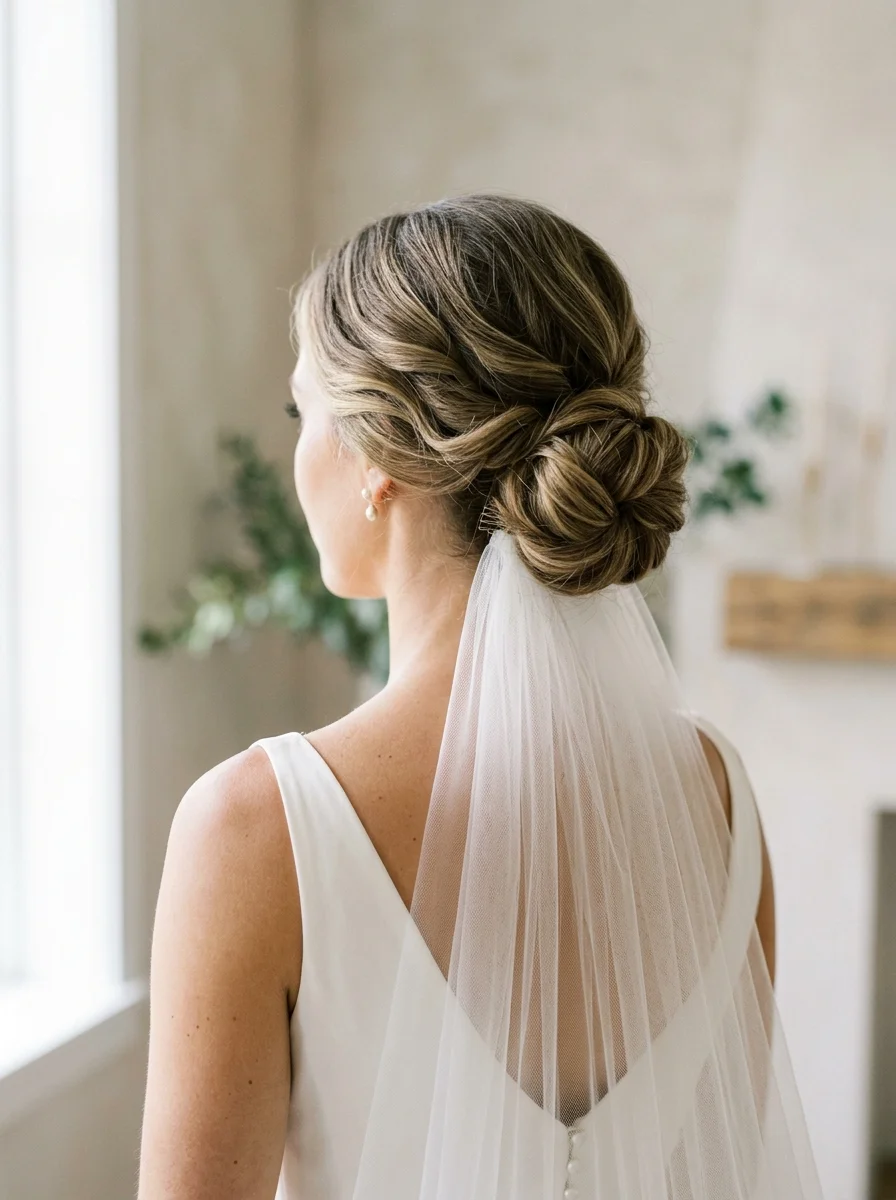
A veil placed under a low bun keeps more of the hairstyle visible. This is a good choice if your bun includes twists, braids, pearls, or soft texture.
The veil sits near the nape and falls behind the shoulders. This creates a softer and less covered look from the front.
A low bun with veil underneath works well with simple tulle veils and chapel-length veils. It can also help show the back of your dress.
The comb may need to face upward when placed beneath the bun.
Best for: Medium or long hair
Veil placement: Under the bun
Works with: Fingertip and chapel veils
Styling tip: Ask your stylist to build a firm pin base below the bun.
Loose Curls With a Veil

Loose curls are a good choice if you want to wear your hair fully down. They look soft, natural, and romantic.
The main problem is support. Loose hair may not give the veil comb enough grip.
Your stylist can solve this with a small hidden braid, crossed pins, or a tiny clear elastic beneath the top layer. These details stay hidden while giving the comb something firm to hold.
A lighter veil usually works better than a heavy cathedral veil with loose curls.
Best for: Medium and long hair
Veil placement: Crown or middle back
Works with: Fingertip and light chapel veils
Styling tip: Add texture near the comb area instead of heavy shine spray.
Hollywood Waves With Veil

Hollywood waves are smooth, shaped waves with a deep side part. They create a polished look with a vintage feel.
The veil can sit at the crown or near the back of the head. A side placement can also work if the hair is swept over one shoulder.
Hollywood waves with veil look best when the wave pattern stays neat. A heavy comb can press the top of the style flat, so a light veil is often easier to wear.
This look suits glamorous weddings, fitted gowns, and bold earrings.
Best for: Medium and long hair
Veil placement: Crown, back, or one side
Works with: Birdcage, fingertip, and light chapel veils
Styling tip: Let each wave cool in clips before brushing it into shape.
Half-Up Twisted Hairstyle With Veil

This style uses two side sections that twist and meet at the back of the head. The twists create a soft shape and a natural place for the veil.
The rest of the hair can stay straight, wavy, or curled. This makes the style easy to match with your hair texture.
A half-up twisted hairstyle works well for simple, beach, and romantic weddings. Small pearl pins or flowers can be added around the twists.
Do not place too many accessories near the comb. Too much detail can make the veil hard to attach.
Best for: Medium and long hair
Veil placement: Under the joined twists
Works with: Light fingertip and chapel veils
Styling tip: Keep the twists firm enough to hold pins without looking tight.
Half-Up Half-Down Waves With Veil

A half-up hairstyle gives you the softness of loose hair with more support for your veil.
The top section is pinned at the back. This creates a firm place for the veil comb. The rest of the hair can fall in soft curls or brushed waves.
Half-up wedding hairstyles with veil work well for medium and long hair. They also suit many face shapes.
Place the veil where the upper section is pinned. This helps it sit flat and reduces slipping.
Best for: Medium to long hair
Veil placement: At the back of the pinned section
Works with: Fingertip and chapel veils
Styling tip: Use a small hidden elastic under the pinned section for extra hold.
French Twist With Veil

A French twist gathers the hair into a smooth vertical roll. It has a polished shape that works well for formal weddings.
The veil can sit above the twist for more volume. It can also sit below the twist if you want the hairstyle to stay visible.
This style shows off your neck, earrings, and dress neckline. It pairs well with high-neck gowns, fitted dresses, and classic bridal outfits.
A French twist wedding hairstyle with veil needs a strong row of hidden pins. The comb should slide into those pins instead of pulling on the twist.
Best for: Medium and long hair
Veil placement: Above or below the twist
Works with: Fingertip and chapel veils
Styling tip: Ask for a firm base if your veil has lace or heavy detail.
Curly Updo With Veil

A curly updo keeps the hair off your neck while showing the curl pattern.
The curls can be pinned into a soft bun or shaped into a more structured updo. A few curls can stay loose around the face.
The veil often looks best under the updo. This keeps the curls visible from the back.
The texture also gives the stylist several places to hide pins. The veil comb should slide into those pins instead of loose curls.
Best for: Medium and long curly hair
Veil placement: Under the updo
Works with: Fingertip, chapel, and cathedral veils
Styling tip: Keep the face-framing curls soft but well set.
Crown Braid With Veil

A crown braid wraps around the head or crosses the back like a band. It creates a soft boho look with plenty of texture.
The veil should sit at the lower back of the crown. It can slide beneath the braid without covering the main pattern.
Small flowers, pearls, or pins can be added to the braid. Keep them away from the veil comb.
This hairstyle works well for garden, outdoor, rustic, and beach weddings.
Best for: Medium and long hair
Veil placement: Beneath the lower part of the braid
Works with: Fingertip and chapel veils
Styling tip: Do not push the comb through the braid itself.
Bubble Ponytail With Veil

A bubble ponytail uses small elastics placed down the length of the hair. Each section is gently pulled apart to create a rounded shape.
This style works best on long hair or hair with extensions. It creates a modern look with more detail than a basic ponytail.
Place the veil above the ponytail base. This gives the comb a firm place to sit without covering the bubbles.
A bubble ponytail suits outdoor, modern, and less formal weddings.
Best for: Long hair
Veil placement: Above the ponytail base
Works with: Light fingertip and chapel veils
Styling tip: Keep each bubble close to the same size.
Braided Updo With Veil

Braids add shape and detail to an updo. They also give your stylist several places to hide pins.
You can choose a braided bun, side braid, crown braid, or loose twisted braid. Each option creates a different bridal feel.
The veil should sit below or behind the main braid. This stops the comb from flattening the pattern.
Braided wedding hairstyles with veil suit boho, garden, beach, and outdoor weddings. They also look good with simple dresses because the hair adds visual interest.
Best for: Medium and long hair
Veil placement: Below the main braided section
Works with: Fingertip, chapel, and simple tulle veils
Styling tip: Keep flowers and pins away from the veil comb.
How to Choose a Wedding Hairstyle That Works With Your Veil
Do not choose your hairstyle and veil as two separate parts of your bridal look. They need to work together.
Start with the weight of your veil. A short birdcage veil is light and easy to attach. A cathedral veil is longer and may need a firm bun or structured updo.
Next, think about your hair length and texture. Long hair gives you more styling options, but short hair can still hold a veil with the right support. Straight or fine hair may need a hidden braid. Thick or curly hair may need stronger pins.
Your dress also matters. A detailed back may look better with the hair up. A simple dress gives you more freedom to wear curls, waves, or a braid.
Think about where you are getting married. Loose hair may move in wind. Smooth styles may react to humidity. An outdoor wedding may need stronger hold than an indoor ceremony.
You should also decide when you plan to remove the veil. Your hairstyle needs to look complete after it comes off.
A bridal hair trial is the best time to test all these details.
| Veil Type | Best Hair Support | Suggested Placement |
| Birdcage | Bob, pixie, short waves | Side or front |
| Fingertip | Half-up hair, curls, bun | Crown or back |
| Chapel | Low bun or textured updo | Above or below bun |
| Cathedral | Firm bun or structured updo | Strong pinned base |
Where Should You Place the Veil?
Moving your veil by a few inches can change your whole bridal look.
A veil placed at the crown creates more height. It also gives more coverage around the face and shoulders. This placement works well with loose curls, waves, and half-up hair.
A veil placed in the middle back feels softer. It suits half-up styles, braids, and hair worn down.
Placing the veil above a bun adds volume. It also creates a more traditional shape. This works well with low buns, chignons, and formal updos.
A veil placed below a bun keeps the hairstyle visible. It also shows more of the back of your dress.
A very low veil near the nape creates a soft and simple finish. It works best with low buns, ponytails, and relaxed updos.
Think about the final view from the front, side, and back. A high veil may frame your face more. A low veil may feel lighter and less full.
Your bridal veil placement should also feel secure. The comb should not pull, scratch, or press into your head.
The best placement is the one that supports the veil and still shows the hairstyle you chose.
How to Keep Your Veil Secure All Day
A slipping veil can pull your hair and change the shape of your style. It can also distract you during the ceremony.
A strong base can prevent this problem.
1. Create a Firm Pin Base
Place two bobby pins in an X shape where the veil will sit. The crossed pins give the comb a firm surface to hold.
You may need several crossed sections for a long or heavy veil.
2. Use a Hidden Braid in Loose Hair
Straight hair and loose curls may not give the comb enough grip.
A small braid can be hidden under the top layer. The veil comb can then slide into the braid.
A small clear elastic can also create a hidden support point.
3. Insert the Comb in the Right Direction
The curve of the comb should follow the shape of the head.
Your stylist may insert the comb downward above a bun. A comb placed under a bun may need to face upward.
4. Test Your Movement
Walk, turn your head, bend slightly, and sit down during your hair trial.
The veil should stay firm. It should not pull or feel painful.
5. Plan for Safe Removal
Ask your stylist to show a bridesmaid how to remove the veil.
The comb should slide out slowly. It should not be pulled upward through curls, pins, or braids.
A secure wedding veil should feel firm without causing pressure or pain.
What to Bring to Your Bridal Hair Trial
Your stylist needs more than a hairstyle photo to create the right bridal look.
Bring the actual veil whenever possible. The comb, weight, and length can affect the hairstyle.
You should also bring any hair accessories you plan to wear. This includes pearl pins, flowers, clips, headbands, and combs.
Take clear photos of your dress. Include the front, neckline, back, and straps. These details help your stylist choose a shape that suits the gown.
Bring two or three hairstyle photos. Choose images with hair that looks similar to your length and texture.
You may also need:
- Earrings or other main jewelry
- Hair extensions
- Your wedding headpiece
- A photo of your makeup plan
- A note about the venue and expected weather
During the bridal hair trial, take photos from the front, side, and back.
Test the hairstyle with the veil attached. Then remove the veil and check the style again.
Your hair should still look complete after the veil comes off.
Choose a Style That Looks Good With and Without the Veil
These 20 wedding hairstyles with veil ideas give you choices for long, short, curly, straight, and textured hair.
The best style depends on your veil weight, dress, hair texture, and wedding setting. Veil placement matters too. A high veil creates volume, while a low veil keeps more of the hairstyle visible.
Save your three favorite styles before your hair trial. Show them to your stylist along with your veil and dress photos.
The right bridal hairstyles with veil support should feel secure, comfortable, and true to your style. Your hair should look beautiful during the ceremony and after the veil comes off.
