You want a haircut with texture, shape, and movement. But you may not want to spend an hour styling it each morning.
That is where the French shag haircut can help. It combines soft layers, face-framing pieces, and relaxed bangs. The result feels polished without looking stiff or overly styled.
Still, choosing the right version can be hard. Short crown layers may add volume to one hair type but create frizz in another. Heavy bangs can frame your eyes, but they may need more upkeep. Too many layers can also make fine ends look thin.
The goal is simple. You should leave knowing which modern French shag hairstyle fits your hair and daily routine.
What Makes a French Shag Haircut Different?
A French shag is softer than many traditional shag haircuts. It still has layers, volume, and texture. But the final shape often looks loose and natural instead of bold or heavily chopped.
The layers usually begin around the crown or cheekbones. These shorter pieces add lift and stop the hair from hanging in one heavy shape. Longer layers move through the middle and ends.
Bangs are also a key part of the look. You may see curtain bangs, wispy bangs, bottleneck bangs, or a full fringe. Each option changes how the haircut frames your face.
A classic 1970s shag may have very short crown layers and a strong difference between the top and bottom. A French-inspired shag often blends these areas more softly. You still get texture, but the layers may be easier to grow out.
The finish matters too. A French shag does not need perfect curls or smooth ends. Natural waves, small bends, and slightly piecey texture all work well.
You can also change the length. A French shag bob feels light and sharp. A shoulder-length cut gives you more styling options. A long shag keeps the length while removing weight.
The right amount of layering depends on your hair density, texture, and styling habits. That is why the same basic haircut can look very different from one person to another.
Soft French Shag With Long Layers

A soft French shag uses long, blended layers instead of a sharp difference between the crown and ends. It gives the hair movement without creating a very choppy shape.
This version works well for people who need a more polished haircut for work. It may also suit someone who wants a shag but feels unsure about short layers.
The fringe can be long and open, or you can skip short bangs and keep cheekbone-length pieces.
This cut often needs less daily styling than a more broken shag.
Best for: A subtle change with easy grow-out
Styling tip: Use a large brush to shape the front layers.
Salon note: Ask for soft blending and limited crown height.
Shoulder-Length French Shag

A shoulder-length French shag is a safe place to start if you are unsure about a dramatic haircut. It gives you texture, but you can still tie your hair back.
The layers may begin around the cheekbones or chin. This adds movement around the face while keeping enough weight through the ends.
It works on straight, wavy, and lightly curly hair. The final result depends on how short the top layers are cut.
Apply mousse to damp hair and scrunch from the ends upward. You can let it dry naturally or use a diffuser on low heat.
Best for: A first shag haircut
Styling tip: Use dry texture spray after drying for more separation.
Salon note: Ask to keep enough length for a ponytail.
Short French Shag Haircut

A short French shag haircut can fall between the ears and upper neck. Short crown layers add lift, while piecey ends create shape around the jaw.
This cut is a good choice when long hair feels heavy or flat. It can also make natural waves look more visible because there is less weight pulling them down.
The shorter length does need more attention as it grows. Once the crown layers get longer, the haircut may lose some of its planned shape.
Use a small amount of texture spray near the roots. Twist a few damp sections around your fingers to create loose bends.
Best for: Short hair that needs movement
Styling tip: Keep product away from the ends if your hair is fine.
Salon note: Discuss how short you want the top layers before cutting.
Long French Shag With Soft Layers

A long French shag haircut keeps most of your length while adding movement around the crown and face. It works well when long hair feels flat or too heavy.
The layers should remove weight without leaving the bottom thin. Long curtain bangs or cheekbone-length pieces can connect the front to the rest of the cut.
This option often suits thick or dense hair. It can also work on fine hair, but the layers need to be limited.
Use a large round brush to shape the front pieces. Add a few loose bends through the middle lengths if your hair is very straight.
Best for: Long, heavy hair
Styling tip: Focus volume near the roots, not the ends.
Salon note: Ask your stylist to protect fullness around the bottom.
French Shag With Wispy Bangs
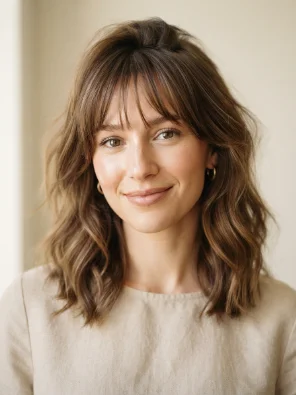
A French shag with wispy bangs feels soft around the forehead. The fringe is light, separated, and less solid than full bangs.
This option works well when you want a fringe but do not want to cover your whole forehead. It also blends easily into cheekbone-length layers.
Wispy bangs may be easier to move to the side as they grow. However, they can separate too much if your roots become oily.
Wash or refresh the fringe on its own between full wash days.
Best for: A light, flexible fringe
Styling tip: Blow-dry the bangs from side to side before shaping them.
Salon note: Ask for enough hair to create shape without making the fringe heavy.
French Shag With Bottleneck Bangs

Bottleneck bangs are shorter in the middle and longer near the cheeks. They sit between curtain bangs and a full fringe.
This shape draws attention to the eyes while keeping softer pieces along the sides of the face. It also connects well with cheekbone and chin-length layers.
The longer edges may grow out more smoothly than a blunt fringe. You can also move them to the sides when they become longer.
Use a round brush to curve the middle section slightly. Direct the outer pieces away from your face.
Best for: Eye framing with a softer grow-out
Styling tip: Keep the center light so the fringe does not look too round.
Salon note: Show your stylist where you want the shortest point to sit.
French Shag With a Full Fringe

A full fringe creates a stronger frame around the eyes. The bangs may sit at the eyebrows or slightly below them.
This style works well with loose layers because the solid fringe gives the haircut a clear focal point. It can also add width across the upper face.
Full bangs often need more styling than curtain or wispy bangs. Cowlicks, oily roots, and humidity can change how they sit.
Use a small round brush and low heat. Avoid adding too much product near the roots.
Best for: Readers who want the bangs to stand out
Styling tip: Style the fringe before the rest of your hair dries.
Salon note: Discuss your natural part and any cowlicks first.
French Shag for Wavy Hair

A French shag for wavy hair works with your natural bends instead of hiding them. Layers stop the waves from sitting in one wide, heavy block.
Face-framing pieces can make your wave pattern more visible around the cheeks and jaw. Crown layers may also add lift at the top.
Heavy creams can flatten this haircut. Start with a light mousse or a small amount of curl cream.
Scrunch your hair while it is damp. Let it air-dry, or use a diffuser without touching it too much.
Best for: Loose or medium waves
Styling tip: Refresh flat sections with water and a small amount of mousse.
Salon note: Ask for layers that follow your natural wave pattern.
French Shag for Thick Hair

A French shag for thick hair can remove bulk and make the shape easier to manage. Internal layers take weight from inside the haircut without making every layer easy to see.
Longer face-framing pieces can stop dense hair from looking too wide near the cheeks. A longer fringe may also blend better than very short bangs.
Your stylist should be careful with thinning tools. Too much thinning can create frizz or short pieces that stick out as they grow.
This haircut works best when weight is removed in planned areas.
Best for: Thick hair that feels bulky
Styling tip: Use smoothing cream through the middle lengths only.
Salon note: Ask for weight removal without thin, uneven ends.
French Shag for Straight Hair

A French shag for straight hair uses choppy or blended layers to create movement. Without these layers, straight hair may make the shape look flat.
Wispy ends usually work better than a heavy, blunt line. The goal is to create separation without making the haircut look uneven.
You can add soft bends with a flat iron. Turn some sections inward and others outward for a less perfect finish.
Texture spray can help the layers stand apart. Use it lightly, especially if your hair becomes dry.
Best for: Straight hair that lacks movement
Styling tip: Bend only the middle of each section and leave the ends loose.
Salon note: Ask for controlled layers rather than random thinning.
French Shag for Fine Hair

A French shag for fine hair should protect fullness. Too many layers may make the bottom look weak or see-through.
The best version often uses fewer layers through the ends. Shorter crown pieces can add lift, but they should blend smoothly into the rest of the hair.
A light fringe may work better than thick bangs because it removes less hair from the front.
More layers do not always mean more volume. Sometimes a stronger bottom line makes fine hair look fuller.
Best for: Fine hair that falls flat
Styling tip: Use root mousse and avoid heavy oils.
Salon note: Ask your stylist to show where the shortest and longest layers will sit.
French Shag Bob

A French shag bob combines the shape of a bob with the movement of a shag. It may sit at the jaw, below the chin, or near the upper neck.
Internal layers remove weight from inside the haircut. This keeps the bob from looking too solid or round.
Wispy bangs can make the style feel softer. A broken full fringe creates a stronger shape around the eyes.
This cut works well for people who want texture but still like a clear outline. It can also make straight hair feel less flat.
Best for: Short to medium hair with a defined shape
Styling tip: Bend random sections instead of curling every piece.
Salon note: Choose the bob length based on your jaw and neck area.
Curly French Shag Haircut

A curly French shag haircut creates a rounded shape with springy layers. The shorter pieces help curls lift instead of stretching downward.
Curl shrinkage can change the final length. A layer that looks long when wet may sit much higher after drying.
For this reason, your stylist should look at your curl pattern before choosing the shortest pieces. A dry cut or curl-aware method may help in some cases.
You can add a curly fringe or keep longer curls around the face. Both choices can work.
Best for: Curly hair that feels heavy or flat
Styling tip: Apply curl cream in sections, then scrunch gently.
Salon note: Discuss shrinkage before any short layers are cut.
Classic French Shag With Curtain Bangs

The classic French shag haircut with bangs usually sits around the shoulders. It has soft crown layers, face-framing pieces, and curtain bangs that open around the eyes.
This style works well on wavy or slightly textured hair. The natural bends help show the different layer lengths without much heat styling.
Ask your stylist to blend the bangs into cheekbone-length pieces. This stops the fringe from looking separate from the rest of the cut.
For styling, blow-dry the bangs away from your face with a small round brush. Let the rest of your hair air-dry, or use a diffuser for more shape.
Best for: Medium-length wavy hair
Styling tip: Use a light mousse instead of a heavy cream.
Salon note: Keep the shortest layers long if you want a softer finish.
Choppy French Shag With Piecey Ends

A choppy French shag has a stronger difference between each layer. The crown may be shorter, while the ends look rough and separated.
This version creates more visible texture. It works well for people who want the haircut to look bold, even without curls.
A small amount of styling wax can help separate the ends. Use very little, or the hair may look oily and heavy.
This style may need more daily shaping than a soft shag.
Best for: Strong texture and visible layers
Styling tip: Rub styling paste between your fingers before touching the ends.
Salon note: Ask how the short top layers will grow out.
How to Choose a French Shag for Your Face Shape
Your face shape can help you choose the length of your layers and bangs. It should not stop you from wearing a haircut you like.
Small changes can make the same cut feel more balanced. The fringe can add width, shorten the look of the forehead, or bring attention to the eyes. Face-framing layers can highlight the cheeks, jaw, or chin.
| Face Shape | French Shag Details to Consider |
| Round | Longer curtain bangs and layers that begin below the cheekbones |
| Oval | Most lengths, bang shapes, and layer placements can work |
| Square | Soft curved layers and light, wispy bangs |
| Heart | Chin-length pieces and a light fringe around the forehead |
| Long | Fuller bangs and more width near the cheeks |
For a round face, very short layers near the widest part of the cheeks may add more width. Longer face-framing pieces can create a more stretched shape.
For a square face, soft bends and curved layers can reduce the look of sharp lines around the jaw. A broken fringe may feel lighter than one thick straight line.
For a heart-shaped face, layers near the chin can add balance below the cheekbones. Light bangs can also soften a wider forehead.
Hair texture still matters. A curly layer may sit much higher than a straight layer cut at the same length. Use your face shape as one guide, then adjust the cut for your natural hair.
How to Style a French Shag Haircut at Home
A French shag should have movement, but it does not need perfect curls. The best routine usually supports your natural hair instead of forcing every section into the same shape.
Start with damp hair. Hair that is dripping wet may water down your styling products.
Apply a lightweight mousse if you need lift. Use curl cream if your hair is curly or very dry. Keep heavy products away from fine roots.
Scrunch wavy or curly hair from the ends upward. For straight hair, twist a few sections while they dry. This can create soft bends without using heat.
You can let the hair air-dry. A diffuser may give you more lift and hold. Use low heat and avoid moving the dryer around too much.
Style your bangs separately. A small round brush can shape curtain, full, or bottleneck bangs. Wispy bangs may only need a quick blow-dry from side to side.
Once the hair is dry, separate a few ends with texture spray or a tiny amount of styling paste.
5 Simple Styling Steps
- Apply mousse, curl cream, or heat protectant to damp hair.
- Scrunch, twist, or bend the middle lengths.
- Air-dry or use a diffuser on low heat.
- Shape the fringe with a small round brush.
- Separate a few dry ends for a soft, piecey finish.
Avoid coating every strand with product. A French shag often looks better when some sections stay loose and natural.
How Much Maintenance Does a French Shag Need?
The amount of upkeep depends on the length, fringe, and shortest layers.
Bangs usually lose their shape before the rest of the haircut. You may need a small fringe trim while the main length still looks fine.
Short French shags can change shape faster because the crown layers grow past their planned position. Longer, softer shags often grow out with fewer awkward stages.
| Shag Length | General Upkeep |
| Short | Needs more shape checks as the crown grows |
| Medium | Offers a balance between shape and easy grow-out |
| Long | Often grows out softly but may become heavy over time |
Your styling routine also affects maintenance. Natural waves and curls may fall into the layers with little work. Straight hair may need texture spray or a few heat-styled bends.
Watch the shape instead of following one strict trim schedule. Book a trim when the crown becomes flat, the ends feel too thin, or the fringe no longer frames your face well.
Growing out a French shag is often easier when the original layers were blended. Very short top layers may take longer to connect with the rest of the hair.
Is a French Shag Haircut Right for You?
A French shag may suit you if you like movement, texture, and face-framing pieces. It is also a good option when one-length hair feels heavy or flat.
You do not need naturally wavy hair. Straight, curly, fine, and thick hair can all wear this style. The layer placement simply needs to change.
This haircut may work for you when:
- You like soft or visible layers.
- You want bangs or shorter pieces around your face.
- You are happy using one or two styling products.
- You do not need every strand to sit perfectly.
- You are willing to refresh your fringe when needed.
It may be less practical when:
- You want a solid one-length cut.
- You dislike hair falling near your eyes or cheeks.
- You want to avoid all bang upkeep.
- You prefer smooth, heavy ends with no separation.
- You do not want any styling around the crown.
You can still choose a softer version. Long layers and cheekbone-length bangs give you the mood of the cut without the stronger shape of a short, choppy shag.
Choose the French Shag That Works With Your Hair
A French shag combines soft layers, face framing, bangs, and natural movement. It can be short and choppy or long and blended.
Your hair density should guide how many layers you get. Fine hair may need a stronger bottom line. Thick hair may need weight removed from inside the cut. Curly hair needs room for shrinkage, while straight hair may need more planned texture.
Save two or three styles that match your natural hair. Compare the fringe, shortest layer, and final length before your salon visit.
The best French shag haircut is one that works with your natural texture instead of fighting it. Show your favorite look to your stylist and explain how you style your hair at home.
