
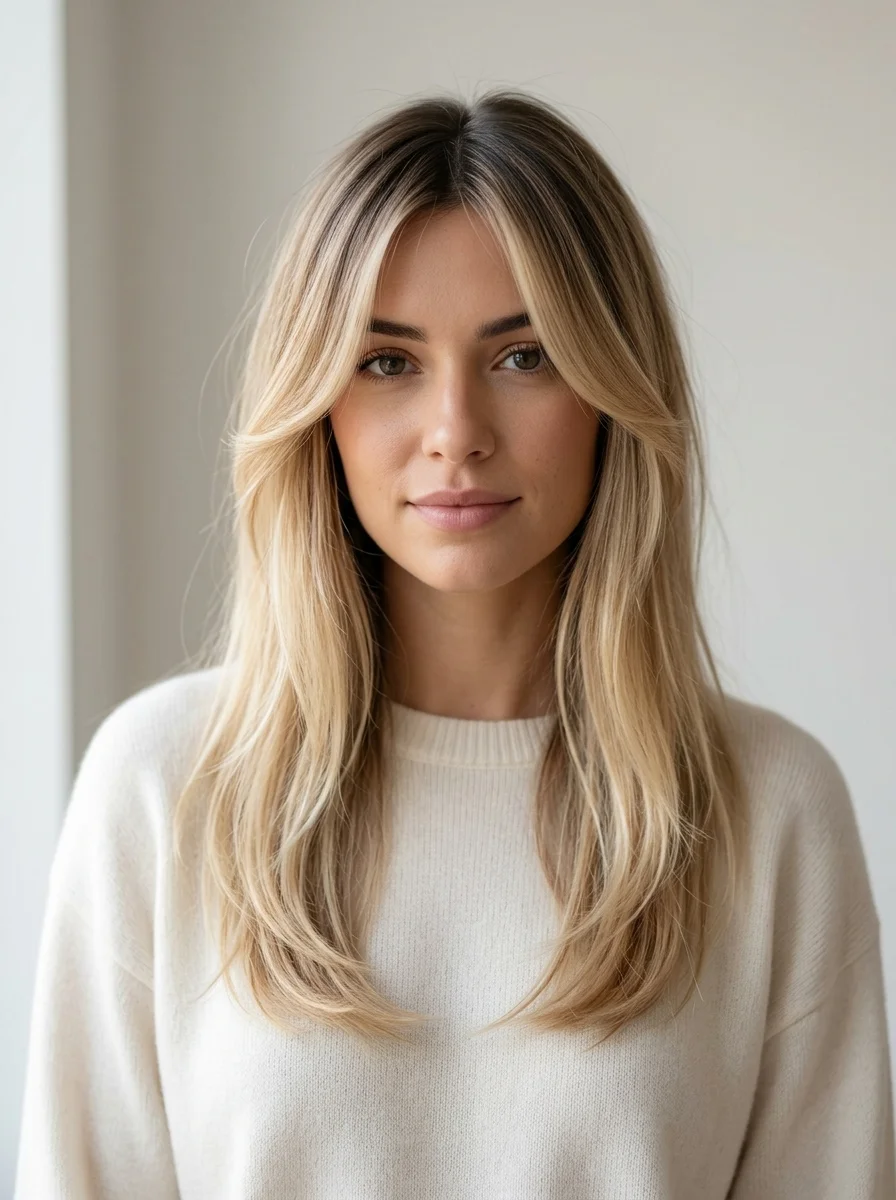
Blonde hair can sometimes feel flat or unfinished. The right bangs can fix that by adding shape, movement, and softness around your face.
Still, choosing blonde hair with bangs is not as simple as picking a pretty photo. Bangs sit right at the front of your haircut. A small change in their length, weight, or shape can affect your whole look.
You also need to think about your hair texture. Full bangs may sit smoothly on straight hair but need more work on thick or wavy hair. Curtain bangs are often easier to style, but they still need the right length to frame your face.
The blonde shade matters too. Warm honey tones can make soft bangs feel gentle and relaxed. Cool platinum shades can make a sharp fringe look even bolder.
Strawberry Blonde Hair With Soft Bangs

Strawberry blonde combines light copper and warm blonde tones. It gives soft bangs a warm and gentle finish.
Light feathered bangs work well with this color because they keep the style from feeling too heavy. The fringe can sit near the brows or open slightly in the middle.
Soft layers through the lengths help the bangs blend with the rest of the haircut.
Warm red and blonde tones can fade over time. Use color-safe hair products and protect the hair from too much heat.
Best for: People who prefer warm shades and gentle face-framing cuts.
Styling tip: Use low heat when drying the bangs to help protect the color.
Ask your stylist for: Light feathered bangs with soft layers around the face.
Shoulder-Length Blonde Hair With Full Bangs

Shoulder-length blonde hair is easy to wear, but it can sometimes feel plain. Full bangs give the cut a clear shape and draw attention to the eyes.
The bangs usually sit at or just above the eyebrows. They can be cut straight across or softened slightly at the edges.
Very thick hair may need some hidden weight removed from the fringe. Without this, the bangs can feel heavy and spread too wide.
You can wear the rest of the hair smooth or add gentle waves. Both options work well with a full fringe.
Best for: Medium hair and people who want a classic change.
Styling tip: Blow-dry the roots from side to side before directing the bangs down.
Ask your stylist for: Brow-length bangs with soft outer corners.
Short Blonde Pixie With Side-Swept Bangs

A short blonde pixie can feel too exposed when the front is cut very close. Side-swept bangs solve this by leaving more length over the forehead.
The sides and back stay short, while the front can be moved across the face or lifted for more volume.
This is one of the most flexible short blonde hair with bangs styles. You can wear the front smooth for a polished look or add texture for a softer finish.
The longer front section also gives you something to work with as the pixie grows.
Best for: People who want short hair with some softness around the face.
Styling tip: Warm a small amount of styling paste between your fingers before applying it.
Ask your stylist for: A short pixie with enough front length to sweep to one side.
Rooted Blonde Hair With Grown-Out Bangs

Rooted blonde keeps some darker color near the scalp. This creates softer regrowth and adds depth around the face.
Grown-out bangs sit near the cheekbones or jaw. They can split in the middle, sweep to one side, or blend into long face-framing layers.
This style is useful when you are growing out a shorter fringe. It also works when you want the look of bangs without regular short trims.
Small clips and pins can help on days when the front pieces do not sit well.
Best for: People who want easier color and fringe maintenance.
Styling tip: Add a soft outward bend to keep the long bangs away from your eyes.
Ask your stylist for: Rooted blonde color with grown-out bangs that blend into the front layers.
Platinum Blonde Bob With Blunt Bangs

A platinum blonde bob with blunt bangs creates a clean and bold look. The sharp fringe gives the haircut a strong shape, while the pale blonde color makes every line stand out.
This style often works best on straight hair or hair that can be smoothed easily. Thick or very wavy hair may need more daily styling to keep the bangs flat.
Blunt bangs usually sit near the eyebrows. They may need regular trims because even a small amount of growth can change the shape.
Platinum blonde also needs care. Use gentle products and heat protection because lightened hair may feel dry.
Best for: Straight hair and people who like polished cuts.
Styling tip: Use a flat brush instead of curling the bangs under.
Ask your stylist for: A straight bob with a full fringe that sits near the brows.
Long Blonde Hair With Curtain Bangs

Long curtain bangs are a good choice when you want a visible change without cutting a thick fringe across your forehead. The bangs split near the center and become longer near the sides.
This shape blends well with face-framing layers. It can also help long blonde hair look lighter around the front.
Curtain bangs work well on straight hair and loose waves. They are also easier to tuck behind your ears as they grow.
Use a medium round brush to bend the ends away from your face. Keep the bend soft so the bangs do not look stiff.
Best for: Long hair that needs more shape around the face.
Styling tip: Dry the bangs forward first. Then split and brush them outward.
Ask your stylist for: Long curtain bangs that connect smoothly with the front layers.
Icy Blonde Hair With Micro Bangs

Micro bangs sit well above the eyebrows. They show more of the forehead and create a strong, eye-catching shape.
Pairing micro bangs with icy blonde hair makes the look even bolder. The style works well with a sleek bob, a pixie, or straight medium-length hair.
These bangs are a bigger commitment than wispy or curtain bangs. You cannot easily sweep them aside when you want a different look.
Hair growth patterns also matter. A strong cowlick may stop the fringe from sitting flat.
Best for: People who want a bold haircut and do not mind frequent trims.
Styling tip: Dry micro bangs right after washing so they do not set in the wrong direction.
Ask your stylist for: Very short bangs that suit your forehead and natural hairline.
Honey Blonde Hair With Wispy Bangs

Wispy bangs are lighter and softer than full bangs. Small spaces between the pieces allow some of your forehead to show, which keeps the fringe from feeling too heavy.
Honey blonde adds warmth to this hairstyle. It can brighten the face without looking as sharp as icy or platinum blonde.
This style can work well on fine or medium hair. It also helps you try bangs without removing too much hair from the front.
Do not cover wispy bangs with thick oils or creams. Heavy products can make the small sections stick together.
Best for: Fine hair and anyone trying bangs for the first time.
Styling tip: Use a tiny amount of lightweight cream to control flyaways.
Ask your stylist for: Soft, piecey bangs with light ends and no heavy line.
Golden Blonde Waves With Bottleneck Bangs

Bottleneck bangs are shorter near the center and longer near the outer edges. Their shape is inspired by the narrow top and wider base of a bottle.
This fringe frames the eyes while the longer sides draw attention to the cheekbones. It feels softer than blunt bangs but more defined than long curtain bangs.
Golden blonde waves add warmth and movement. The color can make the curved fringe feel relaxed instead of sharp.
A round brush or heated brush can help shape the middle and sides. Avoid curling every section in the same direction.
Best for: Wavy hair and people who like a soft retro look.
Styling tip: Brush the middle bangs forward and the longer edges outward.
Ask your stylist for: Bottleneck bangs that sit shorter in the center and blend into cheekbone-length pieces.
Curly Blonde Hair With Rounded Bangs

Curly bangs should work with your natural curl pattern. They do not need to be straightened to look neat.
Rounded bangs follow the shape of the curls across the forehead. The sides are often slightly longer so the fringe blends into the rest of the hair.
Curl shrinkage can make wet hair look much shorter once it dries. For this reason, the bangs should be cut with care. Some stylists prefer to shape curly bangs while the hair is dry.
Use curl cream on damp hair and shape each curl gently with your fingers. Do not brush the fringe after it dries.
Best for: Naturally curly hair that needs more shape near the front.
Styling tip: Refresh flat curls with water and a small amount of curl cream.
Ask your stylist for: Curly bangs cut with enough length to allow for shrinkage.
Blonde Shag With Textured Bangs
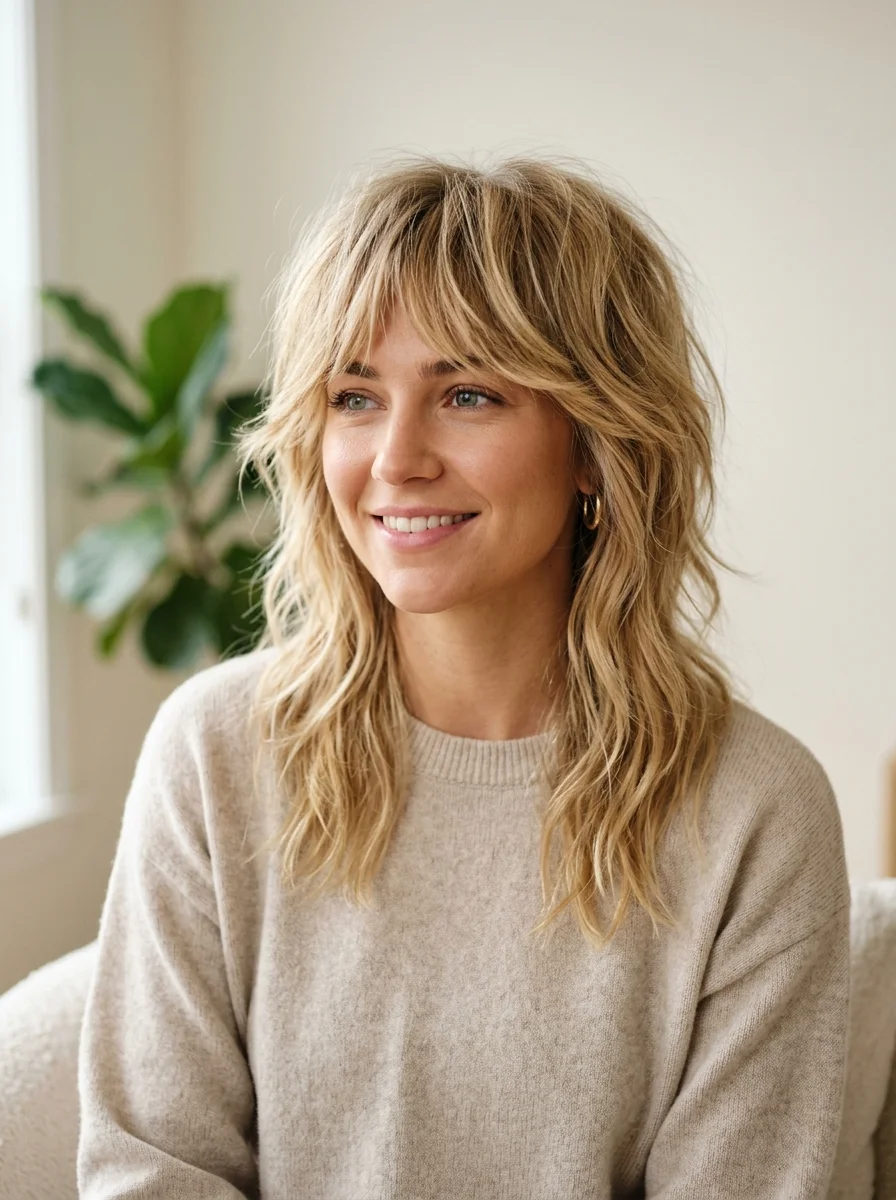
A blonde shag uses short and long layers to create movement. Textured bangs support that shape by looking loose instead of smooth and perfect.
This haircut is useful when wavy hair feels wide at the bottom or flat near the top. Shorter layers around the crown can help lift the shape.
Darker blonde roots can add more depth between the layers. They can also make the hair appear fuller.
A shag does not need to look neat all day. A slightly messy finish is part of the style. Still, the layers must be cut well or the hair may look thin at the ends.
Best for: Wavy hair that feels heavy or flat.
Styling tip: Add texture spray to dry hair and gently scrunch the layers.
Ask your stylist for: A layered blonde shag with broken, textured bangs.
Blonde French Bob With Short Bangs

A French bob usually ends near the chin or jaw. Short bangs give the compact haircut even more shape.
The fringe may sit above the eyebrows or lightly touch them. The finish often looks soft and slightly undone instead of perfectly smooth.
This blonde bob with bangs can make the face the main focus. It works well with straight hair and loose natural waves.
Be careful with the final length if your hair lifts or shrinks after drying. A chin-length bob can appear much shorter once waves form.
Best for: People who want a short haircut with a chic, relaxed shape.
Styling tip: Let some natural texture show instead of flattening every section.
Ask your stylist for: A jaw-length bob with short, soft bangs and light texture.
Blonde Balayage With Long Side Bangs

Blonde balayage uses softer light pieces through the lengths while keeping more depth near the roots. This can make regrowth less obvious than one solid blonde shade.
Long side bangs blend naturally into the lighter front sections. They can be swept across the forehead, tucked behind the ear, or pinned back.
This is a practical choice when you like bangs but do not want a fringe that needs daily trimming or shaping.
Loose waves can help show the color changes and make the side bangs flow into the haircut.
Best for: People who want flexible bangs and softer-looking regrowth.
Styling tip: Add one loose curl to the side bang so it blends with the front layers.
Ask your stylist for: Long side bangs with light face-framing balayage pieces.
Beige Blonde Lob With Curtain Bangs

A beige blonde lob falls near the shoulders. It gives you the fresh shape of a shorter cut without taking away all your length.
Long curtain bangs blend into the front pieces and create a smooth frame around the face. You can still tie the hair back, which makes this style practical for busy days.
Beige blonde sits between warm and cool tones. It can create a softer finish than bright gold or icy platinum.
Style the lob with loose bends instead of tight curls. This keeps the cut modern and allows the curtain bangs to blend with the rest of the hair.
Best for: Medium hair and anyone who wants a safe but clear change.
Styling tip: Curl the front sections away from your face.
Ask your stylist for: A shoulder-length lob with long curtain bangs and blended front layers.
Ash Blonde Layers With Feathered Bangs

Ash blonde has a cool, muted tone. It pairs well with feathered bangs because both parts of the style feel light and polished.
Feathered bangs have soft ends instead of a thick straight line. They can sweep slightly to the sides or sit loosely across the forehead.
Medium or long layers add movement through the rest of the hair. A little lift at the crown can stop the style from looking flat.
Cool blonde hair may need toning, but too much purple shampoo can make the color look dull. Follow the product directions and use it only when needed.
Best for: Medium or long hair that needs soft movement.
Styling tip: Use a blow-dry brush to bend the layers and fringe lightly.
Ask your stylist for: Cool ash blonde layers with soft, feathered bangs.
How to Match Blonde Bangs to Your Face Shape
Bangs can change where people look when they see your face. Some styles draw attention to the eyes. Others create more length or soften strong angles.
Face shape can help you compare blonde hairstyles with bangs, but it is not a strict rule. Your forehead, hairline, texture, and natural growth pattern also matter.
For a round face, long curtain bangs or side-swept bangs can create a longer line. Keeping the outer pieces below the cheekbones may help the fringe feel less wide.
An oval face can often wear many bang shapes. You can choose based on your hair texture and the amount of styling you want to do.
Soft, textured bangs can balance the angles of a square face. A thick, straight fringe may feel stronger, while feathered pieces can create a gentler finish.
Wispy or bottleneck bangs can work well with a heart-shaped face. The light center and longer sides can frame the forehead and cheekbones.
A longer face may suit full or brow-length bangs. The line across the forehead can make the face appear a little shorter.
Your hairline may matter more than your face shape. Talk to your stylist about cowlicks, uneven growth, and how the bangs sit when your hair dries naturally.
Pick a Blonde Shade That Makes the Cut Look Better
Your blonde shade can change how the bangs frame your face. Since the fringe sits close to your skin and eyes, the tone can have a strong effect.
Warm blondes include honey, golden, and strawberry shades. They often create a softer look and work well with wispy, feathered, or curtain bangs.
Cool blondes include platinum, icy, and ash tones. These colors can make blunt, micro, or sharp bangs look more defined.
Beige blonde sits between warm and cool. It works well when you want a soft shade that does not feel too golden or too silver.
When comparing blonde hair color ideas, look at more than the finished photo. Think about your current color, hair condition, and salon schedule.
Very light blonde can make dry or damaged ends more visible. Bleaching the bangs also puts lightener on hair that may be styled with heat each day.
Rooted blonde and balayage can create a softer grow-out. These options may suit you if you do not want a strong line at the roots.
A major blonde change may take more than one appointment. Your stylist may need to lighten the hair slowly to protect its condition.
How to Style Blonde Hair With Bangs Without Making It Greasy
Blonde hair with bangs often looks best when the fringe is styled soon after washing. Bangs dry quickly, so waiting too long can make cowlicks and uneven bends harder to fix.
Start by blotting the fringe with a towel. Do not rub it roughly because wet blonde hair can be more fragile.
Apply a small amount of heat protectant. Keep thick oils away from the roots and forehead.
Next, blow-dry the bangs from side to side. This helps loosen strong growth patterns and stops the fringe from splitting too early.
Once the roots are dry, shape the ends. Use a medium round brush for curtain or bottleneck bangs. Use a flat brush for full or blunt bangs.
For straight or wavy bangs, follow this simple routine:
- Dry the roots from side to side.
- Direct the fringe forward.
- Shape the ends with a brush.
- Split curtain bangs after the roots are dry.
- Finish with light hairspray when needed.
For curly bangs, apply curl cream while the hair is damp. Shape the curls with your fingers and let them dry without brushing.
Dry shampoo can refresh oily roots between wash days. Use a small amount and give it time to absorb before brushing away the extra powder.
Less product is usually better. Too much cream, oil, or hairspray can make bangs look greasy and flat.
Keep Blonde Bangs Fresh Between Salon Visits
Bangs often lose their shape before the rest of the haircut. They sit near your eyes, so even a small amount of growth may feel noticeable.
Book a professional fringe trim when the bangs start blocking your view or losing their shape. Some salons offer quick bang trims between full appointments.
You can also wash only the fringe when it becomes oily. Tie back the rest of your hair, wash the bangs at the sink, and dry them right away.
Keep heavy skincare products away from the fringe. Rich creams and facial oils can transfer to the hair and make the roots look greasy.
Use a small clip during skincare or makeup. This also keeps long bangs away from your face while products settle.
Curly bangs may become flat after sleeping. Refresh them with water and a little curl cream instead of brushing them dry.
Avoid cutting soaking-wet bangs at home. Wet hair can appear longer, so you may remove more length than planned.
Also avoid these common mistakes:
- Using high heat without protection
- Applying heavy oil near the roots
- Trimming curls without allowing for shrinkage
- Using purple shampoo too often
- Cutting micro or blunt bangs without a clear guide
When your bangs begin to grow, use clips, pins, or a side part. A stylist can also blend them into face-framing layers.
Choose a Blonde Fringe That Fits Your Real Routine
The best bangs should suit more than your face. They should also work with your texture, hair length, blonde shade, and daily schedule.
Wispy, curtain, and side bangs can be good starting points when you want a softer change. They are often easier to move, pin back, or grow out.
Blunt and micro bangs make a stronger statement. They may also need more styling and regular trims.
Curly bangs can look fresh and natural when they are cut for your true curl pattern. Rooted blonde and balayage can make color regrowth feel softer.
Save two or three styles that match your hair texture. Then show them to your stylist and ask which details will work for you.
The right blonde hair with bangs style should look good in photos, but it should also feel easy enough to wear in real life.
